Hear it read by Heather Nichols: the audiobook is right here
Story guide on this page: summary, characters, discussion questions
Yours to keep: a DRM-free EPUB for any device. Read it here, or on Kindle (with Send to Kindle), Apple Books, Kobo or Google Play Books.
Want both? Buy the audiobook and add the ebook for $0.99.
✓ DRM-free, yours to keep. Download the files after you buy and play them anywhere.
Yours to keepBuy once, it stays in your library
Listen anywhereIn our app on your phone or computer
Bought by mistake, or something wrong with the file? Email apica@academyvoices.com within 14 days for a full refund.
Bought by mistake or something wrong with the audio? Email apica@academyvoices.com within 14 days for a full refund.
About this audiobookAbout this book
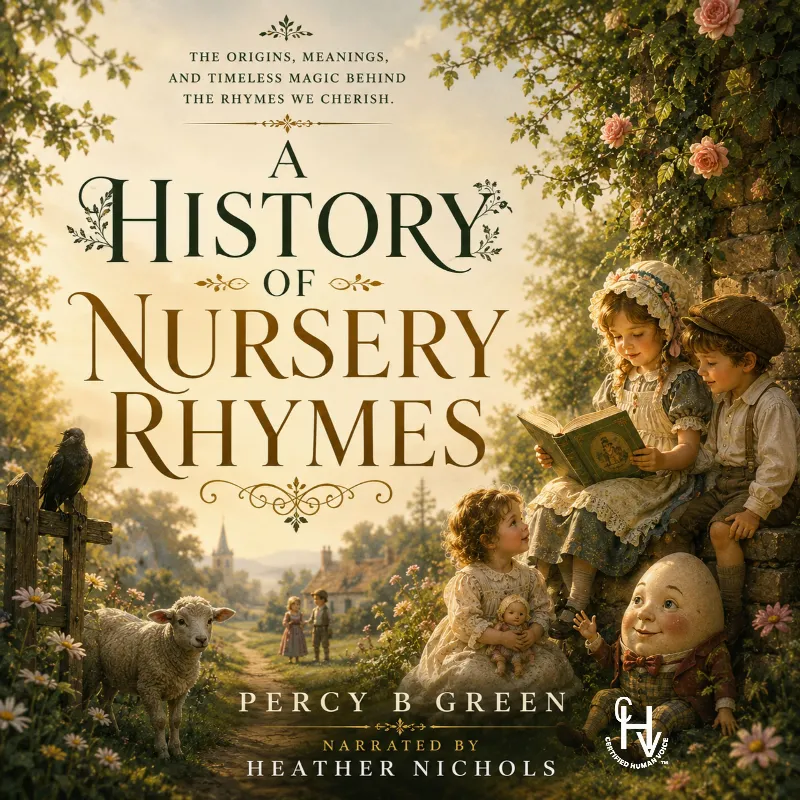
Where do nursery rhymes come from? What did they first mean, and why do they stay with us for a lifetime? Percy B. Green looks at the rhymes we all learned as children, from Humpty Dumpty to Sing a Song of Sixpence, and digs into their history.
He explores riddles, charms, counting rhymes and the old games behind them. First published in London in 1899, the book is read here by Heather Nichols, in about two and a half hours.
For anyone curious about the stories behind the verses.
Story guide
A History of Nursery Rhymes summary
Spoiler alert: this summary tells the whole story.
Percy B. Green sets out to show that the rhymes children sing in the nursery and the street are far older and more meaningful than they seem. In a playful introduction he admits he cannot supply a scholar's full list of references, but argues, drawing on folklorists and anthropologists of his day such as Tylor, Lubbock and Frazer, that "the children of our streets" are among the true historians of mankind.
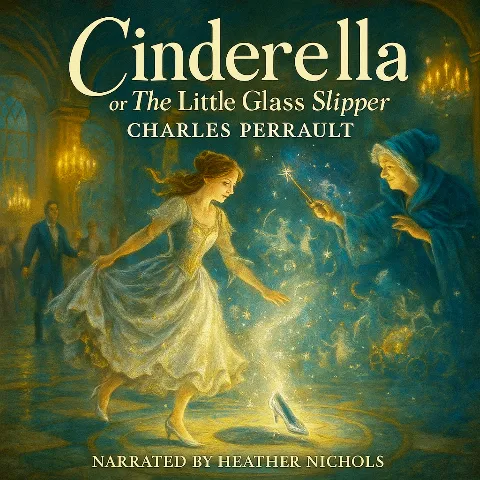
The early chapters look at the beginnings of language in signs and sounds, at gestures and greetings around the world, and at how simple nursery habits like clapping hands go back to very old customs. Green then traces rhymes and stories to ancient beliefs about the sun, moon, spirits and the harvest. He links Cinderella to the older tale of Ashputtel and the golden slipper, and connects rhymes and games to fairy lore, water spirits, the corn spirit and old funeral customs. He gathers lullabies from many countries, including English, German, Danish and Polish cradle songs.
The second half of the book is a lively collection organized by type. There are street and marriage games such as the Mulberry Bush and "Pray, Mr. Fox, what time is it?", cumulative rhymes such as "The House that Jack Built" set beside a Hebrew chant about a kid bought for two pieces of money, Tudor songs like "A Frog who would a-wooing go," cat rhymes, "Jack" rhymes, charms and money rhymes. A chapter on riddles shows that "Humpty Dumpty" began as a riddle whose answer is an egg. Green also notes historical links, such as Sir Toby's reference to "Sing a Song of Sixpence" in Shakespeare's Twelfth Night.
The book ends with a long section of scraps and songs, from "Little Bo Peep" and "Baa! baa! black sheep" to "Old King Cole," finishing with the old woman who doubted her own identity and trusted her little dog to know her. Some of Green's theories are now outdated, but the book is a charming treasury of rhymes and a window into how the Victorians studied folklore.
Famous lines
Humpty Dumpty sat on a wall, Humpty Dumpty had a great fall; Three score men, and three score more, Cannot make Humpty Dumpty as before again.
An old version of the riddle
In Shakespeare's Twelfth Night Sir Toby alludes to the "Sing a Song a Sixpence,"
Green, on "Sing a Song of Sixpence"
If I be I, as I suppose I be, Well, I've a 'Little dog,' and he'll know me!
The closing rhyme
Did you know?
The book was first published in London in 1899 and reissued in Detroit in 1968.
Green shows that "Humpty Dumpty" was originally a riddle, and the answer is an egg.
He compares "The House that Jack Built" with the Chad Gadya, a cumulative song about a little goat sung at the Jewish Passover.
Questions to talk about
Green says children are among the true historians of mankind. What does he mean? Do you agree?
Which rhyme in the book surprised you most with its history or hidden meaning?
Why do you think rhymes like "Humpty Dumpty" and "Sing a Song of Sixpence" have lasted for centuries?
Many rhymes appear in several versions. What does that tell you about how folklore travels and changes?
Some of Green's ideas are now considered outdated. How should we read old works of scholarship today?
Chapters
A History of Nursery Rhymes chapters
ChapterStarts at
Introduction0:20
Chapter 012:49
Chapter 028:10
Part 2 Chapter 0115:20
Part 2 Chapter 231:44
Part 2 Chapter 0338:31
Part 2 Chapter 0447:34
Part 2 Chapter 0557:24
Part 2 Chapter 061:00:50
Part 2 Chapter 071:05:07
Show all 21 chapters
Part 2 Chapter 081:08:13
Part 2 Chapter 091:13:19
Part 2 Chapter 101:18:13
Part 2 Chapter 111:26:42
Part 2 Chapter 121:34:35
Part 2 Chapter 131:39:12
Part 2 Chapter 141:41:52
Part 2 Chapter 151:45:52
Part 2 Chapter 161:50:47
Chapter 032:00:22
Chapter 042:14:06
New listeners
Get 25% off your first audiobook
Join our list and we'll email you 25% off, plus new releases from our store. Every one is read by a real person. No account needed.
Details
Length
2 hr 33 min
Narration
Solo narrator
Format
Unabridged audiobook
Publisher
Academy Voices
Language
English
ISBN
9798240155635
Questions
What is A History of Nursery Rhymes about?
A Victorian writer traces the roots of familiar nursery rhymes, games, lullabies and riddles back through folklore, old customs and ancient beliefs, quoting hundreds of rhymes along the way.
Who narrates the A History of Nursery Rhymes audiobook?
This edition of A History of Nursery Rhymes by Percy B Green is narrated by Heather Nichols.
How long is the A History of Nursery Rhymes audiobook?
It runs 2 hr 33 min, unabridged, so you hear the complete text.
Is this audiobook narrated by a real person?
Yes. Every Academy Voices audiobook is Certified Human Voice: performed start to finish by a real narrator.
Where can I listen to A History of Nursery Rhymes?
Right here: buy it on Academy Voices and listen in your browser or our app. Hear a free sample on this page first.