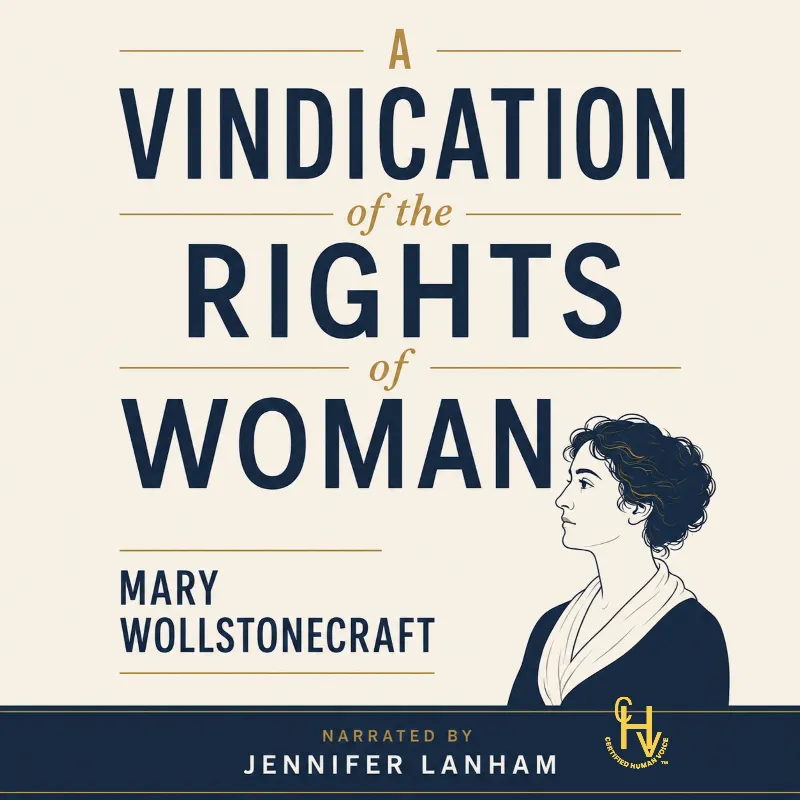
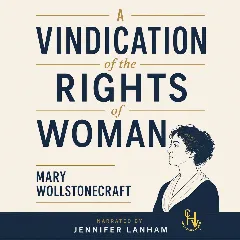
Hear it read by Jennifer Lanham: the audiobook is right here
Story guide on this page: summary, characters, discussion questions
Yours to keep: a DRM-free EPUB for any device. Read it here, or on Kindle (with Send to Kindle), Apple Books, Kobo or Google Play Books.
Want both? Buy the audiobook and add the ebook for $0.99.
✓ DRM-free, yours to keep. Download the files after you buy and play them anywhere.
Yours to keepBuy once, it stays in your library
Listen anywhereIn our app on your phone or computer
Bought by mistake, or something wrong with the file? Email apica@academyvoices.com within 14 days for a full refund.
Bought by mistake or something wrong with the audio? Email apica@academyvoices.com within 14 days for a full refund.
About this audiobookAbout this book
In 1792, Mary Wollstonecraft argued that women are not naturally weaker than men. They only seem so because they are denied education. Give girls the same schooling as boys, she says, and they can be good citizens, good wives and good mothers.
A landmark of early feminist writing, read by Jennifer Lanham. Nearly ten hours.
For listeners who want to hear where modern arguments about equality and education began. It remains a major text in the history of women's rights.
Story guide
A Vindication of the Rights of Woman summary
Spoiler alert: this summary tells the whole story.
Our edition opens with a brief sketch of Mary Wollstonecraft's life: her hard childhood, her work as a teacher and writer, her time in revolutionary Paris, her marriage to the philosopher William Godwin, and her death in 1797 shortly after giving birth to the daughter who became Mary Shelley. Wollstonecraft then dedicates the book to Talleyrand, the French statesman who had just written a report on national education. She urges him to see that it is unjust for men fighting for their own freedom to deny women the chance to judge for themselves.
In the introduction and early chapters she lays out her central claim. Reason is what makes humans human, and virtue grows from reason, so women must be educated to think, not merely to please. She argues that the so-called weakness of women is not natural but the product of an upbringing that teaches girls that beauty is their only power. Women are trained in manners, dress and charm and kept in "a state of perpetual childhood." She insists she wants women to have power not over men, but over themselves.
In the longest chapter she takes on writers who, in her view, made women "objects of pity, bordering on contempt," above all Rousseau, whose novel Émile describes an education for girls designed entirely around pleasing men, as well as popular advice writers such as Dr. Gregory and Fordyce. Later chapters examine how early habits shape character, argue that modesty and a good reputation should rest on real virtue rather than appearances, and attack the evils that flow from inherited rank and wealth. She also writes about the duties of parents and children.
In the chapter on national education she proposes free public day schools where boys and girls study together, so that both sexes grow up as rational companions. She closes with examples of the folly that ignorance breeds in women, such as superstition and an obsession with fashion and romance, and argues that a "revolution in female manners" would make women better citizens, wives and mothers.
Written in 1792, the Vindication is one of the founding works of feminism. Its demand that women be treated as "rational creatures" still shapes debates about education and equality today.
Famous lines
My own sex, I hope, will excuse me, if I treat them like rational creatures, instead of flattering their FASCINATING graces, and viewing them as if they were in a state of perpetual childhood, unable to stand alone.
Wollstonecraft, Introduction
Taught from their infancy, that beauty is woman's sceptre, the mind shapes itself to the body, and, roaming round its gilt cage, only seeks to adorn its prison.
Wollstonecraft
It is time to effect a revolution in female manners, time to restore to them their lost dignity, and make them, as a part of the human species, labour by reforming themselves to reform the world.
Wollstonecraft
I do not wish them to have power over men; but over themselves.
Wollstonecraft
Main characters
MW
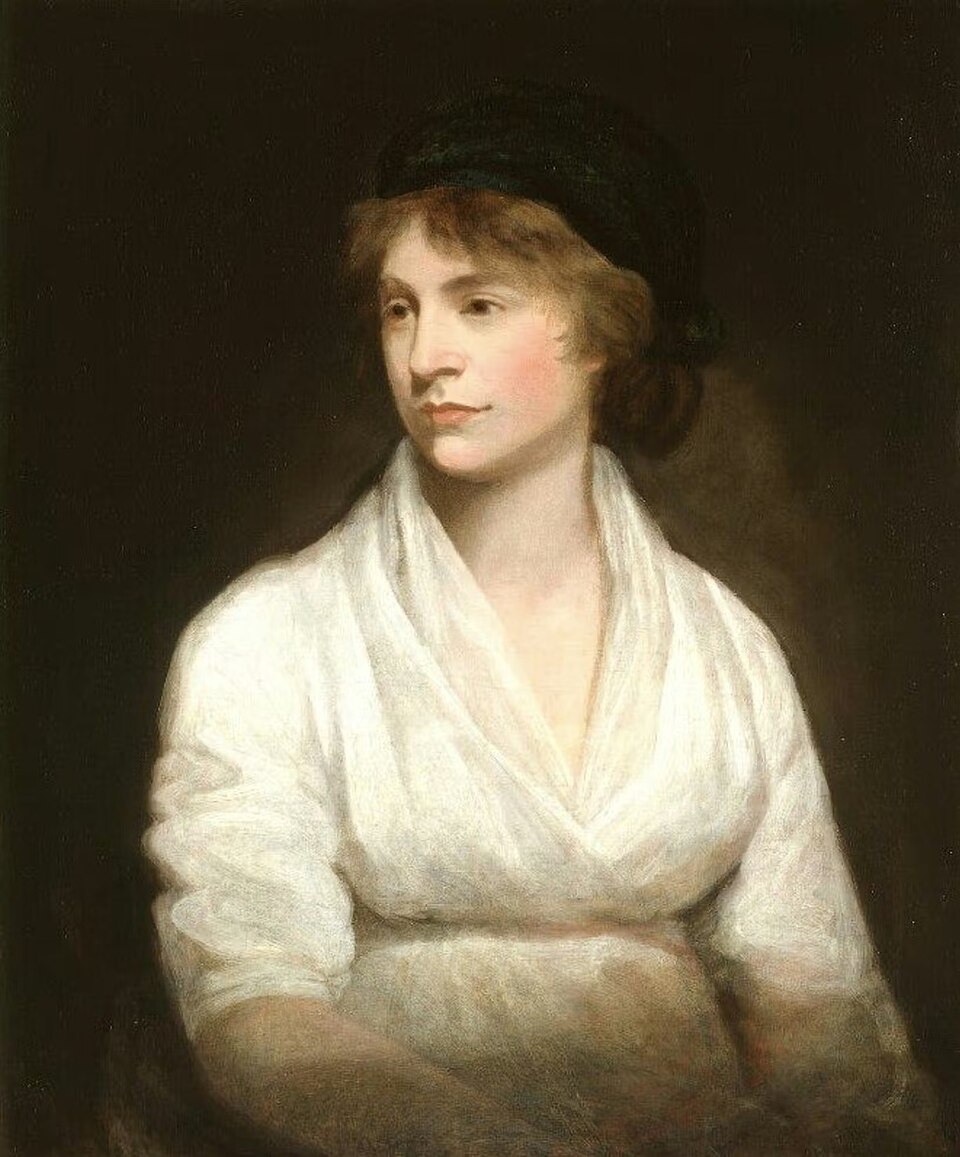
Mary WollstonecraftThe author, an English writer and teacher who argued for women's education and equality.
T
TalleyrandThe French statesman to whom the book is dedicated, author of a report on national education.
JR
Jean-Jacques RousseauThe philosopher whose ideas about educating girls Wollstonecraft criticizes at length.
WG
William GodwinThe philosopher Wollstonecraft married, whose memoir of her is the source of the life sketch.
Did you know?
Wollstonecraft's daughter, Mary Wollstonecraft Shelley, grew up to write Frankenstein.
Two years earlier, Wollstonecraft had written A Vindication of the Rights of Men, a reply to Edmund Burke's attack on the French Revolution.
She died in 1797, just days after giving birth to her daughter Mary.
Questions to talk about
Wollstonecraft says women's weakness comes from their upbringing, not from nature. What evidence does she give? Is her argument convincing?
Why does she want women to have power "over themselves" rather than over men? What is the difference?
What does she object to in Rousseau's plan for educating girls? Are any of those ideas still around today?
She argues that educating women would make them better wives, mothers and citizens. Why might she have framed her case this way in 1792?
Which of her proposals, such as schools where boys and girls learn together, have come true, and which issues remain?
Chapters
A Vindication of the Rights of Woman chapters
ChapterStarts at
Chapter 010:24
Chapter 0221:00
Chapter 031:23:19
Chapter 042:08:04
Chapter 05.Part 13:33:37
Chapter 05.Part 24:31:33
Chapter 065:31:36
Chapter 075:51:11
Chapter 086:23:50
Chapter 096:54:08
Show all 14 chapters
Chapter 107:26:36
Chapter 117:34:11
Chapter 127:49:41
Chapter 138:56:00
New listeners
Get 25% off your first audiobook
Join our list and we'll email you 25% off, plus new releases from our store. Every one is read by a real person. No account needed.
Details
Length
9 hr 46 min
Narration
Solo narrator
Format
Unabridged audiobook
Publisher
Academy Voices
Language
English
ISBN
9798240173646
Questions
What is A Vindication of the Rights of Woman about?
Mary Wollstonecraft's landmark argument that women are rational beings who deserve the same education as men, and that keeping them ignorant harms women, families and all of society.
Who are the main characters in A Vindication of the Rights of Woman?
Mary Wollstonecraft, the author, an English writer and teacher who argued for women's education and equality; Talleyrand, the French statesman to whom the book is dedicated, author of a report on national education; Jean-Jacques Rousseau, the philosopher whose ideas about educating girls Wollstonecraft criticizes at length; William Godwin, the philosopher Wollstonecraft married, whose memoir of her is the source of the life sketch.
Who narrates the A Vindication of the Rights of Woman audiobook?
This edition of A Vindication of the Rights of Woman by Mary Wollstonecraft is narrated by Jennifer Lanham.
How long is the A Vindication of the Rights of Woman audiobook?
It runs 9 hr 46 min, unabridged, so you hear the complete text.
Is this audiobook narrated by a real person?
Yes. Every Academy Voices audiobook is Certified Human Voice: performed start to finish by a real narrator.
Where can I listen to A Vindication of the Rights of Woman?
Right here: buy it on Academy Voices and listen in your browser or our app. Hear a free sample on this page first.