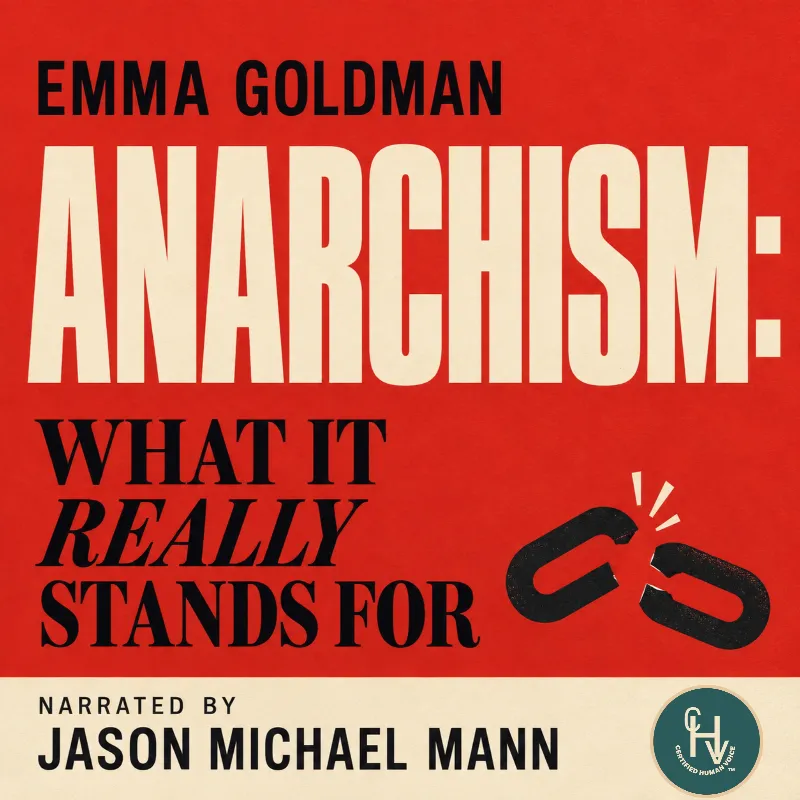
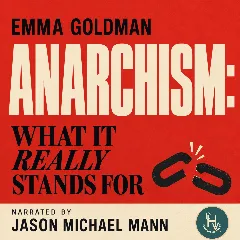
Emma Goldman’s most lucid statement of anarchist thought, Anarchism: What It Really Stands For, tears down the myths that equate anarchism with chaos to reveal a humane, life-affirming vision rooted in individual liberty and voluntary cooperation.
Hear it read by Jason Michael Mann: the audiobook is right here
Story guide on this page: summary, characters, discussion questions
Yours to keep: a DRM-free EPUB for any device. Read it here, or on Kindle (with Send to Kindle), Apple Books, Kobo or Google Play Books.
Want both? Buy the audiobook and add the ebook for $0.99.
Free audiobook
Listen to the whole story free
Enter your email and we'll send you a link to the full audiobook of Anarchism: What It Really Stands For. No account needed.
We'll also ask if you'd like new audiobooks by email. Privacy Policy
✓ DRM-free, yours to keep. Download the files after you buy and play them anywhere.
Yours to keepBuy once, it stays in your library
Listen anywhereIn our app on your phone or computer
Bought by mistake, or something wrong with the file? Email apica@academyvoices.com within 14 days for a full refund.
Bought by mistake or something wrong with the audio? Email apica@academyvoices.com within 14 days for a full refund.
About this audiobookAbout this book
Emma Goldman’s most lucid statement of anarchist thought, Anarchism: What It Really Stands For, tears down the myths that equate anarchism with chaos to reveal a humane, life-affirming vision rooted in individual liberty and voluntary cooperation. With lyrical force and unsparing logic, Goldman indicts the three dominions over human life—religion over the mind, property over needs, and the state over conduct—showing how they smother creativity, solidarity, and joy. She challenges the superstition of politics, dismantles claims about “human nature,” reframes crime as misdirected energy, and makes the case for direct action and free association as the seeds of real social harmony. Narrated by Jason Michael Mann with clarity and conviction, this performance captures both the fire and reason of Goldman’s prose, making a classic text feel urgently contemporary. For listeners curious about political philosophy, movement history, or new ways of imagining work, community, and freedom, this is a bracing, inspirational primer on what anarchism is—and what it is not.
Story guide
Anarchism: What It Really Stands For summary
Spoiler alert: this summary tells the whole story.
Our text is Goldman's full book, Anarchism and Other Essays. It begins with a biographical sketch by her friend Hippolyte Havel, tracing her life from a girlhood in the Russian Empire to her years as a famous and persecuted speaker in America, and a preface in which Goldman explains that she has turned from speeches to the printed page to reach the few who truly want to learn.
The title essay, "Anarchism: What It Really Stands For," answers two common charges: that anarchism is an impractical dream and that it stands for violence. Goldman defines anarchism as a social order based on liberty unrestricted by man-made law, holding that all government rests on violence. She names three great enemies of human freedom: religion, which rules the mind; property, which rules human needs; and the State, which rules human conduct. She argues that free individuals and a free society are not enemies but partners, like the heart and lungs, that work should be a joy rather than drudgery, and that change comes not through voting but through direct action, from strikes to open defiance of unjust laws.
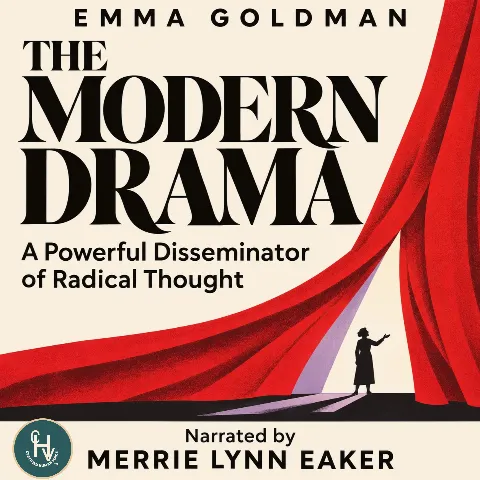
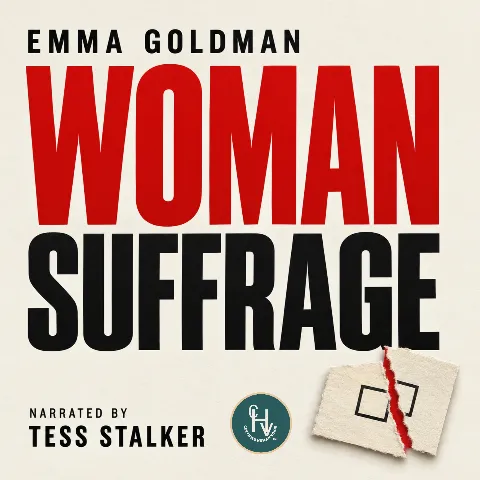
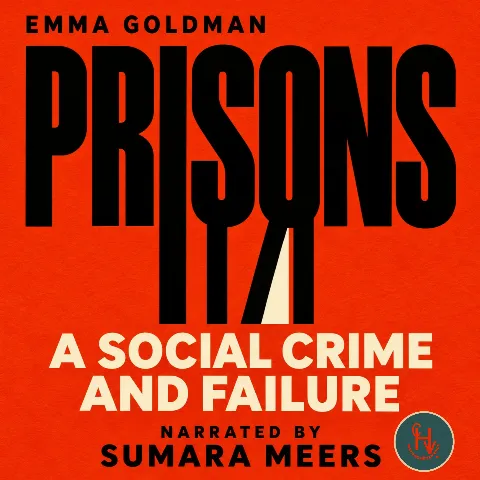
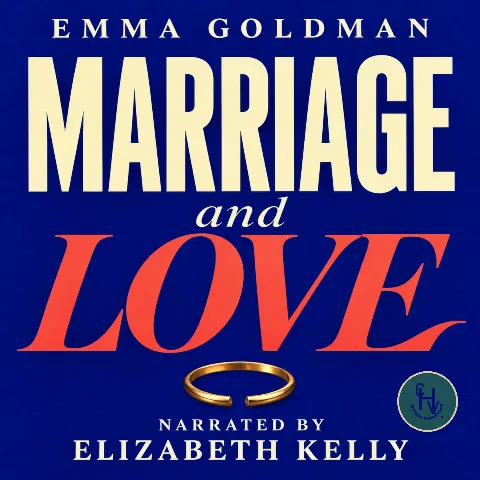
The essays that follow apply these ideas. "Minorities Versus Majorities" argues that progress comes from bold individuals, not the conforming mass. "The Psychology of Political Violence" explains, without simply condemning, the social pressures behind assassinations. Other essays attack prisons as a social failure, patriotism and militarism as menaces to liberty, and the censoring morality of Anthony Comstock. She honors Francisco Ferrer, the Spanish educator executed in 1909, examines prostitution as an economic crime, doubts that the vote will free women, criticizes the narrow women's movement of her day, calls marriage an "insurance pact" opposed to free love, and closes by praising modern drama, from Ibsen to Shaw, as a spreader of radical thought.
Whatever readers think of her conclusions, the book is a key document in American radical history. Goldman's passionate, outspoken voice anticipated many later debates about prisons, war, women's rights and free speech.
Famous lines
Someone has said that it requires less mental effort to condemn than to think.
Emma Goldman, in the title essay
Anarchism, then, really stands for the liberation of the human mind from the dominion of religion; the liberation of the human body from the dominion of property; liberation from the shackles and restraint of government.
Emma Goldman, in the title essay
People are either not familiar with their history, or they have not yet learned that revolution is but thought carried into action.
Emma Goldman, in the title essay
Marriage is primarily an economic arrangement, an insurance pact.
Emma Goldman, in "Marriage and Love"
Main characters
EG
Emma GoldmanThe author, an anarchist lecturer and writer living in the United States.
HH
Hippolyte HavelGoldman's friend and fellow anarchist, who wrote the opening biographical sketch.
FF
Francisco FerrerThe Spanish educator and founder of the Modern School, whose execution she protests.
AC
Anthony ComstockThe American anti-vice crusader she attacks in "The Hypocrisy of Puritanism."
PK
Peter Kropotkin and Henry David ThoreauThinkers she quotes in support of her ideas.
Did you know?
Goldman founded Mother Earth, the anarchist magazine whose publishing house issued this book, in New York in 1906.
After President McKinley was shot in 1901, police tried to connect Goldman to the assassin, Leon Czolgosz, but the effort failed.
In 1919 the United States government deported Goldman to Russia, and she spent most of her remaining years abroad.
Questions to talk about
How does Goldman define anarchism, and how is her definition different from the popular idea of the word?
Why does she call religion, property and the State the three great enemies of freedom? Which argument is strongest, and which is weakest?
Goldman says voting is useless and direct action is needed. What evidence does she give, and how might a supporter of democracy answer?
In "Minorities Versus Majorities," she places her faith in individuals rather than the masses. How does that fit with her concern for working people?
Which of her predictions or criticisms, about prisons, war or women's lives, look most accurate today?
New listeners
Get 25% off your first audiobook
Join our list and we'll email you 25% off, plus new releases from our store. Every one is read by a real person. No account needed.
Details
Length
37 min
Narration
Solo narrator
Format
Unabridged audiobook
Publisher
Anthony Pica Productions LLC
Language
English
ISBN
9798182682961
Questions
What is Anarchism: What It Really Stands For about?
Emma Goldman's 1910 book of essays opens by explaining what anarchism really means to her, and goes on to attack prisons, patriotism, Puritanism and the conventions of marriage, while arguing for individual freedom.
Who are the main characters in Anarchism: What It Really Stands For?
Emma Goldman, the author, an anarchist lecturer and writer living in the United States; Hippolyte Havel, goldman's friend and fellow anarchist, who wrote the opening biographical sketch; Francisco Ferrer, the Spanish educator and founder of the Modern School, whose execution she protests; Anthony Comstock, the American anti-vice crusader she attacks in "The Hypocrisy of Puritanism."; Peter Kropotkin and Henry David Thoreau, thinkers she quotes in support of her ideas.
Who narrates the Anarchism: What It Really Stands For audiobook?
This edition of Anarchism: What It Really Stands For by Emma Goldman is narrated by Jason Michael Mann.
How long is the Anarchism: What It Really Stands For audiobook?
It runs 37 min, unabridged, so you hear the complete text.
Is this audiobook narrated by a real person?
Yes. Every Academy Voices audiobook is Certified Human Voice: performed start to finish by a real narrator.
Where can I listen to Anarchism: What It Really Stands For?
Right here: buy it on Academy Voices and listen in your browser or our app. Hear a free sample on this page first.