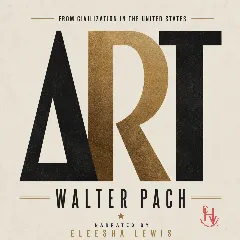
Hear it read by Eleesha Lewis: the audiobook is right here
Story guide on this page: summary, characters, discussion questions
Yours to keep: a DRM-free EPUB for any device. Read it here, or on Kindle (with Send to Kindle), Apple Books, Kobo or Google Play Books.
Want both? Buy the audiobook and add the ebook for $0.99.
Free audiobook
Listen to the whole story free
Enter your email and we'll send you a link to the full audiobook of Art (from Civilization in the United States). No account needed.
We'll also ask if you'd like new audiobooks by email. Privacy Policy
✓ DRM-free, yours to keep. Download the files after you buy and play them anywhere.
Yours to keepBuy once, it stays in your library
Listen anywhereIn our app on your phone or computer
Bought by mistake, or something wrong with the file? Email apica@academyvoices.com within 14 days for a full refund.
Bought by mistake or something wrong with the audio? Email apica@academyvoices.com within 14 days for a full refund.
About this audiobookAbout this book
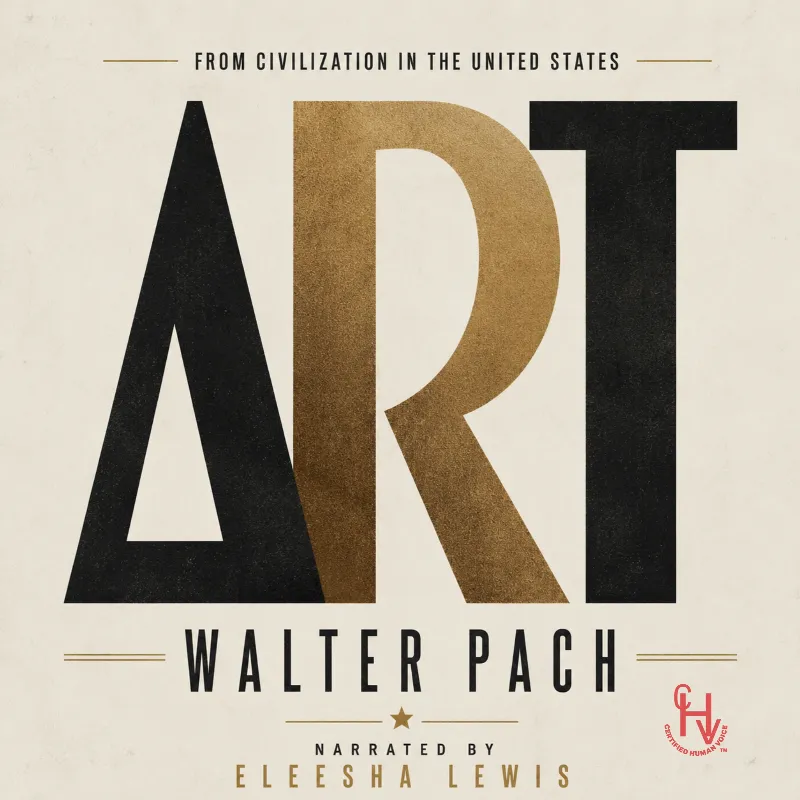
The problem of American art, says Walter Pach, is unlike that of any other country. Egypt and Mexico built their art on their own people. Italy and France received it from older races. America's settlers were Europeans, already holding the same inheritance. So what should an American art be?
This essay comes from Civilization in the United States, a 1922 collection edited by Harold Stearns. Read by Eleesha Lewis in forty-one minutes.
Story guide
Art (from Civilization in the United States) summary
Spoiler alert: this summary tells the whole story.
Pach begins by saying that America's problem in art is unlike any other country's. Its people came as Europeans, cut off from the old traditions, and busy building a new land, they lost touch with art. He dismisses Native American influence in language that is now offensive, while admitting that Native artists in the Southwest still make beautiful work. In America, he says, art is a "Sunday thing" rather than part of daily life, and it is left mostly to women, whom men leave in charge of taste.
Pach then judges America's painters against the best of Europe. He admires John Singleton Copley's honest colonial portraits. The landscape painters Inness, Wyant and Homer Martin, he notes, followed the French Barbizon painters by a generation. Winslow Homer and Albert Pinkham Ryder are the strongest and least European of American painters, though both suffered from poor training. Whistler looks weak beside Degas and Manet, and Chase and Sargent are skilled but shallow.
He has harsh words for the official mural painters and sculptors who decorate statehouses and libraries, for magazine illustrators and for the endless exhibition pictures that are "neither art nor American." Puritan suspicion of pleasure, he argues, has starved American life of beauty, which is why so many Americans long for Europe.
Yet Pach is hopeful. The 1913 Armory Show introduced Americans to Cézanne, Matisse and the Cubists, and drew huge crowds. He praises Maurice Prendergast as one American who held his own beside the great French painters, notes that an American museum was the first to hang Manet, and sees in steel bridges, buildings and machines the beginnings of a new kind of American art.
The essay is a lively snapshot of American art at the moment modernism arrived, written by one of the people who helped bring it.
Famous lines
Copying the externals of their work without again living their lives can result only in academism—bad sculpture and bad pictures.
Pach
The only excuse for mentioning such things in an essay on American art is that they help to define it by contrast—for these pictures are neither art nor American.
Pach, on popular exhibition pictures
Main characters
WP
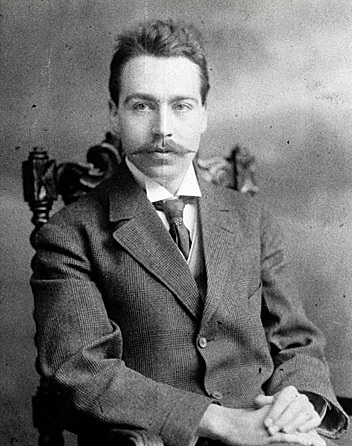
Walter PachThe American painter and critic who wrote the essay.
WH
Winslow HomerA painter Pach calls one of the strongest Americans of his time, and one of the least European.
AP
Albert Pinkham RyderA visionary painter whose deep, beautiful work gives Pach confidence in American talent.
JM
James McNeill WhistlerThe famous American painter Pach finds weaker than his reputation.
MP
Maurice PrendergastThe painter Pach praises for holding his own beside the best of modern Europe.
Did you know?
Walter Pach helped organize the 1913 Armory Show, the exhibition that first brought modern European art to a large American audience.
The Armory Show's most talked-about picture was Marcel Duchamp's Nude Descending a Staircase, which critics mocked as an explosion in a shingle factory.
Civilization in the United States gathered essays by thirty writers on American life. It was edited by Harold Stearns and published in 1922.
Questions to talk about
Why does Pach think America's situation in art is unlike any other country's?
Pach praises Homer and Ryder for owing little to Europe, but criticizes them for poor training. Can both be true?
What does Pach mean when he says art in America is a "Sunday thing"?
Why was the 1913 Armory Show so important to him?
Pach sees art in steel bridges and machines. What everyday objects today would you call art?
New listeners
Get 25% off your first audiobook
Join our list and we'll email you 25% off, plus new releases from our store. Every one is read by a real person. No account needed.
Details
Length
41 min
Narration
Solo narrator
Format
Unabridged audiobook
Publisher
Academy Voices
Language
English
ISBN
9798182623889
Questions
What is Art (from Civilization in the United States) about?
Painter and critic Walter Pach's 1922 essay asking why America has not yet produced a great art of its own, and why he believes it soon will.
Who are the main characters in Art (from Civilization in the United States)?
Walter Pach, the American painter and critic who wrote the essay; Winslow Homer, a painter Pach calls one of the strongest Americans of his time, and one of the least European; Albert Pinkham Ryder, a visionary painter whose deep, beautiful work gives Pach confidence in American talent; James McNeill Whistler, the famous American painter Pach finds weaker than his reputation; Maurice Prendergast, the painter Pach praises for holding his own beside the best of modern Europe.
Who narrates the Art (from Civilization in the United States) audiobook?
This edition of Art (from Civilization in the United States) by Walter Pach is narrated by Eleesha Lewis.
How long is the Art (from Civilization in the United States) audiobook?
It runs 41 min, unabridged, so you hear the complete text.
Is this audiobook narrated by a real person?
Yes. Every Academy Voices audiobook is Certified Human Voice: performed start to finish by a real narrator.
Where can I listen to Art (from Civilization in the United States)?
Right here: buy it on Academy Voices and listen in your browser or our app. Hear a free sample on this page first.