Read by a real person
Justin Fife1 audiobook with Academy Voices
Historical
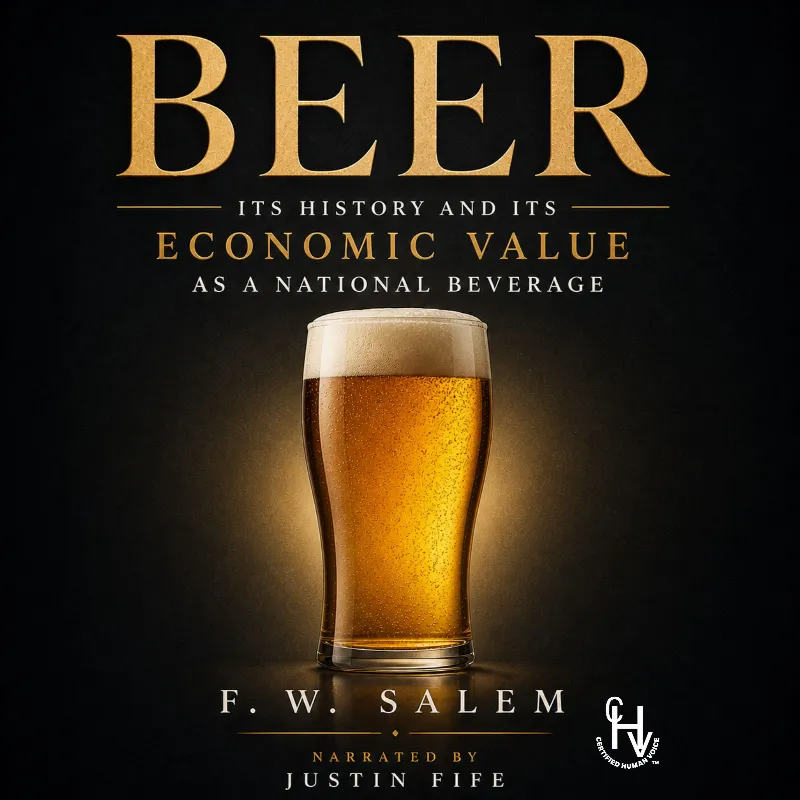
Beer, Its History and Its Economic Value as a National Beverage Ebook
by F. W. SALEM. · read by
Justin Fife · 4 hr 19 min
In 1880 a Hartford writer argued that beer deserved a better reputation. F. W. Salem's book traces beer from its earliest history through its modern development.
Hear it read by Justin Fife: the audiobook is right here
Story guide on this page: summary, characters, discussion questions
Yours to keep: a DRM-free EPUB for any device. Read it here, or on Kindle (with Send to Kindle), Apple Books, Kobo or Google Play Books.
Want both? Buy the audiobook and add the ebook for $0.99.
✓ DRM-free, yours to keep. Download the files after you buy and play them anywhere.
Yours to keepBuy once, it stays in your library
Listen anywhereIn our app on your phone or computer
Bought by mistake, or something wrong with the file? Email apica@academyvoices.com within 14 days for a full refund.
Bought by mistake or something wrong with the audio? Email apica@academyvoices.com within 14 days for a full refund.
About this audiobookAbout this book
In 1880 a Hartford writer argued that beer deserved a better reputation. F. W. Salem's book traces beer from its earliest history through its modern development. He explains how it is made and then makes his case for beer over distilled spirits.
Chapters also cover brewing as a help to farmers and the effect of prohibition laws. Read by Justin Fife. Four hours and twenty-two minutes.
A window into the beer trade and the temperance arguments of the nineteenth century.
Story guide
Beer, Its History and Its Economic Value as a National Beverage summary
Spoiler alert: this summary tells the whole story.
F. W. Salem of Hartford, Connecticut, dedicates his book to the brewers of the United States, whom he calls real promoters of temperance. His starting point is compromise: just as temperance lies between total abstinence and excess, beer lies between strong spirits and water. If Americans learned to drink mild beer instead of whiskey, he argues, drunkenness would fall.
The first half is a history. Salem traces beer from ancient Egypt, where its invention was credited to the god Osiris, through the Greeks, Romans, Germans and medieval monasteries, to modern Europe and America. He celebrates famous brewers, among them Jacob van Artevelde of Ghent, and he counts William Penn and the Revolutionary general Israel Putnam among America's brewers and tavern keepers. He explains how beer is made, comparing brewing to baking bread, and how ale, porter and German lager developed.
The second half makes the case. Salem describes the fast-growing American beer trade, much of it built by German immigrants, and cites doctors, scientists and military surgeons on beer's advantages over distilled liquor. He argues that breweries help farmers by creating local markets for barley and hops. A long chapter examines prohibition laws, especially in Maine, and gathers testimony that they failed to stop drinking and drove people toward hidden whiskey instead.
In his conclusion he sums up: beer is wholesome and so mildly alcoholic that drunkenness from it is rare, and the best path to real temperance is to encourage it. He also argues against strict Sunday laws that closed beer gardens enjoyed by immigrant families. He closes with his motto, "Beer against whisky." Appendices give production figures, chemical analyses, descriptions of breweries and lists of American brewers.
Written as open advocacy for the brewing industry, the book is now a revealing document of the nineteenth-century temperance debate and of the rise of lager beer in America.
Famous lines
As extremes do and must perforce exist, the noblest philosophy of life is compromise.
The opening line of Chapter I
beer occupies the medium position between ardent spirits and water.
Salem
BEER AGAINST WHISKY.
Salem's closing motto
Main characters
FW
F. W. SalemThe author, a Hartford writer and publisher making the brewers' case.
JV
Jacob van ArteveldeThe fourteenth-century "Brewer of Ghent" and leader of Flanders whom Salem celebrates.
WP
William Penn and Israel PutnamFamous early Americans whom Salem presents as brewers.
Did you know?
The book is dedicated to the beer brewers of the United States, and its opening page lists the officers of the United States Brewers Association.
Maine, which Salem examines at length, passed the first statewide prohibition law in the United States in 1851.
Forty years after this book appeared, the United States adopted nationwide Prohibition, which lasted from 1920 to 1933.
Questions to talk about
Salem calls beer a friend of temperance. What is persuasive about his argument, and what might a temperance reformer of 1880 say in reply?
Why does Salem spend so much of the book on history? How does the past help his case?
Salem dedicates the book to brewers. How should knowing who a book is written for affect how we read it?
What does the book suggest about how German immigrants changed American life?
Salem argues that prohibition laws in Maine did not work. How does his argument compare with what happened during national Prohibition?
Chapters
Beer, Its History and Its Economic Value as a National Beverage chapters
ChapterStarts at
Preface0:21
Chapter 012:16
Chapter 0210:57
Chapter 0335:36
Chapter 041:04:59
Chapter 051:27:37
Chapter 061:40:34
Chapter 071:51:17
Chapter 082:00:49
Chapter 092:24:05
Show all 13 chapters
Chapter 102:36:33
Chapter 113:12:54
Chapter 123:51:37
New listeners
Get 25% off your first audiobook
Join our list and we'll email you 25% off, plus new releases from our store. Every one is read by a real person. No account needed.
Details
Length
4 hr 19 min
Narration
Solo narrator
Format
Unabridged audiobook
Publisher
Academy Voices
Language
English
ISBN
9798240144363
Questions
What is Beer, Its History and Its Economic Value as a National Beverage about?
An 1880 history and defense of beer, arguing that light, wholesome beer is the best weapon against drunkenness from hard liquor and a boon to American farmers and industry.
Who are the main characters in Beer, Its History and Its Economic Value as a National Beverage?
F. W. Salem, the author, a Hartford writer and publisher making the brewers' case; Jacob van Artevelde, the fourteenth-century "Brewer of Ghent" and leader of Flanders whom Salem celebrates; William Penn and Israel Putnam, famous early Americans whom Salem presents as brewers.
Who narrates the Beer, Its History and Its Economic Value as a National Beverage audiobook?
This edition of Beer, Its History and Its Economic Value as a National Beverage by F. W. SALEM. is narrated by Justin Fife.
How long is the Beer, Its History and Its Economic Value as a National Beverage audiobook?
It runs 4 hr 19 min, unabridged, so you hear the complete text.
Is this audiobook narrated by a real person?
Yes. Every Academy Voices audiobook is Certified Human Voice: performed start to finish by a real narrator.
Where can I listen to Beer, Its History and Its Economic Value as a National Beverage?
Right here: buy it on Academy Voices and listen in your browser or our app. Hear a free sample on this page first.