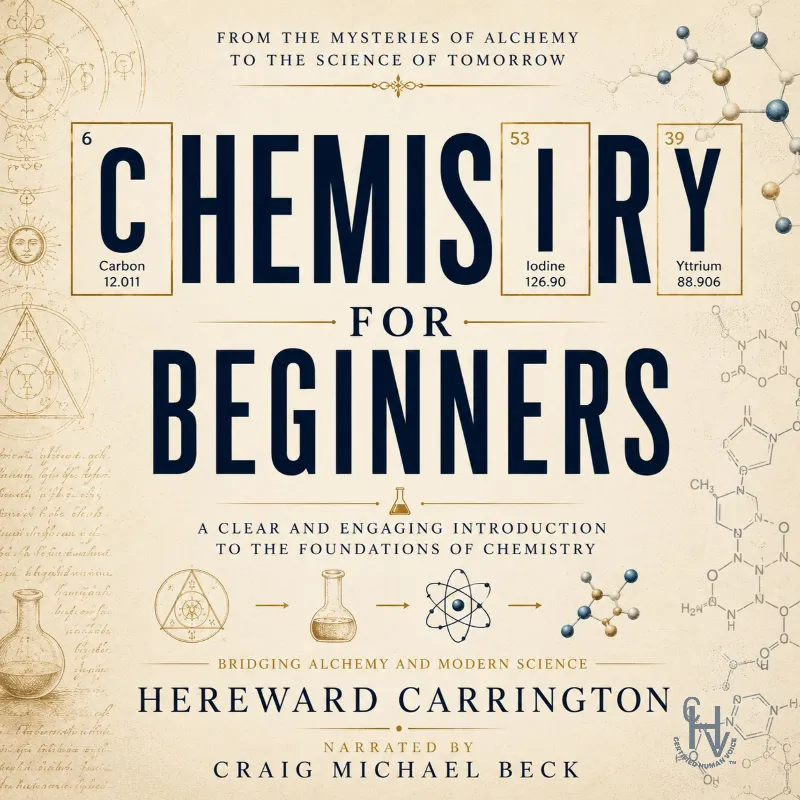
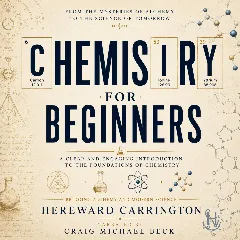
A plain-spoken introduction to chemistry for readers who have never studied it. The first part follows how the science grew, from its early history to the basic principles chemists work by.
Hear it read by Craig Michael Beck: the audiobook is right here
Story guide on this page: summary, characters, discussion questions
Yours to keep: a DRM-free EPUB for any device. Read it here, or on Kindle (with Send to Kindle), Apple Books, Kobo or Google Play Books.
Want both? Buy the audiobook and add the ebook for $0.99.
Free audiobook
Listen to the whole story free
Enter your email and we'll send you a link to the full audiobook of Chemistry for Beginners. No account needed.
We'll also ask if you'd like new audiobooks by email. Privacy Policy
✓ DRM-free, yours to keep. Download the files after you buy and play them anywhere.
Yours to keepBuy once, it stays in your library
Listen anywhereIn our app on your phone or computer
Bought by mistake, or something wrong with the file? Email apica@academyvoices.com within 14 days for a full refund.
Bought by mistake or something wrong with the audio? Email apica@academyvoices.com within 14 days for a full refund.
About this audiobookAbout this book
A plain-spoken introduction to chemistry for readers who have never studied it. The first part follows how the science grew, from its early history to the basic principles chemists work by. The second part moves through the elements one by one, then the organic and inorganic compounds built from them.
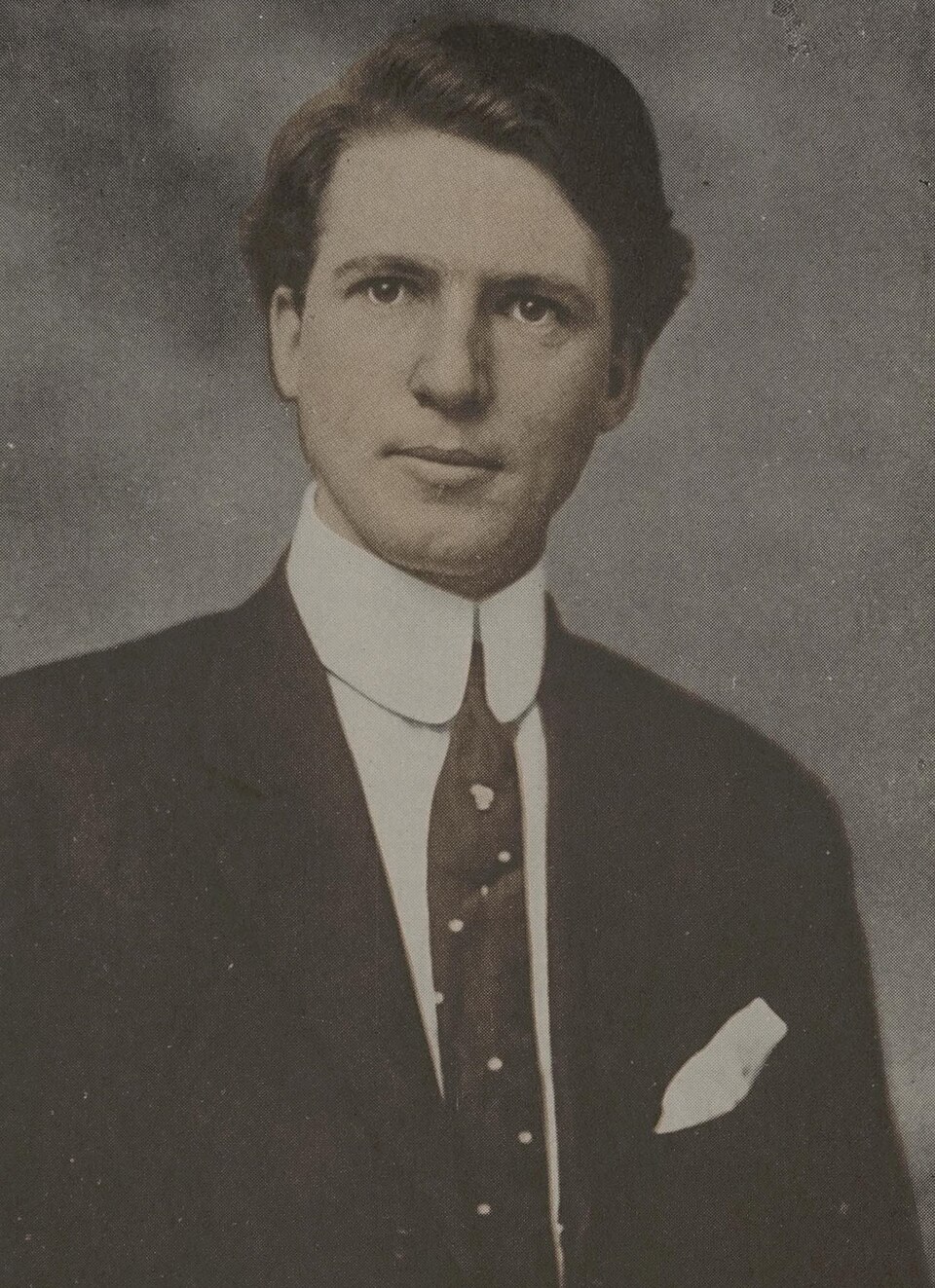
Hereward Carrington wrote it in 1924 as one of the small Little Blue Books, aimed at ordinary readers. Craig Michael Beck reads it in about an hour and a half.
A good fit for anyone curious about how early twentieth century science explained the stuff the world is made of.
Story guide
Chemistry for Beginners summary
Spoiler alert: this summary tells the whole story.
Hereward Carrington's little book begins with the oldest questions about what the world is made of. He describes the early Greek thinkers who argued over whether everything came from water, fire or four elements, and explains how alchemy, with its search for the philosopher's stone and the elixir of life, slowly gave way to real chemistry. Robert Boyle defined the chemical element, the phlogiston theory rose and fell, and John Dalton gave the world the modern atomic theory, the idea that all matter is made of tiny particles called atoms.
The book then covers the basics a beginner needs: what elements are, how atomic weights and valency work, how Mendeleeff arranged the elements in the periodic law, and how chemists write formulas and equations. It explains the difference between analysis, which breaks substances apart, and synthesis, which builds new ones, and between inorganic chemistry and the organic chemistry of carbon and living things. Short sections introduce catalysts, enzymes and hormones.
Next Carrington looks outward, to the chemistry of the earth and the saltiness of the oceans, and upward, to the spectroscope, which lets scientists learn what the sun and stars are made of from their light. He also describes industrial chemistry and the tools of research. The final chapters turn to what was then "the newer chemistry": radioactivity, the enormous energy locked inside atoms, and the electron, which showed that atoms themselves are built of smaller parts.
Part II discusses individual elements such as oxygen, nitrogen and carbon, suggests simple experiments, and ends with bigger speculations about the origin of life and the nature of matter. Some of these ideas, such as the ether and claims that life could be made from chemicals in a flask, are now out of date, and listeners should treat them as history.
Written as a cheap pocket guide for ordinary readers, the book is a charming snapshot of how science looked in the 1920s, just as the atom was being opened up.
Famous lines
Chemistry is that branch of science which investigates the nature and properties of matter in all its forms.
Hereward Carrington
Chemistry is more or less the direct child of Alchemy
Hereward Carrington
It has therefore been said that, cosmically speaking, life is only a “flash in the pan between two eternities”—but for us that flash in the pan is everything!
Hereward Carrington
Main characters
HC
Hereward CarringtonThe author, a popular science writer and well-known investigator of psychic claims.
JD
John DaltonThe English scientist whose atomic theory forms the heart of the book.
RB
Robert BoyleThe seventeenth-century scientist Carrington credits with founding modern chemistry.
DM
Dmitri MendeleeffThe Russian chemist who arranged the elements into the periodic law.
Did you know?
Little Blue Books were tiny, cheap paperbacks printed by the Haldeman-Julius Company in Girard, Kansas, and sold for as little as five cents each. Hundreds of millions of copies were sold.
Hereward Carrington was also famous as a psychical researcher who tested the claims of mediums, and he wrote several other Little Blue Books on science and the mind.
Mendeleeff published his first periodic table in 1869, and he left gaps for elements that had not yet been discovered.
Questions to talk about
How did alchemy help lead to modern chemistry?
Why was Dalton's atomic theory such an important step?
Which ideas in the book have held up, and which have changed since 1924?
How can scientists learn what a distant star is made of?
Why do you think a cheap pocket book about chemistry was popular with ordinary readers?
Chapters
Chemistry for Beginners chapters
ChapterStarts at
Chapter 010:19
Chapter 023:32
Chapter 035:02
Chapter 047:19
Chapter 0511:48
Chapter 0614:38
Chapter 0716:12
Chapter 0817:27
Chapter 0918:54
Chapter 1020:36
Show all 38 chapters
Chapter 1123:16
Chapter 1225:21
Chapter 1326:35
Chapter 1428:14
Chapter 1530:52
Chapter 1632:24
Chapter 1734:16
Chapter 1835:19
Chapter 1936:47
Chapter 2038:22
Chapter 2140:48
Chapter 2241:43
Chapter 2344:00
Chapter 2449:13
Chapter 2550:30
Chapter 2652:46
Chapter 2753:46
Chapter 2855:03
Chapter 2956:23
Chapter 3058:56
Chapter 311:00:54
Chapter 321:03:56
Chapter 331:05:52
Chapter 341:12:17
Chapter 351:14:08
Chapter 361:16:02
Chapter 371:18:19
Chapter 381:21:05
New listeners
Get 25% off your first audiobook
Join our list and we'll email you 25% off, plus new releases from our store. Every one is read by a real person. No account needed.
Details
Length
1 hr 24 min
Narration
Solo narrator
Format
Unabridged audiobook
Publisher
Academy Voices
Language
English
ISBN
9798240165498
Questions
What is Chemistry for Beginners about?
A short, friendly introduction to chemistry from 1924, tracing the science from ancient ideas and alchemy to atoms, the periodic table, radioactivity and the electron.
Who are the main characters in Chemistry for Beginners?
Hereward Carrington, the author, a popular science writer and well-known investigator of psychic claims; John Dalton, the English scientist whose atomic theory forms the heart of the book; Robert Boyle, the seventeenth-century scientist Carrington credits with founding modern chemistry; Dmitri Mendeleeff, the Russian chemist who arranged the elements into the periodic law.
Who narrates the Chemistry for Beginners audiobook?
This edition of Chemistry for Beginners by Hereward Carrington is narrated by Craig Michael Beck.
How long is the Chemistry for Beginners audiobook?
It runs 1 hr 24 min, unabridged, so you hear the complete text.
Is this audiobook narrated by a real person?
Yes. Every Academy Voices audiobook is Certified Human Voice: performed start to finish by a real narrator.
Where can I listen to Chemistry for Beginners?
Right here: buy it on Academy Voices and listen in your browser or our app. Hear a free sample on this page first.