In January 1776, as the colonies argued over whether to make peace with Britain, Thomas Paine published a short pamphlet in plain language for everyday readers.
Hear it read by Gary Middleton: the audiobook is right here
Story guide on this page: summary, characters, discussion questions
Yours to keep: a DRM-free EPUB for any device. Read it here, or on Kindle (with Send to Kindle), Apple Books, Kobo or Google Play Books.
Want both? Buy the audiobook and add the ebook for $0.99.
✓ DRM-free, yours to keep. Download the files after you buy and play them anywhere.
Yours to keepBuy once, it stays in your library
Listen anywhereIn our app on your phone or computer
Bought by mistake, or something wrong with the file? Email apica@academyvoices.com within 14 days for a full refund.
Bought by mistake or something wrong with the audio? Email apica@academyvoices.com within 14 days for a full refund.
About this audiobookAbout this book
In January 1776, as the colonies argued over whether to make peace with Britain, Thomas Paine published a short pamphlet in plain language for everyday readers. He argued that monarchy was a poor way to run a country, that Britain had no right to rule America, and that the time to declare independence had come.
Common Sense helped turn public opinion toward the Revolution. Read by Gary Middleton. About two and a half hours for anyone curious how the argument for American independence was first made.
Story guide
Common Sense summary
Spoiler alert: this summary tells the whole story.
Paine opens by separating society from government. Society comes from our needs and is a blessing. Government comes from our weaknesses and is at best a necessary evil, so it should be simple and answer to the people. He then attacks the English constitution, which many colonists admired, as a confused mix of monarchy and aristocracy that leaves the king too much power.
Next he goes after kings themselves. There is no natural reason, he says, for one man to be raised so far above others, and hereditary rule makes it worse, since a wise king may pass his crown to a fool or a child. He mocks the English monarchy's origins in William the Conqueror and argues that monarchy has filled the world with war.
The heart of the pamphlet turns to America's situation. Since the fighting at Lexington and Concord in April 1775, Paine says, the time for argument is over. He answers the case for reconciliation point by point. Britain protected the colonies for its own profit, not out of love. Europe, not England, is America's true parent. It is absurd for a continent to be ruled forever by an island an ocean away, and any peace would only delay a future war. He proposes a plan for an independent government, with a continental charter and elected assemblies, and declares that in America the law should be king.
Finally he argues that America can win. It has the timber and materials to build a navy, room to grow, and no national debt. Only a declaration of independence, he says, will win help from foreign nations, which will not aid subjects who are merely quarreling with their king.
Common Sense spread through the colonies within months of its release in January 1776 and helped turn public opinion toward independence. Its direct, everyday language made political ideas belong to ordinary readers.
Famous lines
The cause of America is in a great measure the cause of all mankind.
From the introduction
The sun never shined on a cause of greater worth.
Thomas Paine
The blood of the slain, the weeping voice of nature cries, 'Tis time to part.
Thomas Paine
We have it in our power to begin the world over again.
Thomas Paine
Did you know?
It was first published anonymously. Paine had arrived in America from England only about a year earlier.
George Washington praised its "sound doctrine and unanswerable reasoning" in a 1776 letter.
Later that year Paine began The American Crisis, which opens, "These are the times that try men's souls."
Questions to talk about
Why does Paine call government "a necessary evil"? Do you agree?
What arguments for staying with Britain does Paine answer, and which of his replies is most convincing?
Why did Paine write in plain language instead of the formal style of most political writing of his time?
How does Paine use images of family, nature and religion to persuade readers?
What would you say to someone in 1776 who wanted to make peace with the king?
For your class
Students: listen along while you read. Common Sense runs 2 hr 39 min, read by Gary Middleton. Press play on the free sample above to hear the voice first.
Tell us about your class and we'll send you one code your students can all use.
New listeners
Get 25% off your first audiobook
Join our list and we'll email you 25% off, plus new releases from our store. Every one is read by a real person. No account needed.
Details
Length
2 hr 39 min
Narration
Solo narrator
Format
Unabridged audiobook
Publisher
Academy Voices
Language
English
ISBN
9798875194641
Cover art
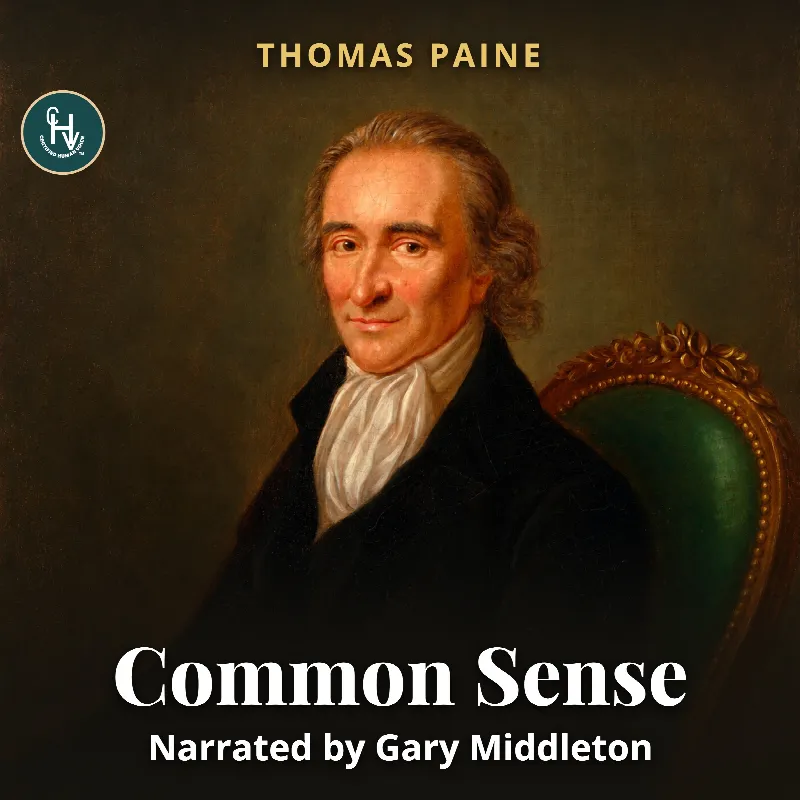
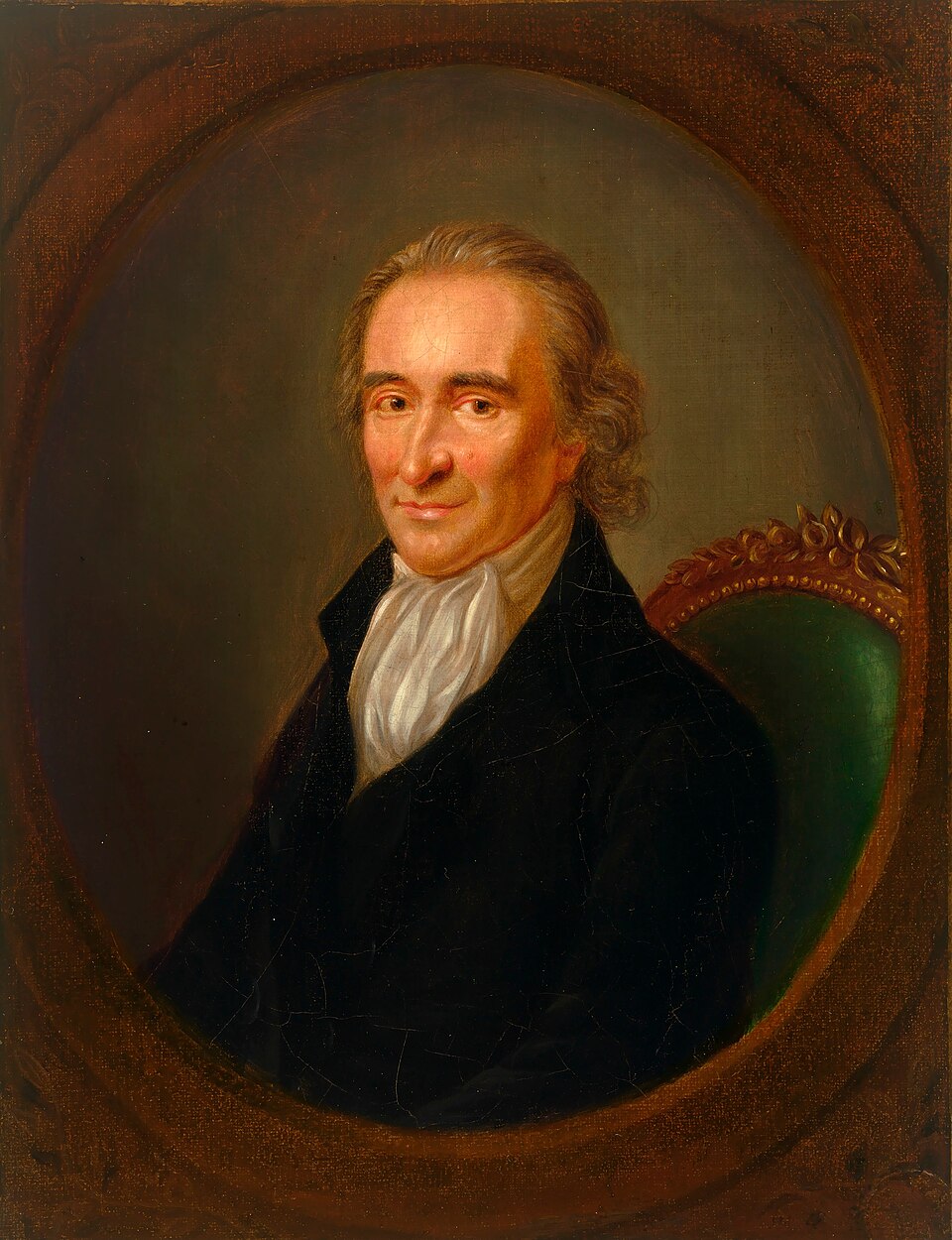
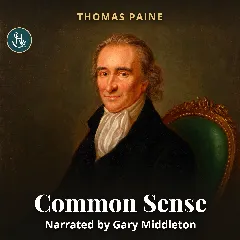
After Laurent Dabos, portrait of Thomas Paine (about 1791)
Questions
What is Common Sense about?
Thomas Paine's 1776 pamphlet argues in plain, fiery language that the American colonies should stop seeking peace with Britain and declare their independence.
Who narrates the Common Sense audiobook?
This edition of Common Sense by Thomas Paine is narrated by Gary Middleton.
How long is the Common Sense audiobook?
It runs 2 hr 39 min, unabridged, so you hear the complete text.
Is this audiobook narrated by a real person?
Yes. Every Academy Voices audiobook is Certified Human Voice: performed start to finish by a real narrator.
Where can I listen to Common Sense?
Right here: buy it on Academy Voices and listen in your browser or our app. Hear a free sample on this page first.