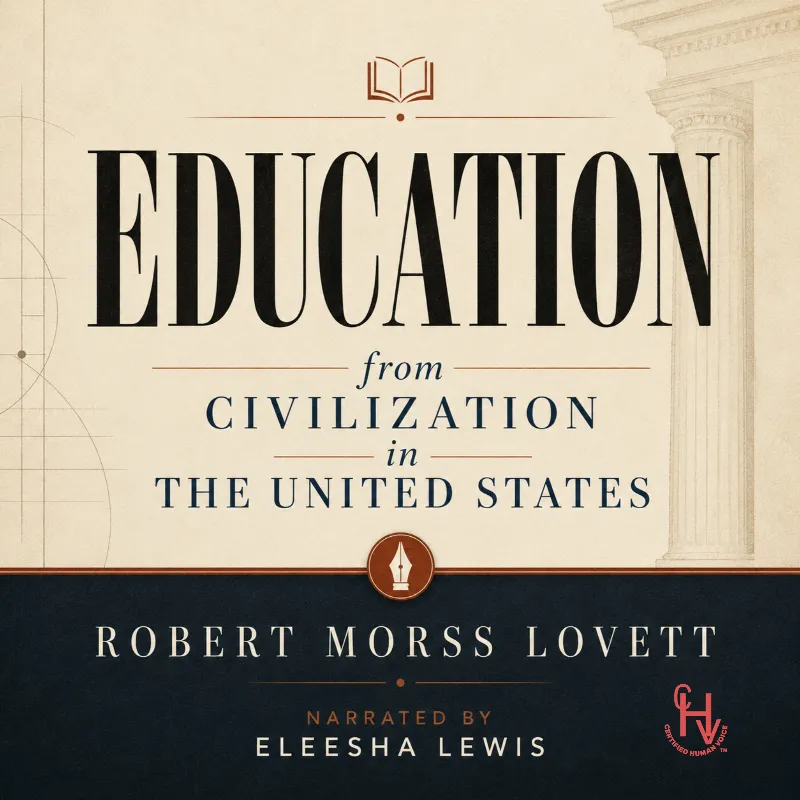
Hear it read by Eleesha Lewis: the audiobook is right here
Story guide on this page: summary, characters, discussion questions
Yours to keep: a DRM-free EPUB for any device. Read it here, or on Kindle (with Send to Kindle), Apple Books, Kobo or Google Play Books.
Want both? Buy the audiobook and add the ebook for $0.99.
Free audiobook
Listen to the whole story free
Enter your email and we'll send you a link to the full audiobook of Education (from Civilization in the United States). No account needed.
We'll also ask if you'd like new audiobooks by email. Privacy Policy
✓ DRM-free, yours to keep. Download the files after you buy and play them anywhere.
Yours to keepBuy once, it stays in your library
Listen anywhereIn our app on your phone or computer
Bought by mistake, or something wrong with the file? Email apica@academyvoices.com within 14 days for a full refund.
Bought by mistake or something wrong with the audio? Email apica@academyvoices.com within 14 days for a full refund.
About this audiobookAbout this book
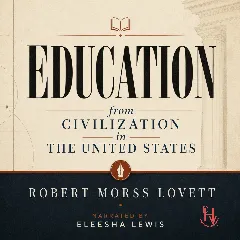
Henry Adams spent his life trying to understand education. Robert Morss Lovett starts there. He notes that in America education is a magic word: when trouble breaks out, whether strikes, lynchings or immigration, people say education is the cure. He asks what it really is, and what it can do.
This essay comes from Civilization in the United States, a 1922 collection edited by Harold Stearns. Read by Eleesha Lewis in forty-one minutes.
Story guide
Education (from Civilization in the United States) summary
Spoiler alert: this summary tells the whole story.
Lovett opens with Henry Adams and with a 1904 article by Professor Barrett Wendell called "The Great American Superstition." Wendell said Americans believe education will cure every social problem, and that schools and libraries have become the new cathedrals. Lovett takes up this comparison and carries it through the whole essay.
The old classical education, he says, worked in its day like a religion. The elective system, which he compares to the Protestant Reformation with Harvard's President Eliot as its Luther, gave students free choice. Specialists in science, medicine and business now get excellent training. But the general student chooses the easiest path, avoids hard subjects and foreign languages, and reads summaries about books instead of the books themselves. He becomes, in Lovett's words, "a specialist in the obvious." High schools and grade schools fare no better.
Lovett's sharpest charge is that education, like the medieval Church, has allied itself with worldly power. During and after World War I, he says, schools suppressed free thought more fiercely than anyone. He describes teachers put on trial for refusing to discuss the Soviet government or for wanting an early peace, a history textbook censored to please the public, and the "Americanization" campaign. He calls education "the propaganda department of the State."
Yet he sees signs of change: educated people grow skeptical, workers start their own labor colleges, and underpaid teachers can hardly promise success to others. He calls for two reforms. Teachers should control their own schools, and education should give up its claim to save society and simply tell people the truth.
The essay is a fierce, witty record of American debates about schooling and free speech after World War I, and many of its questions about what education is for are still argued today.
Famous lines
He is, in short, a specialist in the obvious.
Lovett, on the general student
Better that our fathers had died, their intellectual thirst unsatisfied, than that they had left this legacy of mental soft drinks for their children.
Lovett, on shortcut culture courses
Education is the propaganda department of the State, and the existing social system.
Robert Morss Lovett
Main characters
RM
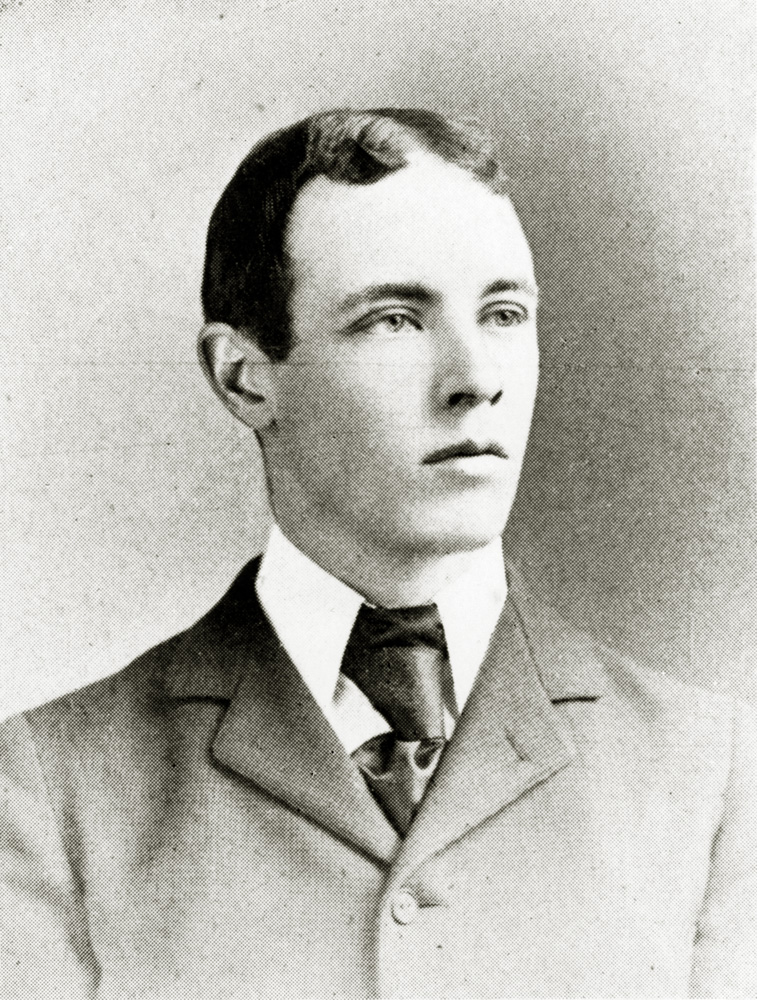
Robert Morss LovettThe author, a University of Chicago English professor and outspoken liberal.
BW
Barrett WendellA Harvard professor whose 1904 article compared education to medieval superstition.
HA
Henry AdamsThe historian whose book about his own education opens the essay.
PE
President EliotHarvard's president, whom Lovett calls the Luther of the elective system.
PH
President HopkinsThe Dartmouth president whose warning about wartime propaganda Lovett quotes.
JT
Dr. John TildsleyA New York school official shown in a trial transcript accusing a teacher of disloyalty.
Did you know?
Henry Adams's book The Education of Henry Adams, which opens the essay, won the Pulitzer Prize in 1919.
Lovett later worked in the government of the U.S. Virgin Islands, and Congress's attempt to cut off his salary led to the Supreme Court case United States v. Lovett (1946).
Lovett taught English at the University of Chicago for many years.
Questions to talk about
Lovett compares schools to the medieval Church throughout. Where does the comparison work best, and where does it break down?
What does he mean by calling the general student "a specialist in the obvious"?
Is reading summaries and criticism about a book really worse than reading the book? Why might it be?
Lovett says schools exist to produce belief rather than to stimulate thought. Do you agree? Give examples.
Should teachers, rather than politicians or boards, control schools? What are the risks either way?
New listeners
Get 25% off your first audiobook
Join our list and we'll email you 25% off, plus new releases from our store. Every one is read by a real person. No account needed.
Details
Length
41 min
Narration
Solo narrator
Format
Unabridged audiobook
Publisher
Academy Voices
Language
English
ISBN
9798182623841
Questions
What is Education (from Civilization in the United States) about?
Robert Morss Lovett argues that Americans treat education the way medieval people treated the Church, with blind faith, and that schools have become a propaganda arm of the state and big business.
Who are the main characters in Education (from Civilization in the United States)?
Robert Morss Lovett, the author, a University of Chicago English professor and outspoken liberal; Barrett Wendell, a Harvard professor whose 1904 article compared education to medieval superstition; Henry Adams, the historian whose book about his own education opens the essay; President Eliot, harvard's president, whom Lovett calls the Luther of the elective system; President Hopkins, the Dartmouth president whose warning about wartime propaganda Lovett quotes; Dr. John Tildsley, a New York school official shown in a trial transcript accusing a teacher of disloyalty.
Who narrates the Education (from Civilization in the United States) audiobook?
This edition of Education (from Civilization in the United States) by Robert Morss Lovett is narrated by Eleesha Lewis.
How long is the Education (from Civilization in the United States) audiobook?
It runs 41 min, unabridged, so you hear the complete text.
Is this audiobook narrated by a real person?
Yes. Every Academy Voices audiobook is Certified Human Voice: performed start to finish by a real narrator.
Where can I listen to Education (from Civilization in the United States)?
Right here: buy it on Academy Voices and listen in your browser or our app. Hear a free sample on this page first.