Hear it read by Gary Middleton: the audiobook is right here
Story guide on this page: summary, characters, discussion questions
Yours to keep: a DRM-free EPUB for any device. Read it here, or on Kindle (with Send to Kindle), Apple Books, Kobo or Google Play Books.
Want both? Buy the audiobook and add the ebook for $0.99.
✓ DRM-free, yours to keep. Download the files after you buy and play them anywhere.
Yours to keepBuy once, it stays in your library
Listen anywhereIn our app on your phone or computer
Bought by mistake, or something wrong with the file? Email apica@academyvoices.com within 14 days for a full refund.
Bought by mistake or something wrong with the audio? Email apica@academyvoices.com within 14 days for a full refund.
About this audiobookAbout this book
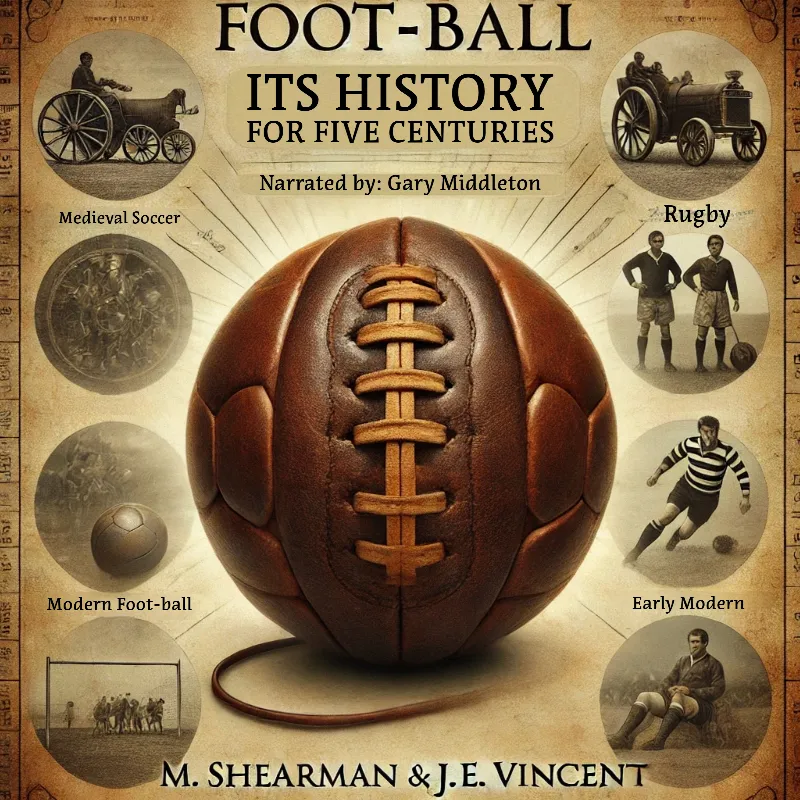
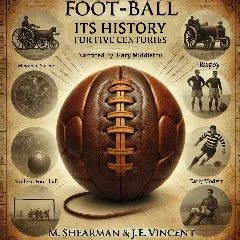
Where did football come from? Montague Shearman and James E. Vincent trace the game back through five hundred years, starting with the ball the Romans called the follis and moving through its early English history to the game of their own day.
The book was first published in 1885 and is full of old rules, famous schools and local customs. Read by Gary Middleton. Three hours and thirty-eight minutes.
For football fans, sports historians and anyone who likes a deep look at the past.
Story guide
Foot-ball: It's History for Five Centuries summary
Spoiler alert: this summary tells the whole story.
The authors set out not to teach football but to gather its scattered history, and they argue that the modern games owe almost everything to England's public schools. They begin with legends: that the game grew from kicking a stone along parish boundaries, or from warriors kicking the heads of fallen enemies. They politely set these aside and suggest that the first football was probably the Roman follis, an inflated bladder, struck by hand until some player kicked it in frustration.
The first real mention of the game comes from London on Shrove Tuesday. Kings tried again and again to stamp it out. Edward III banned it in 1349 because men were neglecting archery, and Richard II, Henry IV, Henry VIII, James III of Scotland and Queen Elizabeth's London all followed with bans that never worked. The old game had almost no rules: two goals, sometimes a mile apart or across a whole town, and any way at all of getting the ball there. Writers such as Sir Thomas Elyot and the Puritan Philip Stubbes condemned it as brutal and sinful, and the authors quote vivid accounts of bloody heads and broken bones, including Cornish hurling.
After the Puritan era, the book says, football slowly declined, though it never died. Pepys saw footballs in the frozen London streets in 1665, King Charles II watched a match in 1681, and towns such as Derby, Kingston and Corfe Castle kept their Shrove Tuesday games. The game survived above all in the great public schools, and the authors argue that each school's playground shaped its rules. Rugby School, with its wide open field, kept the old running and tackling game described in Tom Brown's Schooldays, while cramped grounds at Westminster, Charterhouse, Eton and Winchester led to kicking games that pointed toward the Association rules.
The last section traces the modern revival: new clubs like Sheffield and Blackheath in the 1850s, the meetings of 1863 that founded the Football Association and banned running with the ball, and the founding of the Rugby Union in January 1871. The authors close by hoping players of each game will always admire the other's skill "with admiration, and not with envy."
Learned, witty and full of old quotations, this short book is one of the earliest serious histories of football and a treat for anyone curious about how soccer and rugby began.
Famous lines
At the present day an American novelist, whose subtle analysis of character is charming English readers, has pronounced his opinion that an Englishman is only to be understood and appreciated when he is seen out of doors in a flannel suit; while a French critic goes further, and assigns a narrower sphere to British ability, by making the observation that an Englishman is only perfectly happy when he has a ball to play with.
The authors, opening Chapter I
In fact, the original form of football,—for it is the simplest,—is of such a nature that it can hardly be played except in a wide open space.
The authors, on the public schools
We venture to express a hope that the footballers of either game will ever continue to look upon skill in the other and rival game with admiration, and not with envy.
The closing line
Main characters
MS
Montague Shearman and James E. VincentThe authors, who gather the game's scattered history and argue for the public schools' role.
EI
Edward IIIThe king who banned football in 1349 to make men practice archery.
ST
Sir Thomas ElyotA Tudor writer who called football nothing but "beastlie furie and exstreme violence."
PS
Philip StubbesA Puritan writer who attacked football, especially when played on Sunday.
SP
Samuel PepysThe diarist who saw the London streets full of footballs during the great frost of 1665.
JS
Joseph StruttAn earlier historian of English sports whom the authors often quote and argue with.
Did you know?
Montague Shearman was a champion sprinter and one of the founders of the Amateur Athletic Association in 1880, and he later became a High Court judge.
The Football Association was founded in 1863 and the Rugby Football Union in 1871, the two events this book ends with.
The book calls the Association game "the dribbling game" and rugby "the running and tackling game," names from before the word "soccer" caught on.
Questions to talk about
Why do you think so many kings tried to ban football, and why did their bans keep failing?
The authors argue that the size and shape of each school's playground decided its rules. Is that convincing? Can you think of a modern example?
How was medieval football different from the soccer and rugby we know today?
Why did gentlemen once look down on football as a game for apprentices and laborers? How did that change?
The authors hope fans of each game will admire, not envy, the other. Does that hope match how sports fans behave today?
Chapters
Foot-ball: It's History for Five Centuries chapters
ChapterStarts at
Preface0:15
Chapter 11:49
Chapter 211:42
Chapter 352:25
Chapter 41:13:45
Conclusion1:43:13
New listeners
Get 25% off your first audiobook
Join our list and we'll email you 25% off, plus new releases from our store. Every one is read by a real person. No account needed.
Details
Length
3 hr 38 min
Narration
Solo narrator
Format
Unabridged audiobook
Publisher
Academy Voices
Language
English
ISBN
9798875189593
Questions
What is Foot-ball: It's History for Five Centuries about?
A lively Victorian history of English football, from rough medieval street games and royal bans, through the public schools that kept the game alive, to the founding of the Football Association and the Rugby Union.
Who are the main characters in Foot-ball: It's History for Five Centuries?
Montague Shearman and James E. Vincent, the authors, who gather the game's scattered history and argue for the public schools' role; Edward III, the king who banned football in 1349 to make men practice archery; Sir Thomas Elyot, a Tudor writer who called football nothing but "beastlie furie and exstreme violence."; Philip Stubbes, a Puritan writer who attacked football, especially when played on Sunday; Samuel Pepys, the diarist who saw the London streets full of footballs during the great frost of 1665; Joseph Strutt, an earlier historian of English sports whom the authors often quote and argue with.
Who narrates the Foot-ball: It's History for Five Centuries audiobook?
This edition of Foot-ball: It's History for Five Centuries by Montague Shearman and James E. Vincent is narrated by Gary Middleton.
How long is the Foot-ball: It's History for Five Centuries audiobook?
It runs 3 hr 38 min, unabridged, so you hear the complete text.
Is this audiobook narrated by a real person?
Yes. Every Academy Voices audiobook is Certified Human Voice: performed start to finish by a real narrator.
Where can I listen to Foot-ball: It's History for Five Centuries?
Right here: buy it on Academy Voices and listen in your browser or our app. Hear a free sample on this page first.