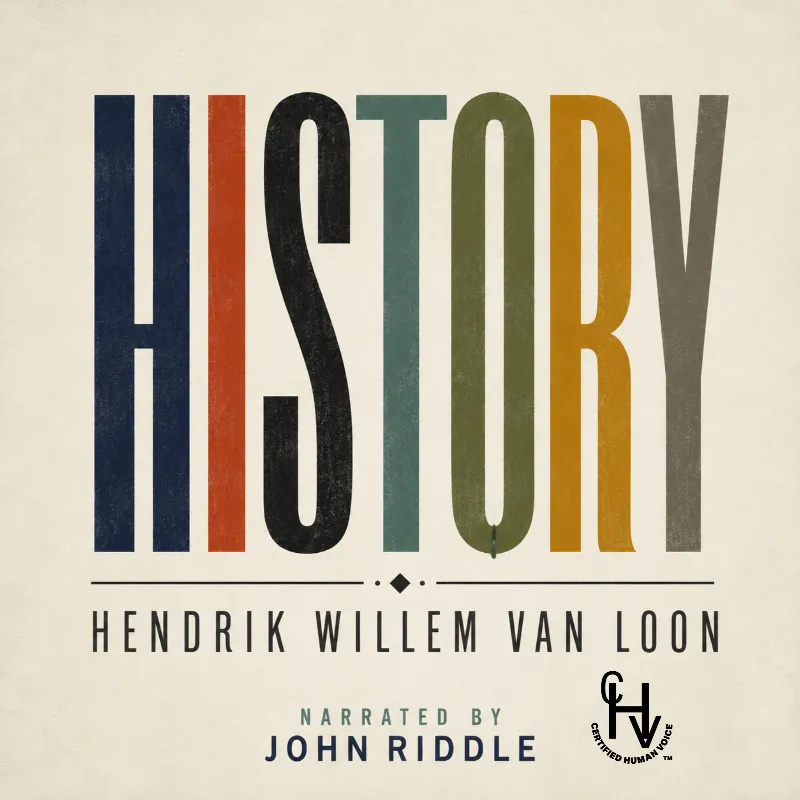
Hendrik Willem van Loon opens with the stuffy front parlors of Holland, kept shut and full of the past, and uses them to ask what we do with history. He sets two sayings above it.
Hear it read by JOHN RIDDLE: the audiobook is right here
Story guide on this page: summary, characters, discussion questions
Yours to keep: a DRM-free EPUB for any device. Read it here, or on Kindle (with Send to Kindle), Apple Books, Kobo or Google Play Books.
Want both? Buy the audiobook and add the ebook for $0.99.
Free audiobook
Listen to the whole story free
Enter your email and we'll send you a link to the full audiobook of History. No account needed.
We'll also ask if you'd like new audiobooks by email. Privacy Policy
✓ DRM-free, yours to keep. Download the files after you buy and play them anywhere.
Yours to keepBuy once, it stays in your library
Listen anywhereIn our app on your phone or computer
Bought by mistake, or something wrong with the file? Email apica@academyvoices.com within 14 days for a full refund.
Bought by mistake or something wrong with the audio? Email apica@academyvoices.com within 14 days for a full refund.
About this audiobookAbout this book
Hendrik Willem van Loon opens with the stuffy front parlors of Holland, kept shut and full of the past, and uses them to ask what we do with history. He sets two sayings above it. Cicero: not to know what happened before you were born is to remain a child. Henry Ford: history is bunk.
This essay comes from Civilization in the United States, a 1922 collection edited by Harold Stearns. Read by JOHN RIDDLE in thirty-six minutes.
Story guide
History summary
Spoiler alert: this summary tells the whole story.
Van Loon opens with the Dutch "front parlour," a grand room kept locked all year and opened only for stiff family occasions, where old portraits gaze down at grandchildren who do not know them. American history, he says, lives in the same kind of front parlour: brought out for big patriotic occasions and otherwise forgotten. He quotes Henry Ford's famous remark that "history is bunk" and says most Americans agree, remembering only dull facts about useless kings from their school days.
He traces how this happened. Early settlers brought their history with them, and the colonies shared Britain's past. But once the frontier opened, immigrants threw Europe's history of kings and wars overboard, and the New England schoolbooks that followed the pioneers west were not fair witnesses, since they both hated and loved England. Later, professors trained in Germany brought home a dry, "scientific" style that filled the classrooms but emptied them of interest.
Then came the Great War, and he says the historians failed the public just when they were most needed. In Germany, England and elsewhere, and in America too, historians became propagandists for their own side, and textbooks were rewritten to suit the moment. Van Loon admits historians are human, but insists they helped create the state of mind that makes modern war possible.
Looking ahead, he says the children now in second grade will have to rebuild a troubled world, and that a real knowledge of the past will be as useful to them as the Ten Commandments. He quotes the ancient Greek historian Thucydides, who hoped his history would help readers understand the future, and he ends by saying there is no quick cure for neglect of history and we must be as patient as Nature.
Sharp, funny and still timely, the essay is a lively argument for why history should be told as an art and a guide, never as dull facts or propaganda.
Famous lines
History is bunk.
Henry Ford, quoted at the opening
But history, like cooking or fiddling, is primarily an art.
Van Loon
A handbook of chemistry or higher mathematics has a right to be dull. A history, never.
Van Loon
For the coming of that day we must be as patient as Nature.
The closing line
Main characters
HW
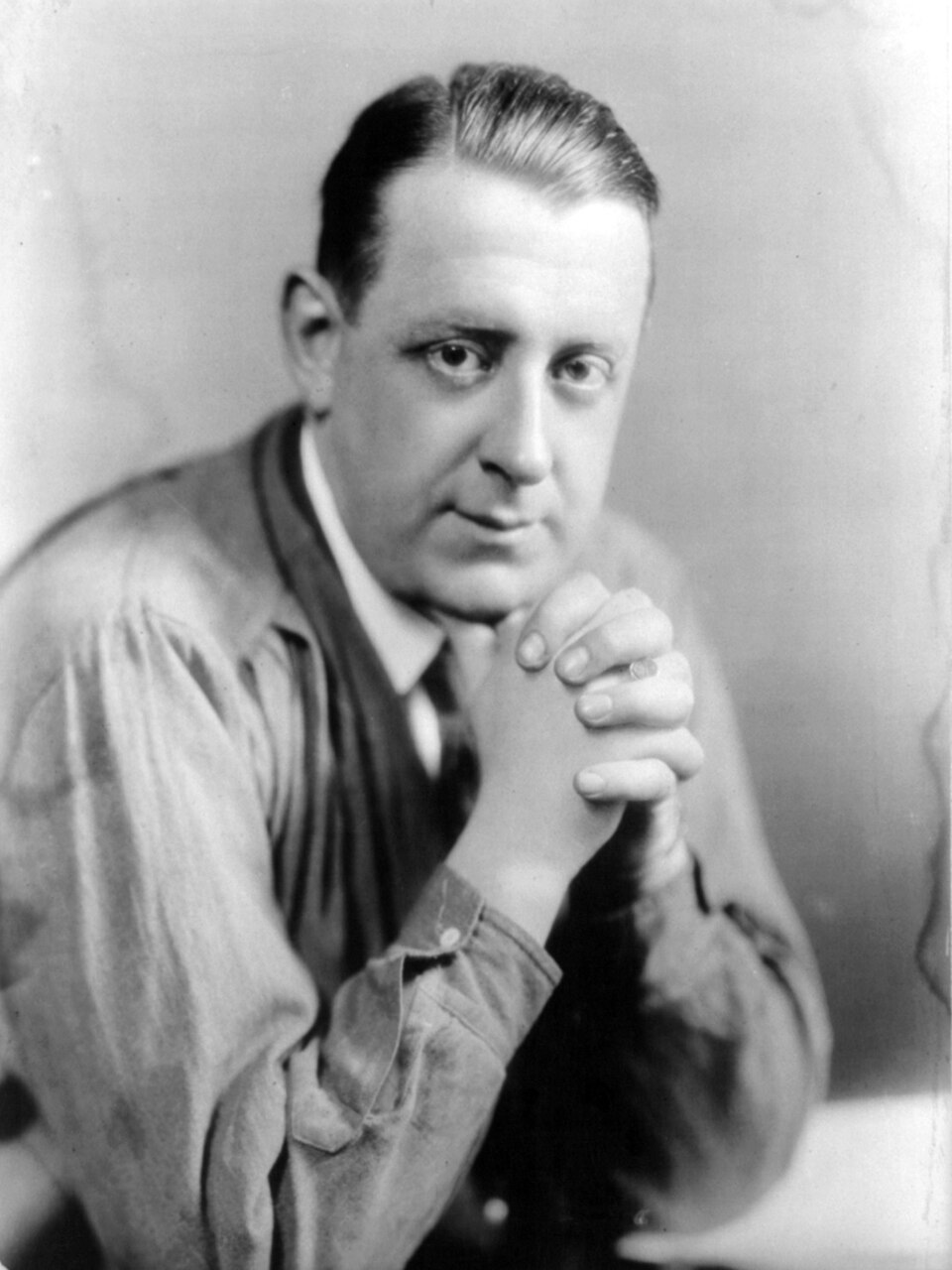
Hendrik Willem van LoonThe author and narrator, a Dutch-born American historian with a playful, opinionated voice.
HF
Henry FordThe carmaker whose remark that "history is bunk" van Loon uses as his starting point.
C
ClioThe Greek Muse of history, whom van Loon pictures struggling to make a living in America.
T
ThucydidesThe ancient Greek historian whose words about learning from the past close the argument.
Did you know?
Van Loon was born in Rotterdam in the Netherlands and later became an American citizen.
His book The Story of Mankind won the very first Newbery Medal for children's literature, in 1922.
This essay was one of thirty in a collection edited by Harold Stearns, in which writers took a critical look at American life.
Questions to talk about
What is the "front parlour" comparison, and how well does it describe the way we treat history today?
Why does van Loon think frontier settlers and immigrants left their history behind?
Van Loon says history should be an art, not a dull science. What are the risks and rewards of that view?
Do you agree that historians helped create the state of mind that made the Great War possible? Why or why not?
If you could change one thing about how history is taught at your school, what would it be, after reading this essay?
New listeners
Get 25% off your first audiobook
Join our list and we'll email you 25% off, plus new releases from our store. Every one is read by a real person. No account needed.
Details
Length
36 min
Narration
Solo narrator
Format
Unabridged audiobook
Publisher
Academy Voices
Language
English
ISBN
9798182618694
Questions
What is History about?
In this witty essay, Hendrik Willem van Loon argues that Americans have come to hate history because it was taught badly and bent to serve war, and that the country badly needs it back.
Who are the main characters in History?
Hendrik Willem van Loon, the author and narrator, a Dutch-born American historian with a playful, opinionated voice; Henry Ford, the carmaker whose remark that "history is bunk" van Loon uses as his starting point; Clio, the Greek Muse of history, whom van Loon pictures struggling to make a living in America; Thucydides, the ancient Greek historian whose words about learning from the past close the argument.
Who narrates the History audiobook?
This edition of History by Hendrik Willem van Loon is narrated by JOHN RIDDLE.
How long is the History audiobook?
It runs 36 min, unabridged, so you hear the complete text.
Is this audiobook narrated by a real person?
Yes. Every Academy Voices audiobook is Certified Human Voice: performed start to finish by a real narrator.
Where can I listen to History?
Right here: buy it on Academy Voices and listen in your browser or our app. Hear a free sample on this page first.