Written by
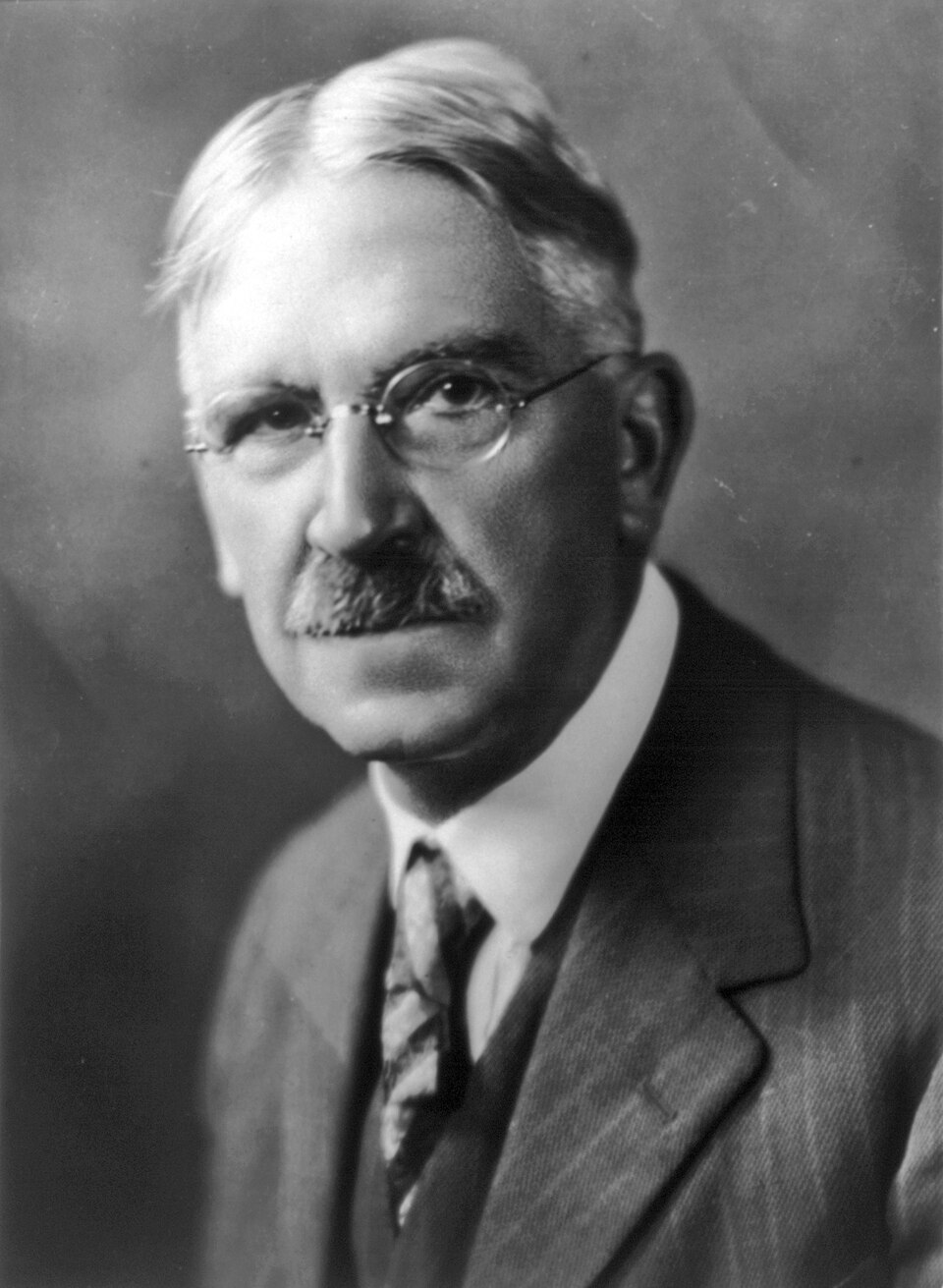
John Dewey1 audiobook with Academy Voices
A belief in democracy runs through his work, and he argued that schools and public life should help people learn by doing and by testing ideas.More about John Dewey →
C
Read by a real person
Craig Michael Beck5 audiobooks with Academy Voices
Sociology
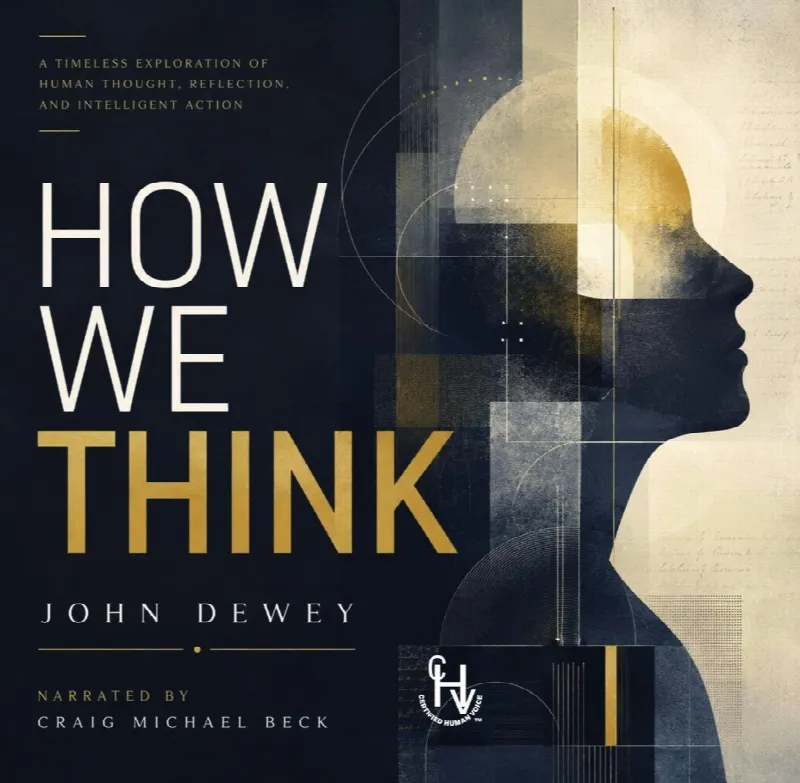
How We Think Ebook
by John Dewey · read by
Craig Michael Beck · 7 hr 1 min
How do we think well? John Dewey argues that good thinking is a skill that can be taught, and he calls it reflective thinking: noticing a problem, weighing the evidence and testing ideas before accepting them.
Hear it read by Craig Michael Beck: the audiobook is right here
Story guide on this page: summary, characters, discussion questions
Yours to keep: a DRM-free EPUB for any device. Read it here, or on Kindle (with Send to Kindle), Apple Books, Kobo or Google Play Books.
Want both? Buy the audiobook and add the ebook for $0.99.
✓ DRM-free, yours to keep. Download the files after you buy and play them anywhere.
Yours to keepBuy once, it stays in your library
Listen anywhereIn our app on your phone or computer
Bought by mistake, or something wrong with the file? Email apica@academyvoices.com within 14 days for a full refund.
Bought by mistake or something wrong with the audio? Email apica@academyvoices.com within 14 days for a full refund.
About this audiobookAbout this book
How do we think well? John Dewey argues that good thinking is a skill that can be taught, and he calls it reflective thinking: noticing a problem, weighing the evidence and testing ideas before accepting them. He looks at where thinking goes wrong, and what schools can do about it.
First published in 1910, it is still a foundation of modern education theory. Read by Craig Michael Beck. A little over seven hours.
For teachers, students and anyone who wants to think more clearly.
Story guide
How We Think summary
Spoiler alert: this summary tells the whole story.
Dewey starts by asking what thinking actually is. We use the word for idle daydreams, for stories we imagine and for beliefs we accept without question. But the kind of thinking that matters most is reflective thought: the active, persistent and careful testing of a belief against the evidence for it. Such thinking begins, he says, in a "forked-road situation," when we face a puzzle or a choice and have to stop and figure out which way to go.
He argues that this kind of thinking must be trained, because people easily fall into bad habits such as jumping to conclusions, trusting authority blindly or believing what they wish were true. Happily, children come equipped with natural resources for good thinking: curiosity, suggestion and orderliness. The danger is that schools often smother these gifts with rote drills and passive listening.
In the middle of the book, Dewey analyzes a complete act of thought, using everyday examples. He finds five steps: a felt difficulty; locating and defining the problem; suggesting a possible solution; reasoning out what the suggestion would mean; and testing it by further observation and experiment until it is accepted or rejected. He then explains induction and deduction, judgment, meaning and the difference between concrete and abstract thinking, and between everyday "empirical" thinking and true scientific thinking.
The last part turns to the classroom. Dewey shows how hands-on activity, good use of language, careful observation and well-run recitations can all train students to think, and he ends by calling for a healthy balance between unconscious and conscious thinking, between play and work, and between the familiar and the new. More than a century later, his ideas still shape how teachers talk about critical thinking, inquiry and learning by doing.
Famous lines
Active, persistent, and careful consideration of any belief or supposed form of knowledge in the light of the grounds that support it, and the further conclusions to which it tends, constitutes reflective thought.
John Dewey
Thinking begins in what may fairly enough be called a forked-road situation, a situation which is ambiguous, which presents a dilemma, which proposes alternatives.
John Dewey
Demand for the solution of a perplexity is the steadying and guiding factor in the entire process of reflection.
John Dewey
The wisest of the Greeks used to say that wonder is the mother of all science.
John Dewey, on curiosity
Main characters
JD
John DeweyThe American philosopher and educator who wrote the book, drawing on his work with real schools and children.
Did you know?
Dewey published a thoroughly revised edition of How We Think in 1933.
Before writing it, Dewey founded the Laboratory School at the University of Chicago in 1896 to test his ideas about education.
Dewey's five steps of reflective thinking became a widely used model for teaching problem solving.
Questions to talk about
What is the difference between ordinary thinking and what Dewey calls reflective thought?
Think of a recent problem you solved. Can you find Dewey's five steps in what you did?
Why does Dewey believe children are natural scientists? Do you agree?
Which school habits does Dewey say harm good thinking? Do any still exist today?
How could a teacher use Dewey's ideas in a lesson you have taken?
Chapters
How We Think chapters
ChapterStarts at
Preface0:18
Chapter 012:25
Chapter 0226:38
Chapter 0354:35
Chapter 041:25:10
Chapter 051:44:39
Chapter 062:07:39
Chapter 072:28:18
Chapter 083:11:32
Chapter 093:40:26
Show all 17 chapters
Chapter 104:17:27
Chapter 114:35:26
Chapter 124:58:03
Chapter 135:21:34
Chapter 145:53:58
Chapter 156:16:36
Chapter 166:40:36
New listeners
Get 25% off your first audiobook
Join our list and we'll email you 25% off, plus new releases from our store. Every one is read by a real person. No account needed.
Details
Length
7 hr 1 min
Narration
Solo narrator
Format
Unabridged audiobook
Publisher
Academy Voices
Language
English
ISBN
9798240153990
Questions
What is How We Think about?
The philosopher and educator John Dewey explains what careful, reflective thinking is, how it works step by step, and how schools can train children to think well instead of just memorize.
Who are the main characters in How We Think?
John Dewey, the American philosopher and educator who wrote the book, drawing on his work with real schools and children.
Who narrates the How We Think audiobook?
This edition of How We Think by John Dewey is narrated by Craig Michael Beck.
How long is the How We Think audiobook?
It runs 7 hr 1 min, unabridged, so you hear the complete text.
Is this audiobook narrated by a real person?
Yes. Every Academy Voices audiobook is Certified Human Voice: performed start to finish by a real narrator.
Where can I listen to How We Think?
Right here: buy it on Academy Voices and listen in your browser or our app. Hear a free sample on this page first.