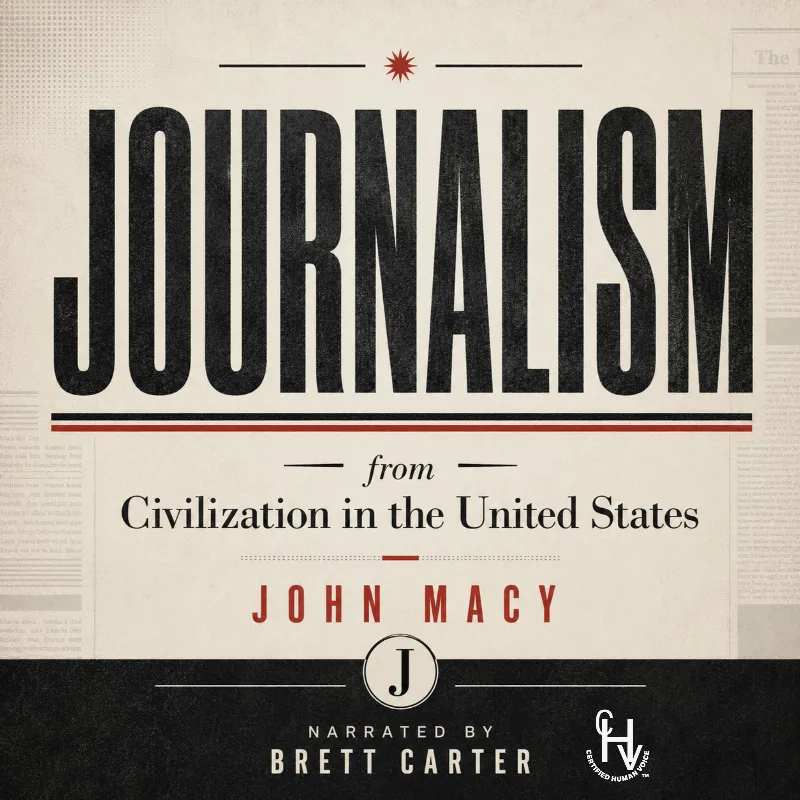
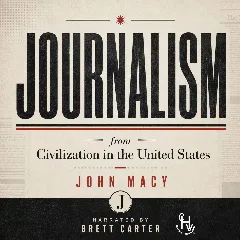
Journalism opens with a simple fact: millions of Americans buy a newspaper every day, and no other institution shapes the national mind as much. John Macy asks what that daily press tells us about the American people.
Hear it read by Brett Carter: the audiobook is right here
Story guide on this page: summary, characters, discussion questions
Yours to keep: a DRM-free EPUB for any device. Read it here, or on Kindle (with Send to Kindle), Apple Books, Kobo or Google Play Books.
Want both? Buy the audiobook and add the ebook for $0.99.
Free audiobook
Listen to the whole story free
Enter your email and we'll send you a link to the full audiobook of Journalism (from Civilization in the United States). No account needed.
We'll also ask if you'd like new audiobooks by email. Privacy Policy
✓ DRM-free, yours to keep. Download the files after you buy and play them anywhere.
Yours to keepBuy once, it stays in your library
Listen anywhereIn our app on your phone or computer
Bought by mistake, or something wrong with the file? Email apica@academyvoices.com within 14 days for a full refund.
Bought by mistake or something wrong with the audio? Email apica@academyvoices.com within 14 days for a full refund.
About this audiobookAbout this book
Journalism opens with a simple fact: millions of Americans buy a newspaper every day, and no other institution shapes the national mind as much. John Macy asks what that daily press tells us about the American people. He treats the newspaper as a rough measure of the American mind.
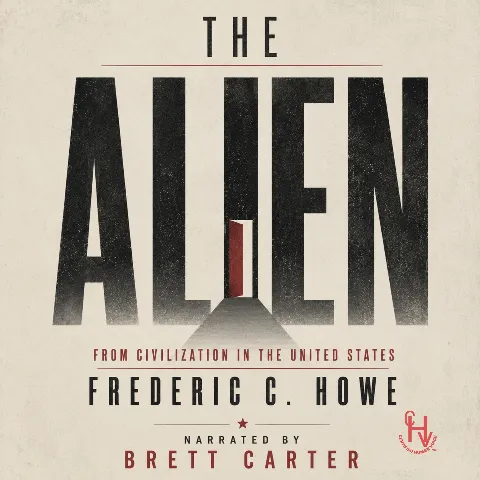
This essay comes from Civilization in the United States, a 1922 collection edited by Harold Stearns in which writers took stock of American life. It is read by Brett Carter in fifty-six minutes.
For readers who like to see how the press was judged a hundred years ago.
Story guide
Journalism (from Civilization in the United States) summary
Spoiler alert: this summary tells the whole story.
John Macy begins with numbers. Americans buy tens of millions of newspapers every day, so no school or church has as much power over the national mind as the press. That makes the newspaper a fair way to study Americans, and the first thing it shows is how alike they are. A traveler cannot tell what city he is in from the paper at the hotel newsstand, because papers everywhere are fed by the same news services and owned by the same kinds of money.
The journalist himself, Macy says, is not to blame. Journalism is no longer a respected profession. Editors and reporters are nameless wage earners, like clerks in a department store, and they write what their employers want or lose their jobs. He tells of one managing editor fired twice for refusing to print lies, with no effect at all on either paper. He disagrees with Walter Lippmann, who says reporters need only courage, and he finds Upton Sinclair's The Brass Check right in spirit but a badly organized jumble of evidence.
Part of the blame falls on readers. Americans grumble that you cannot believe everything you read, but they never demand better papers, and when one paper is a little more honest, like the New York Globe, few notice. The real power, though, lies with the advertisers. Three cents a copy cannot pay for a newspaper, so the news is only bait to bring eyes to the ads. Stories that hurt advertisers vanish, as when Philadelphia papers buried a profiteering charge against a department store, and strike news is slanted against workers, as in the Pittsburgh steel strike.
Worst of all is world news, where government and big business work together. Macy's main example is the reporting on Soviet Russia, where, as one study found, the New York Times had Lenin dead once, nearly killed three times, and fleeing again and again. He sees a little light in The Federated Press, a news service run by working journalists, and in small honest weeklies like the Nation, the New Republic and the Freeman. But their tiny readership proves his point, and he closes with his verdict: the American press is an accurate gauge of the American mind.
Written a century ago, the essay still speaks to arguments about media bias, advertising, misinformation and who controls the news. It is sharp, angry and often funny.
Famous lines
No other institution approaches the newspaper in universality, persistence, continuity of influence.
John Macy
Paradoxically, the journalist is the one man who can do little or nothing to improve journalism.
John Macy
A reporter is never sent out by his chief to get information, but always, in the lingo of the office, to get a “story.”
John Macy
The American press is an accurate gauge of the American mind.
The closing line
Main characters
JM
John MacyThe author, a literary critic and former newspaper man who writes from inside knowledge of the business.
WL
Walter LippmannThe journalist whose book Liberty and the News Macy quotes and argues with.
US
Upton SinclairThe novelist whose exposé of the press, The Brass Check, Macy admires but finds poorly put together.
HG
Horace GreeleyThe famous nineteenth-century editor Macy holds up as the kind of independent man newspapers no longer allow.
Did you know?
Civilization in the United States was a famous 1922 collection of essays on American life, edited by the critic Harold Stearns.
John Macy was married to Anne Sullivan, Helen Keller's teacher, and he helped edit Helen Keller's autobiography, The Story of My Life.
Upton Sinclair, whose book The Brass Check Macy discusses, is best known for The Jungle, his novel about the Chicago meatpacking industry.
Questions to talk about
Macy says you could not tell what city you were in from the local paper. Is news today more varied, or just as uniform?
Why does Macy think a brave reporter who refuses to lie changes nothing? Do you agree?
He argues the news is only "bait" to bring readers to the ads. How does that compare with online news and social media today?
How much of the blame for bad newspapers does Macy put on readers? Is that fair?
What does the story of Lenin "dying" in the newspapers teach about reporting on a country people fear?
New listeners
Get 25% off your first audiobook
Join our list and we'll email you 25% off, plus new releases from our store. Every one is read by a real person. No account needed.
Details
Length
52 min
Narration
Solo narrator
Format
Unabridged audiobook
Publisher
Academy Voices
Language
English
ISBN
9798240194603
Questions
What is Journalism (from Civilization in the United States) about?
The critic John Macy looks at American newspapers in 1922 and argues that they are uniform, controlled by advertisers and business, careless with the truth, and an accurate gauge of the American mind.
Who are the main characters in Journalism (from Civilization in the United States)?
John Macy, the author, a literary critic and former newspaper man who writes from inside knowledge of the business; Walter Lippmann, the journalist whose book Liberty and the News Macy quotes and argues with; Upton Sinclair, the novelist whose exposé of the press, The Brass Check, Macy admires but finds poorly put together; Horace Greeley, the famous nineteenth-century editor Macy holds up as the kind of independent man newspapers no longer allow.
Who narrates the Journalism (from Civilization in the United States) audiobook?
This edition of Journalism (from Civilization in the United States) by John Macy is narrated by Brett Carter.
How long is the Journalism (from Civilization in the United States) audiobook?
It runs 52 min, unabridged, so you hear the complete text.
Is this audiobook narrated by a real person?
Yes. Every Academy Voices audiobook is Certified Human Voice: performed start to finish by a real narrator.
Where can I listen to Journalism (from Civilization in the United States)?
Right here: buy it on Academy Voices and listen in your browser or our app. Hear a free sample on this page first.