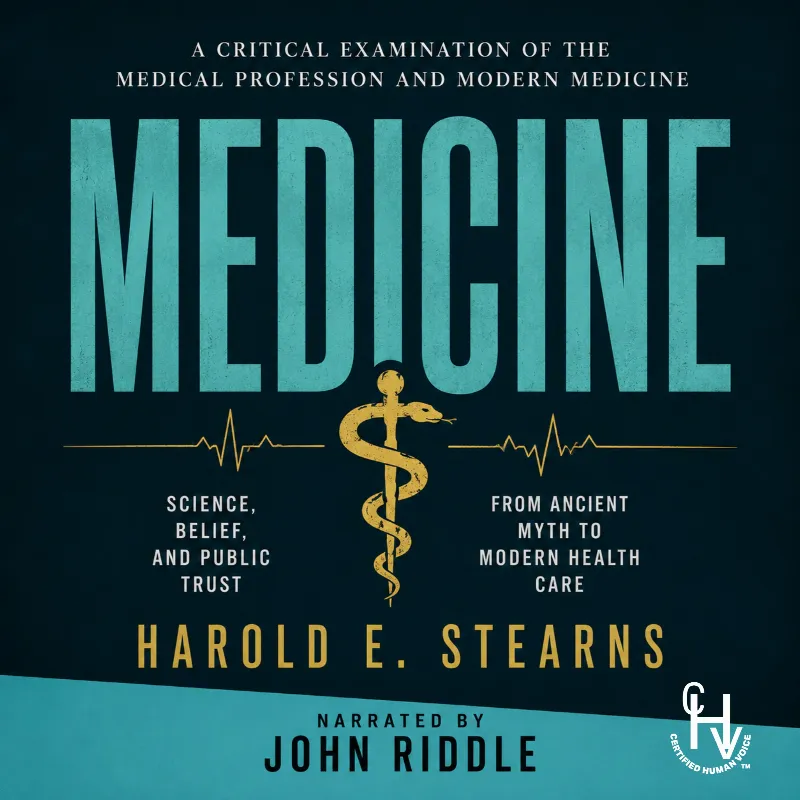
Hear it read by JOHN RIDDLE: the audiobook is right here
Story guide on this page: summary, characters, discussion questions
Yours to keep: a DRM-free EPUB for any device. Read it here, or on Kindle (with Send to Kindle), Apple Books, Kobo or Google Play Books.
Want both? Buy the audiobook and add the ebook for $0.99.
Free audiobook
Listen to the whole story free
Enter your email and we'll send you a link to the full audiobook of Medicine. No account needed.
We'll also ask if you'd like new audiobooks by email. Privacy Policy
✓ DRM-free, yours to keep. Download the files after you buy and play them anywhere.
Yours to keepBuy once, it stays in your library
Listen anywhereIn our app on your phone or computer
Bought by mistake, or something wrong with the file? Email apica@academyvoices.com within 14 days for a full refund.
Bought by mistake or something wrong with the audio? Email apica@academyvoices.com within 14 days for a full refund.
About this audiobookAbout this book
For centuries the doctor has been treated with awe, once because he seemed close to the gods and now because he seems to hold the secrets of science. This essay says the old priest still lives inside the modern physician, and that the mixture produces odd contradictions. In America, it argues, the medical profession has gained great prestige and prosperity.
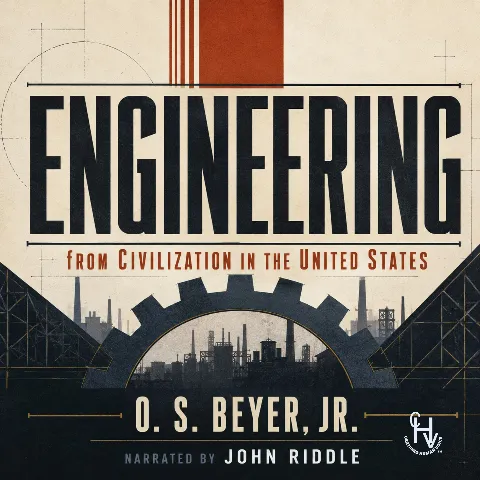
This essay comes from Civilization in the United States, a 1922 collection edited by Harold Stearns. Read by JOHN RIDDLE in forty-three minutes.
Story guide
Medicine summary
Spoiler alert: this summary tells the whole story.
This essay comes from Civilization in the United States, a 1922 book edited by Harold E. Stearns in which thirty writers took stock of American life. The "Medicine" chapter is signed simply "Anonymous." It opens by asking how the Harvard Medical School and the church of Christian Science can thrive side by side in the same city. The writer's answer is that Americans, doctors included, will believe almost anything.
The author argues that the practice of medicine is an art, not a science. Doctors care too much about saving their patients to test treatments properly against untreated control groups, so they cannot really know what works. Their oldest and most useful role, the writer says, is as "professional sympathizers" who comfort families through illnesses that cannot be cured. That kindly old family doctor is now giving way to the specialist and to profitable "group medicine" clinics. As an example of their excesses, the essay mocks the craze for "focal infection," in which patients lost teeth, tonsils and appendixes in the hunt for a hidden cause of their aches.
The writer gives real praise to American disease prevention at its best, such as Walter Reed's team proving that mosquitoes spread yellow fever, which made the Panama Canal possible. But he says public health has since become a moral crusade. He attacks the scientific case made for Prohibition, pointing out that some studies on the effects of alcohol were quoted while others were ignored, and he criticizes campaigns that used fear rather than proven prevention against syphilis.
The essay ends by calling for medicine built on exact physics and chemistry, and it praises laboratory scientists such as Jacques Loeb. Witty, provocative and often unfair, it is a vivid snapshot of the debates about science, money and morals in American medicine a century ago, many of which still sound familiar.
Famous lines
From time immemorial the doctor has been the object of respect and awe by the generality of mankind.
The opening line
Fortunately for us, most diseases are self-limiting.
The author
In fact, we may be said to lead the world—to use an apt Americanism—in the production of surgeons, just as we do in that of automobiles, baby carriages, and antique furniture.
The author
Main characters
AA
The anonymous authorA scientifically trained critic who writes with biting humor about doctors and public health.
JL
Jacques LoebA laboratory scientist the author praises as the greatest figure in American medical research.
WR
Walter Reed and his teamResearchers praised for proving in 1901 that mosquitoes spread yellow fever.
CS
Charles Stockard and Raymond PearlScientists whose conflicting animal studies on alcohol the author compares.
HD
Henry DoolittleAn imaginary patient who loses organ after organ to the focal infection craze.
Did you know?
The essay was published without a name; it was later known to be by Paul de Kruif, a bacteriologist who soon left the Rockefeller Institute and went on to write the bestseller Microbe Hunters (1926).
Other writers in the same book included H. L. Mencken on politics, Lewis Mumford on the city and Ring Lardner on sport.
The yellow fever research the essay praises cost the life of team member Jesse Lazear, who died of yellow fever in 1900.
Questions to talk about
Why do you think the author chose to publish this essay anonymously?
The author says doctors cannot be true scientists because they care too much about their patients. Is that a weakness or a strength?
What is the "focal infection" story meant to show? Does the humor make the argument stronger or weaker?
The essay accuses hygienists of quoting only the studies that support Prohibition. Can you think of modern examples of this kind of selective evidence?
Which of the author's complaints about medicine still apply today, and which seem out of date?
New listeners
Get 25% off your first audiobook
Join our list and we'll email you 25% off, plus new releases from our store. Every one is read by a real person. No account needed.
Details
Length
43 min
Narration
Solo narrator
Format
Unabridged audiobook
Publisher
Academy Voices
Language
English
ISBN
9798182618823
Questions
What is Medicine about?
A sharp, satirical 1922 essay arguing that American medicine is more priesthood, folklore and business than true science, and that its public health crusades had become mixed up with moralizing.
Who are the main characters in Medicine?
The anonymous author, a scientifically trained critic who writes with biting humor about doctors and public health; Jacques Loeb, a laboratory scientist the author praises as the greatest figure in American medical research; Walter Reed and his team, researchers praised for proving in 1901 that mosquitoes spread yellow fever; Charles Stockard and Raymond Pearl, scientists whose conflicting animal studies on alcohol the author compares; Henry Doolittle, an imaginary patient who loses organ after organ to the focal infection craze.
Who narrates the Medicine audiobook?
This edition of Medicine by Harold E. Stearns is narrated by JOHN RIDDLE.
How long is the Medicine audiobook?
It runs 43 min, unabridged, so you hear the complete text.
Is this audiobook narrated by a real person?
Yes. Every Academy Voices audiobook is Certified Human Voice: performed start to finish by a real narrator.
Where can I listen to Medicine?
Right here: buy it on Academy Voices and listen in your browser or our app. Hear a free sample on this page first.