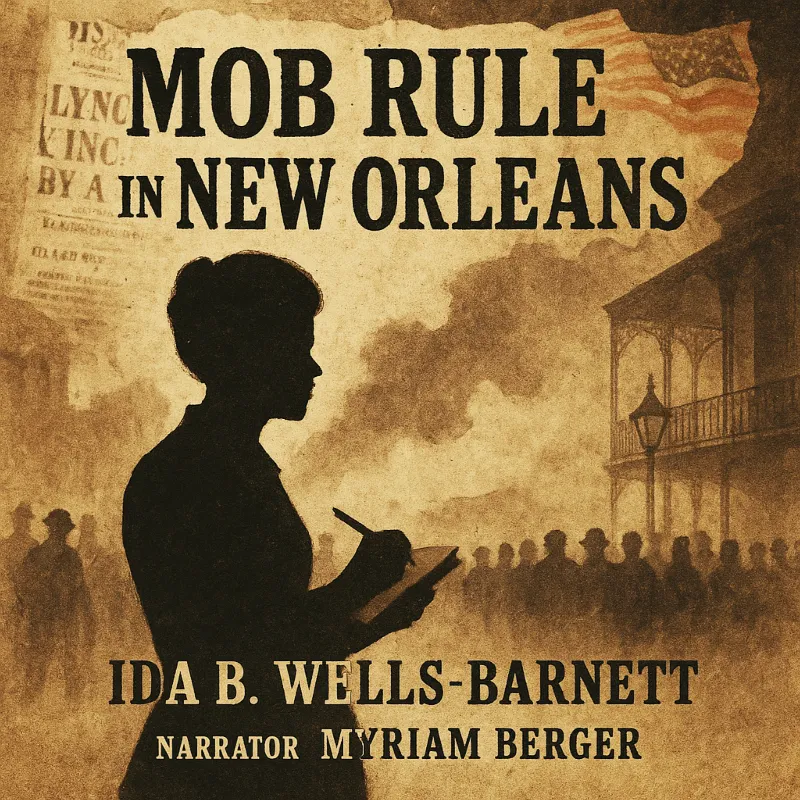
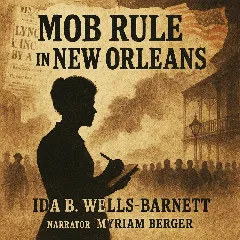
In July 1900, a street confrontation between New Orleans police and a Black man named Robert Charles ended in gunfire and set off days of mob violence against Black residents.
Hear it read by Myriam Berger: the audiobook is right here
Story guide on this page: summary, characters, discussion questions
Yours to keep: a DRM-free EPUB for any device. Read it here, or on Kindle (with Send to Kindle), Apple Books, Kobo or Google Play Books.
Want both? Buy the audiobook and add the ebook for $0.99.
✓ DRM-free, yours to keep. Download the files after you buy and play them anywhere.
Yours to keepBuy once, it stays in your library
Listen anywhereIn our app on your phone or computer
Bought by mistake, or something wrong with the file? Email apica@academyvoices.com within 14 days for a full refund.
Bought by mistake or something wrong with the audio? Email apica@academyvoices.com within 14 days for a full refund.
About this audiobookAbout this book
In July 1900, a street confrontation between New Orleans police and a Black man named Robert Charles ended in gunfire and set off days of mob violence against Black residents. Ida B. Wells-Barnett gives her account of what happened, of Charles's life and of the manhunt that followed.
She also adds lynching statistics from earlier years. Read by Myriam Berger. Two hours and fifteen minutes.
For readers of American history and civil rights.
Story guide
Mob Rule in New Orleans summary
Spoiler alert: this summary tells the whole story.
Ida B. Wells-Barnett opens by explaining why she wrote this pamphlet: to put the plain facts in front of the American public, so that the nation's conscience would have "facts to use as a weapon against injustice." She builds her account largely from the reports of two New Orleans newspapers, the Times-Democrat and the Picayune, letting their own words show what happened.
In late July 1900, three police officers approach two Black men, Robert Charles and nineteen-year-old Leonard Pierce, who are simply sitting on a doorstep on Dryades Street. With no warrant and no crime committed, the officers try to arrest them. Officer Mora attacks Charles with a club and then a gun. Charles fires back, both men are wounded, and Charles escapes. When police come to his room hours later, he shoots and kills two officers and flees again.
While Charles hides, white mobs roam the city for days, beating, shooting and killing Black men and women who have nothing to do with the case. Wells records victim after victim, including a man pulled from a streetcar, Louis Taylor at the French Market, and Baptiste Thilo, a seventy-five-year-old worker. Finally Charles is betrayed and cornered in a house on Saratoga Street. Alone, he holds off a huge crowd, killing and wounding many, until the house is set on fire and he is shot down as he steps out.
Wells then examines how the papers turned Charles into a monster, though his room held schoolbooks and pamphlets about emigrating to Liberia. She closes with a history of burnings and a table of lynchings since 1882, showing that only a small share of victims were even accused of the crime most often used to excuse lynching.
This pamphlet is a landmark of investigative journalism and of the fight against lynching. It is hard reading, and it remains powerful because it names names and counts the dead.
Famous lines
When this conscience wakes and speaks out in thunder tones, as it must, it will need facts to use as a weapon against injustice, barbarism and wrong.
Ida B. Wells-Barnett, in the introduction
It is now, even as it was in the days of slavery, an unpardonable sin for a Negro to resist a white man, no matter how unjust or unprovoked the white man's attack may be.
Ida B. Wells-Barnett
The Negro asks only justice and an impartial consideration of these facts.
Ida B. Wells-Barnett
Main characters
IB
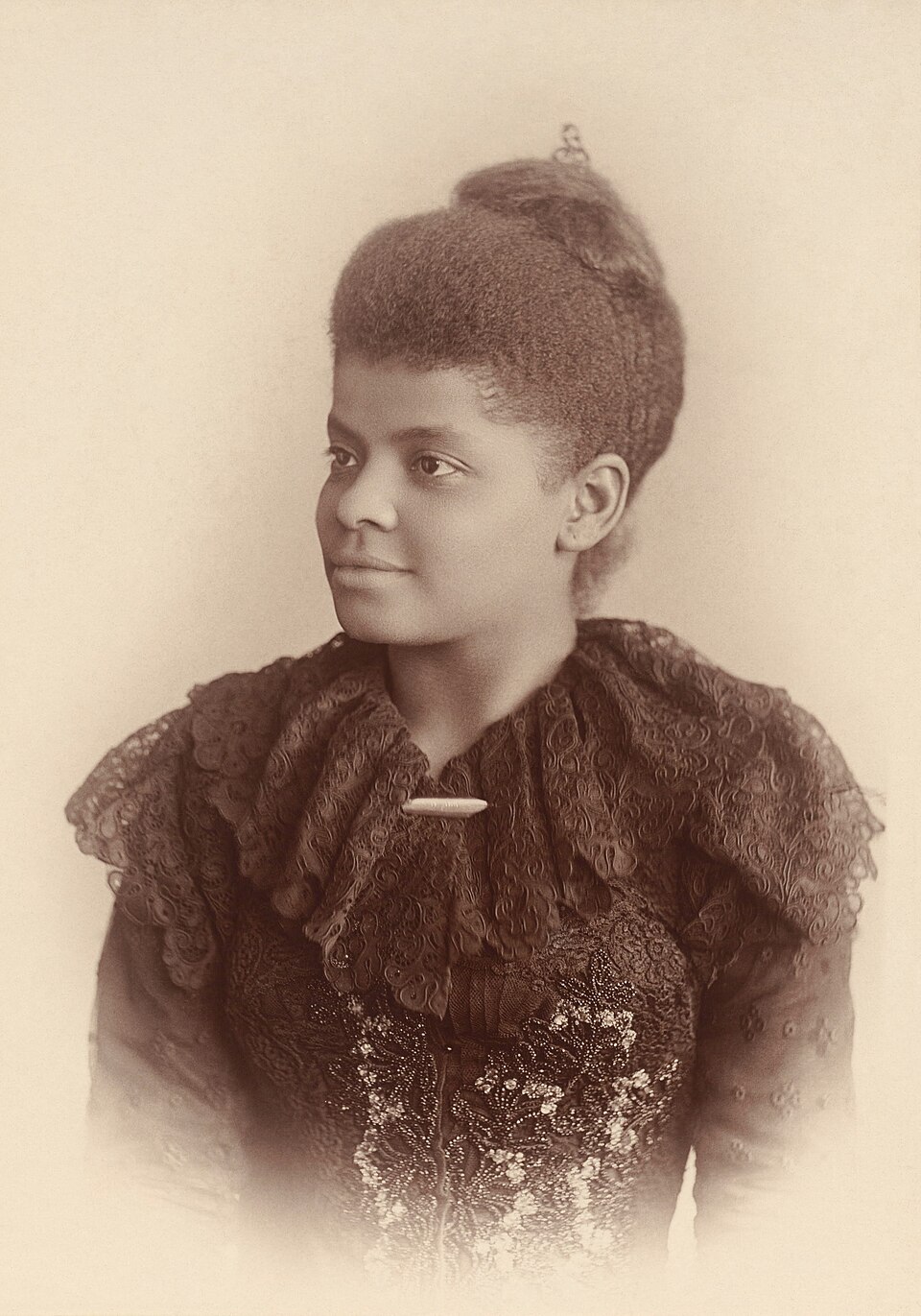
Ida B. Wells-BarnettThe journalist and activist who wrote and published the report.
RC
Robert CharlesA Black laborer who fought back against an unlawful police attack.
LP
Leonard PierceA nineteen-year-old arrested at gunpoint while sitting with Charles.
OA
Officer August T. MoraThe policeman who attacked Charles and was wounded in the exchange.
LT
Louis TaylorA vegetable carrier murdered by the mob at the French Market.
BT
Baptiste ThiloAn elderly French Market worker beaten by a mob.
Did you know?
Wells began her anti-lynching campaign after three of her friends were lynched in Memphis in 1892.
She was one of the founders of the NAACP in 1909.
In 2020 she was awarded a special Pulitzer Prize citation for her reporting on lynching.
Questions to talk about
Why does Wells rely so heavily on the words of white-owned newspapers?
How do the newspapers describe Robert Charles, and how does Wells answer them?
What does the lynching table at the end add to the story of one week in New Orleans?
Wells hoped facts would wake the nation's conscience. Do facts alone change minds? What else is needed?
How does this pamphlet connect to conversations about policing and justice today?
Chapters
Mob Rule in New Orleans chapters
ChapterStarts at
Part 10:24
Part 21:10:50
New listeners
Get 25% off your first audiobook
Join our list and we'll email you 25% off, plus new releases from our store. Every one is read by a real person. No account needed.
Details
Length
2 hr 15 min
Narration
Solo narrator
Format
Unabridged audiobook
Publisher
Academy Voices
Language
English
ISBN
9798295352690
Questions
What is Mob Rule in New Orleans about?
Ida B. Wells's fierce eyewitness-style report on the week in July 1900 when a white mob terrorized Black residents of New Orleans after Robert Charles resisted an unlawful police attack.
Who are the main characters in Mob Rule in New Orleans?
Ida B. Wells-Barnett, the journalist and activist who wrote and published the report; Robert Charles, a Black laborer who fought back against an unlawful police attack; Leonard Pierce, a nineteen-year-old arrested at gunpoint while sitting with Charles; Officer August T. Mora, the policeman who attacked Charles and was wounded in the exchange; Louis Taylor, a vegetable carrier murdered by the mob at the French Market; Baptiste Thilo, an elderly French Market worker beaten by a mob.
Who narrates the Mob Rule in New Orleans audiobook?
This edition of Mob Rule in New Orleans by Ida B. Wells is narrated by Myriam Berger.
How long is the Mob Rule in New Orleans audiobook?
It runs 2 hr 15 min, unabridged, so you hear the complete text.
Is this audiobook narrated by a real person?
Yes. Every Academy Voices audiobook is Certified Human Voice: performed start to finish by a real narrator.
Where can I listen to Mob Rule in New Orleans?
Right here: buy it on Academy Voices and listen in your browser or our app. Hear a free sample on this page first.