Written by
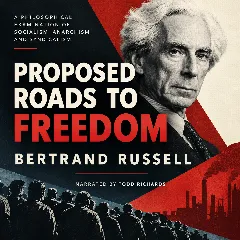
Bertrand Russell1 audiobook with Academy Voices
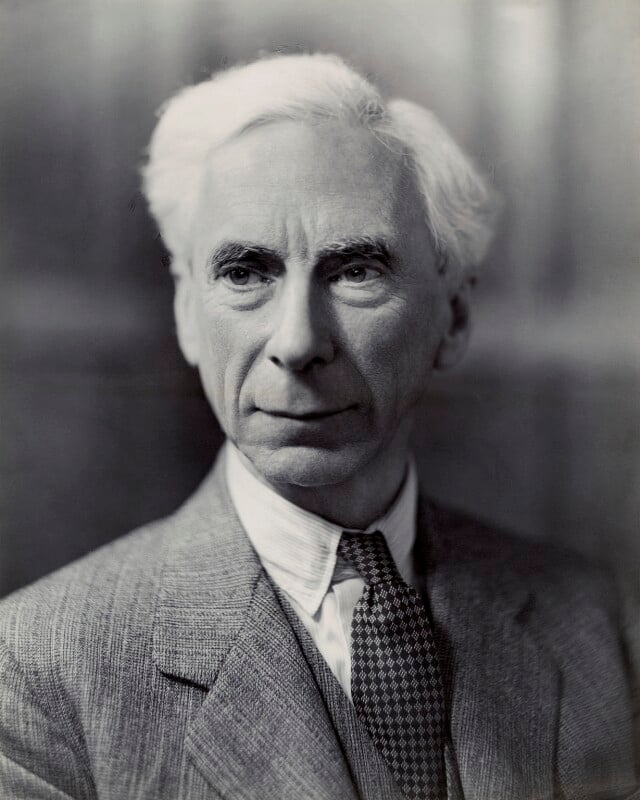
Bertrand Russell was an English mathematician and philosopher, a founder of analytic philosophy and one of the leading philosophers of the twentieth century.More about Bertrand Russell →
Read by a real person
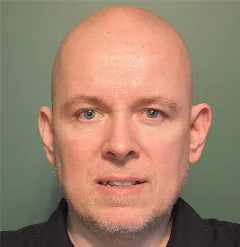
Todd Richards5 audiobooks with Academy Voices
**** I record in a home studio with a RODE NT1 Signature Edition and an MKH-416 microphone (Industry standard in today's media world) **** Hi my name is Todd.Hear more from Todd →Tip Todd for this narration →
Hear it read by Todd Richards: the audiobook is right here
Story guide on this page: summary, characters, discussion questions
Yours to keep: a DRM-free EPUB for any device. Read it here, or on Kindle (with Send to Kindle), Apple Books, Kobo or Google Play Books.
Want both? Buy the audiobook and add the ebook for $0.99.
✓ DRM-free, yours to keep. Download the files after you buy and play them anywhere.
Yours to keepBuy once, it stays in your library
Listen anywhereIn our app on your phone or computer
Bought by mistake, or something wrong with the file? Email apica@academyvoices.com within 14 days for a full refund.
Bought by mistake or something wrong with the audio? Email apica@academyvoices.com within 14 days for a full refund.
About this audiobookAbout this book
What would a truly free society look like—and how might we build it?
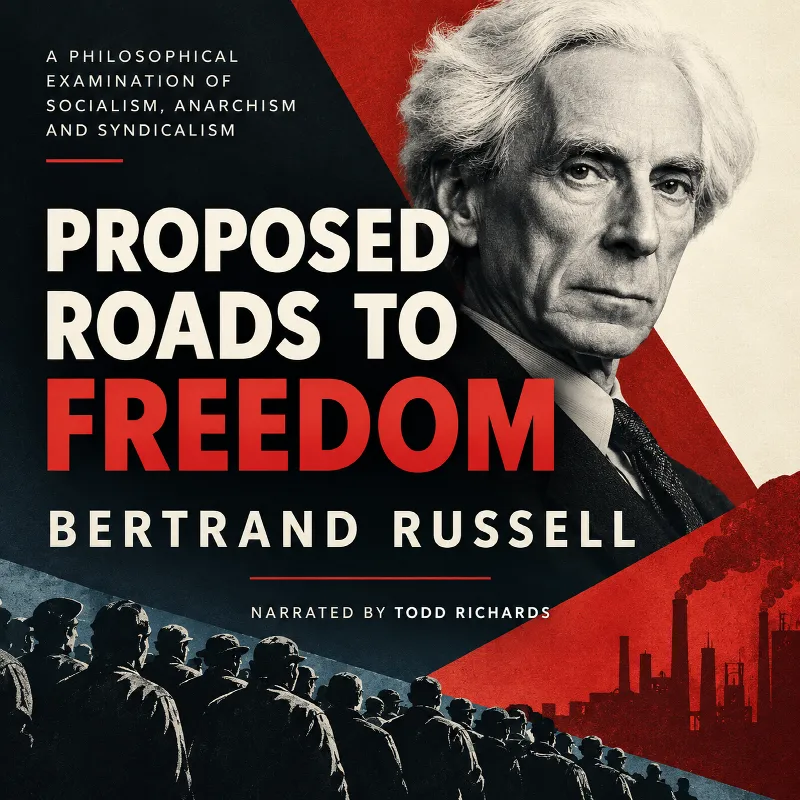
In Proposed Roads to Freedom, Bertrand Russell examines socialism, anarchism, and syndicalism, exploring their competing answers to the problems of inequality, exploitation, and concentrated power.
Beginning with the ideas of Karl Marx, Mikhail Bakunin, and the organized labor movement, Russell considers how different political systems might shape everyday life. His inquiry reaches into work and wages, government and law, international conflict, and the freedom to pursue science and art.
Throughout, Russell weighs the promise of economic security against the dangers of excessive authority. He develops his case for guild socialism while asking how collective cooperation can preserve individual independence.
For listeners interested in political philosophy, economic history, and social reform, this classic offers a searching examination of the relationship between justice and liberty—and the possibilities for a more humane society.
Story guide
Proposed Roads to Freedom summary
Spoiler alert: this summary tells the whole story.
Writing at the end of the First World War, the philosopher Bertrand Russell sets out to examine the movements that wanted to remake society from the ground up. In his introduction he argues that the reformers behind them, however bitter their words can sound, are driven at bottom by love for mankind. He also states his conclusion at the start: pure anarchism is the right ultimate ideal but would not last a year or two if tried now, state socialism would give the government too much power, and the best practical system is Guild Socialism.
The first part of the book is history. Russell explains Karl Marx's ideas and the growth of socialist parties, then the life of Mikhail Bakunin and the anarchist movement, whose quarrel with Marx split the First International. He follows anarchist ideas into syndicalism, the French trade union movement that hoped to overturn capitalism through the general strike, and its cousins, the I.W.W. in America and Guild Socialism in England.
The second part looks at problems of the future. On work and pay, Russell asks whether people would work without the threat of hunger. He proposes that a small income, enough for necessities, be secured to everyone whether they work or not, with a larger income for those who do useful work. He then weighs government and law, warning that any state, even a socialist one, tends to abuse power, and he turns to international relations, where he blames capitalism and nationalism for feeding war. A chapter on science and art argues that creative people need freedom more than anything, and imagines artists living simply on a "vagabond's wage."
In the last chapter, "The World as It Could Be Made," Russell sorts human misery into three kinds: physical evils, evils of character and evils of power. He names a cure for each, science, education and reform of the way power is shared, and ends with a vision of a world built on the impulse to create rather than the urge to possess.
The book is still read as one of the clearest short guides to these movements by a writer who took them seriously without becoming a follower of any one of them. Its idea of a basic income for all, set down in 1918, now sounds surprisingly modern.
Famous lines
Such a world is possible; it waits only for men to wish to create it.
Russell, near the end of the book
A life lived in this spirit—the spirit that aims at creating rather than possessing—has a certain fundamental happiness, of which it cannot be wholly robbed by adverse circumstances.
Russell, in the last chapter
Poverty is the symptom: slavery the disease.
G. D. H. Cole, quoted by Russell
Main characters
BR
Bertrand RussellThe British philosopher who writes the book and gives his own verdict on each movement.
KM
Karl MarxThe founder of modern socialist theory, whose ideas fill the first chapter.
MB
Mikhail BakuninThe Russian anarchist whose rivalry with Marx split the First International.
PK
Peter KropotkinThe anarchist thinker Russell quotes often on work, freedom and sharing.
GD
G. D. H. ColeA Guild Socialist writer whose views on freedom and work Russell admires.
Did you know?
In Britain the book was published as Roads to Freedom. Proposed Roads to Freedom is its American title.
In 1918 Russell was sentenced to six months in Brixton Prison for an article he wrote against the war.
Russell won the Nobel Prize in Literature in 1950.
Questions to talk about
Russell says reformers are moved by love even when their words sound full of hatred. Do you find that convincing? Why or why not?
Why does Russell think pure anarchism would collapse within a year or two? Do you agree?
What do you think of his plan to give everyone a small income whether they work or not? What problems might it solve or cause?
Russell worries that a socialist state could become as oppressive as any other. What examples from history support or challenge that worry?
What does Russell mean by a world built on "creating rather than possessing"? What would that look like in your own life?
Chapters
Proposed Roads to Freedom chapters
ChapterStarts at
Chapter One0:27
Chapter Two58:47
Chapter Three1:44:20
Chapter Four2:39:42
Chapter Five3:23:08
Chapter Six4:15:08
Chapter Seven5:03:41
Chapter Eight5:43:16
New listeners
Get 25% off your first audiobook
Join our list and we'll email you 25% off, plus new releases from our store. Every one is read by a real person. No account needed.
Details
Length
6 hr 36 min
Narration
Solo narrator
Format
Unabridged audiobook
Publisher
Academy Voices
Language
English
ISBN
9798182654418
Questions
What is Proposed Roads to Freedom about?
Bertrand Russell's study of socialism, anarchism and syndicalism, which traces where these movements came from and then asks which of their ideas could build a freer, happier world.
Who are the main characters in Proposed Roads to Freedom?
Bertrand Russell, the British philosopher who writes the book and gives his own verdict on each movement; Karl Marx, the founder of modern socialist theory, whose ideas fill the first chapter; Mikhail Bakunin, the Russian anarchist whose rivalry with Marx split the First International; Peter Kropotkin, the anarchist thinker Russell quotes often on work, freedom and sharing; G. D. H. Cole, a Guild Socialist writer whose views on freedom and work Russell admires.
Who narrates the Proposed Roads to Freedom audiobook?
This edition of Proposed Roads to Freedom by Bertrand Russell is narrated by Todd Richards.
How long is the Proposed Roads to Freedom audiobook?
It runs 6 hr 36 min, unabridged, so you hear the complete text.
Is this audiobook narrated by a real person?
Yes. Every Academy Voices audiobook is Certified Human Voice: performed start to finish by a real narrator.
Where can I listen to Proposed Roads to Freedom?
Right here: buy it on Academy Voices and listen in your browser or our app. Hear a free sample on this page first.