Written by
Ralph Waldo Emerson7 audiobooks with Academy Voices
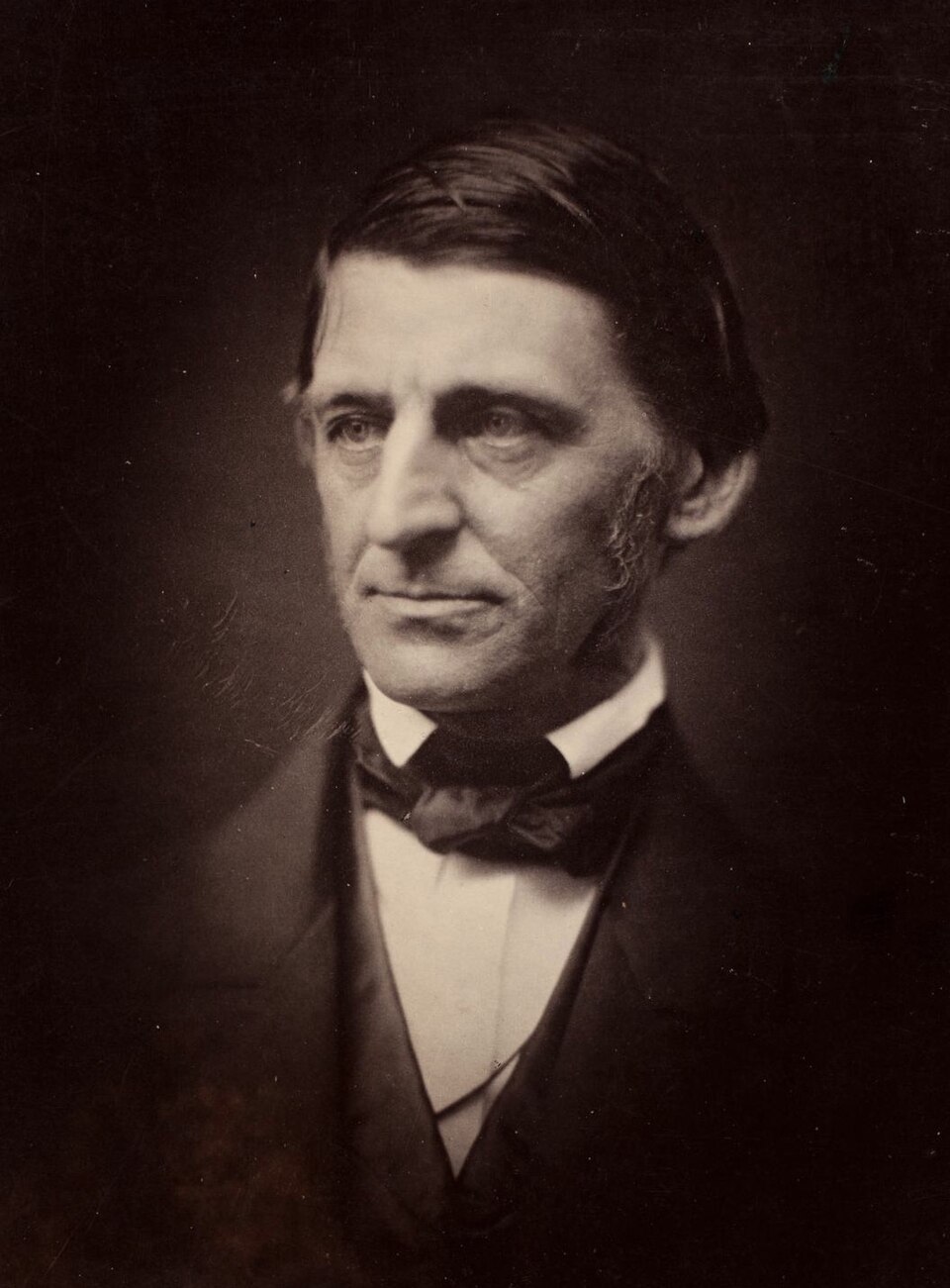
Ralph Waldo Emerson was born in Boston, studied at Harvard and became a Unitarian minister before leaving the pulpit in 1832.More about Ralph Waldo Emerson →
Read by a real person
Cory Stoutner4 audiobooks with Academy Voices
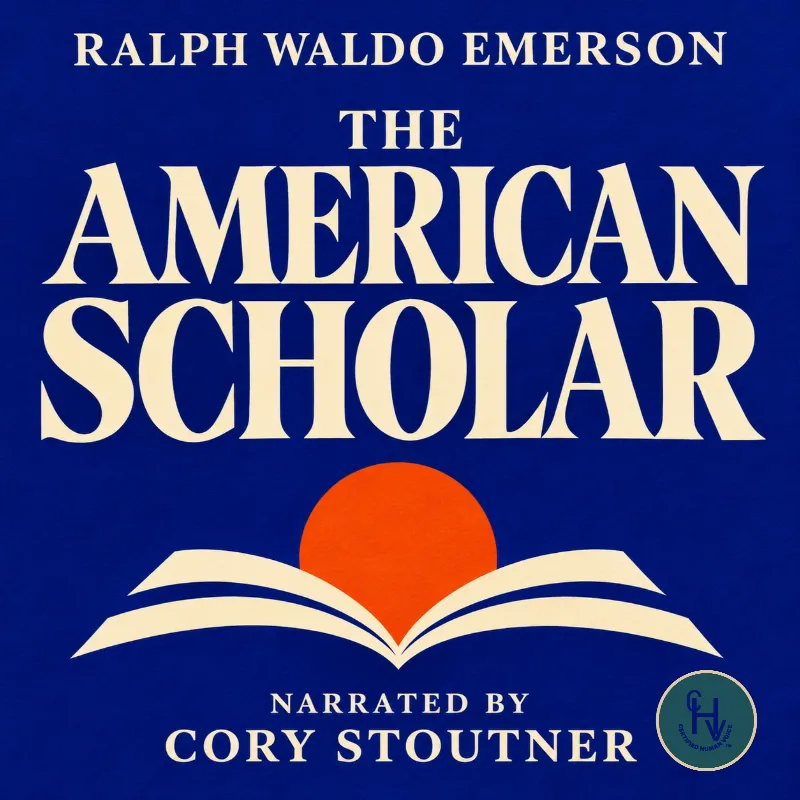
Ralph Waldo Emerson’s electrifying address is America’s “Intellectual Declaration of Independence,” a rousing call for the scholar to become Man Thinking—original, whole, and alive to the world.
Hear it read by Cory Stoutner: the audiobook is right here
Story guide on this page: summary, characters, discussion questions
Yours to keep: a DRM-free EPUB for any device. Read it here, or on Kindle (with Send to Kindle), Apple Books, Kobo or Google Play Books.
Want both? Buy the audiobook and add the ebook for $0.99.
Free audiobook
Listen to the whole story free
Enter your email and we'll send you a link to the full audiobook of The American Scholar. No account needed.
We'll also ask if you'd like new audiobooks by email. Privacy Policy
✓ DRM-free, yours to keep. Download the files after you buy and play them anywhere.
Yours to keepBuy once, it stays in your library
Listen anywhereIn our app on your phone or computer
Bought by mistake, or something wrong with the file? Email apica@academyvoices.com within 14 days for a full refund.
Bought by mistake or something wrong with the audio? Email apica@academyvoices.com within 14 days for a full refund.
About this audiobookAbout this book
Ralph Waldo Emerson’s electrifying address is America’s “Intellectual Declaration of Independence,” a rousing call for the scholar to become Man Thinking—original, whole, and alive to the world. Emerson maps a bold education through three great teachers: nature, the past (books), and action. Books, he insists, are sparks, not shackles; experience is the forge of wisdom; and private insight must ripen into public courage. With crystalline prose and a prophet’s urgency, he urges listeners to trust their own minds, discard secondhand authority, and help build a vigorous national culture grounded in self-reliance and creative thought.
Narrated by Cory Stoutner, this performance restores the speech’s oratorical cadence and moral fire, making its ideas vivid for students, educators, creators, and anyone seeking a bracing manifesto for independent thinking. Concise yet inexhaustibly quotable, The American Scholar rewards repeat listening—as inspiration for study and work, a lens on American thought, and a portable handbook for living bravely, reading creatively, and acting with purpose.
Story guide
The American Scholar summary
Spoiler alert: this summary tells the whole story.
Emerson opens by telling his Harvard audience that America's long apprenticeship to the learning of other lands is ending. He retells an old fable in which the gods divided one Man into many men, so that society is now full of people reduced to a single job: the farmer, the tradesman, the lawyer. In this divided world the scholar should be "Man Thinking," not a mere thinker or, worse, "the parrot of other men's thinking."
He then names the three great influences that educate the scholar. The first is nature, whose laws turn out to be the laws of the scholar's own mind, so that "Know thyself" and "Study nature" become one rule. The second is the past, mostly through books. Books are the best of things when used well and the worst when abused. They are meant to inspire, but readers too often worship them, and meek young men forget that Cicero, Locke and Bacon were once only young men in libraries. The third is action. Experience is the raw material of thought, and the scholar who avoids real life and work has nothing true to say.
The scholar's duties, Emerson says, all come down to self-trust. He must observe patiently, accept poverty and neglect if needed, never bow to the popular cry, and see through the world's pretensions. In exploring his own private thoughts, he finds what is true for all people. Emerson welcomes signs of a new age, such as literature turning to the common and the familiar, and new respect for the single person.
He closes with a challenge to his country: "We have listened too long to the courtly muses of Europe." Americans should walk on their own feet, work with their own hands and speak their own minds. The speech is often called America's intellectual Declaration of Independence, and it still shapes how Americans think about education, originality and self-reliance.
Famous lines
In the right state he is Man Thinking.
Ralph Waldo Emerson
Books are the best of things, well used; abused, among the worst.
Ralph Waldo Emerson
We have listened too long to the courtly muses of Europe.
Ralph Waldo Emerson
We will walk on our own feet; we will work with our own hands; we will speak our own minds.
Ralph Waldo Emerson
Main characters
RW
Ralph Waldo EmersonThe speaker, a former minister and rising essayist and lecturer.
AS
The American ScholarEmerson's ideal of "Man Thinking," whom he describes and challenges.
SG
Swedenborg, Goethe and WordsworthWriters Emerson praises as signs of a new age that finds wonder in common life.
Did you know?
Oliver Wendell Holmes Sr. called the speech America's "intellectual Declaration of Independence."
Emerson gave the address in August 1837 at Harvard, where he had graduated in 1821.
Emerson was a leader of Transcendentalism, a New England movement that also included his friend Henry David Thoreau.
Questions to talk about
What does Emerson mean by "Man Thinking," and how is it different from being a bookworm or a "parrot of other men's thinking"?
Why does Emerson say books can be among the worst of things? How should a reader use them?
Why does Emerson believe action and hard experience are part of a scholar's education?
What does he mean by self-trust? Can it go too far?
Is Emerson's call to stop imitating Europe still relevant to American culture today? Explain.
New listeners
Get 25% off your first audiobook
Join our list and we'll email you 25% off, plus new releases from our store. Every one is read by a real person. No account needed.
Details
Length
1 hr
Narration
Solo narrator
Format
Unabridged audiobook
Publisher
Anthony Pica Productions, LLC
Language
English
ISBN
9798179319825
Questions
What is The American Scholar about?
In a famous 1837 speech at Harvard, Ralph Waldo Emerson calls on American thinkers to stop imitating Europe and to learn from nature, books and action while trusting their own minds.
Who are the main characters in The American Scholar?
Ralph Waldo Emerson, the speaker, a former minister and rising essayist and lecturer; The American Scholar, emerson's ideal of "Man Thinking," whom he describes and challenges; Swedenborg, Goethe and Wordsworth, writers Emerson praises as signs of a new age that finds wonder in common life.
Who narrates The American Scholar audiobook?
This edition of The American Scholar by Ralph Waldo Emerson is narrated by Cory Stoutner.
How long is The American Scholar audiobook?
It runs 1 hr, unabridged, so you hear the complete text.
Is this audiobook narrated by a real person?
Yes. Every Academy Voices audiobook is Certified Human Voice: performed start to finish by a real narrator.
Where can I listen to The American Scholar?
Right here: buy it on Academy Voices and listen in your browser or our app. Hear a free sample on this page first.