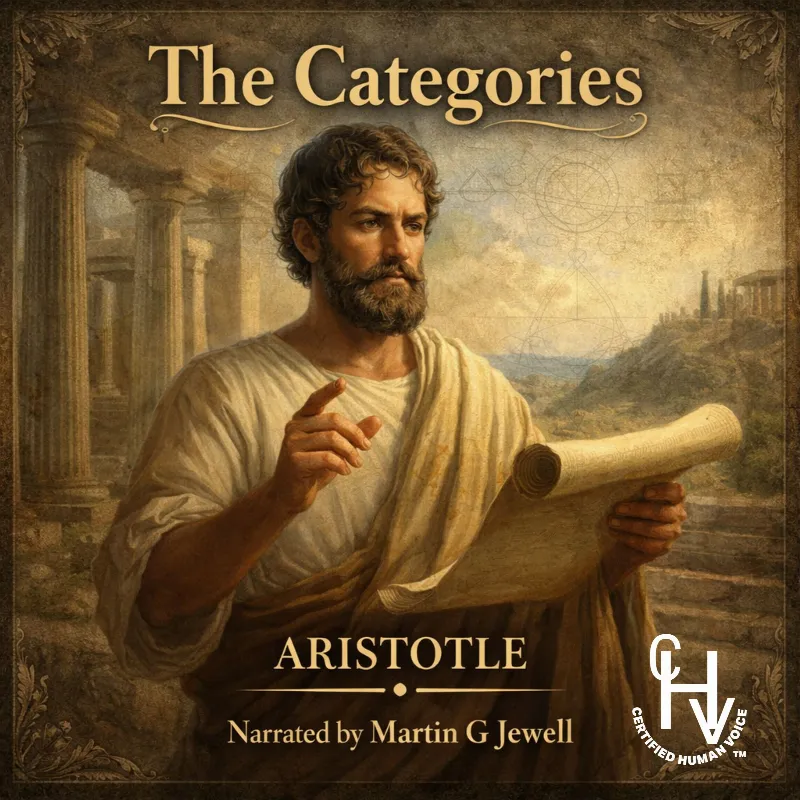
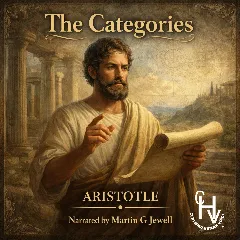
Hear it read by Martin G. Jewell: the audiobook is right here
Story guide on this page: summary, characters, discussion questions
Yours to keep: a DRM-free EPUB for any device. Read it here, or on Kindle (with Send to Kindle), Apple Books, Kobo or Google Play Books.
Want both? Buy the audiobook and add the ebook for $0.99.
Free audiobook
Listen to the whole story free
Enter your email and we'll send you a link to the full audiobook of The Categories. No account needed.
We'll also ask if you'd like new audiobooks by email. Privacy Policy
✓ DRM-free, yours to keep. Download the files after you buy and play them anywhere.
Yours to keepBuy once, it stays in your library
Listen anywhereIn our app on your phone or computer
Bought by mistake, or something wrong with the file? Email apica@academyvoices.com within 14 days for a full refund.
Bought by mistake or something wrong with the audio? Email apica@academyvoices.com within 14 days for a full refund.
About this audiobookAbout this book
What kinds of things are there? Aristotle's Categories is a short work of logic in which he tries to sort everything that can be said of anything into ten kinds: substance, quantity, quality, relation, place, time, position, state, action and being acted on. It is the first part of his writings on logic and was studied for two thousand years.
Martin Jewell reads it in about an hour and a half. It is a dense text, and the careful pace is part of the point.
For listeners who want to hear where Western philosophy began to sort the world.
Story guide
The Categories summary
Spoiler alert: this summary tells the whole story.
The Categories opens with three ways words can share names. Things are named "equivocally" when they share a name but not a meaning, "univocally" when they share both, and "derivatively" when one name grows from another, as "courageous" comes from "courage." Aristotle then separates things that can be said of a subject, like "man" said of Socrates, from things that exist in a subject, like a particular whiteness in a body.
He next lists ten categories, the most basic kinds of things a simple word can signify: substance, quantity, quality, relation, place, time, position, state, action and affection (being acted upon). His examples are everyday ones: "man" or "horse" for substance, "two cubits long" for quantity, "white" for quality, "in the Lyceum" for place, and "yesterday" for time.
Most of the work explores the four biggest categories. Substance comes first. Primary substances are individual things, like this man or this horse, and everything else depends on them. Species and genera, like "man" and "animal," are substances in a secondary sense. A substance's most distinctive mark is that it stays one and the same while taking on opposite qualities, as a person can be pale at one time and dark at another. Aristotle then examines quantity, which can be discrete like number or continuous like a line; relation, where every relative has a correlative, as a master has a slave and a half has its double; and quality, which includes habits, abilities, feelings and shapes.
The final part looks at related ideas: kinds of opposites, such as contraries, privation and possession, and true and false statements; what it means for one thing to be "prior" to another or "simultaneous" with it; the six kinds of motion or change; and the many senses of the word "to have." For more than two thousand years, the Categories was among the first texts students of logic read, and its way of sorting reality still shapes philosophy, science and how we organize knowledge.
Famous lines
Substance, in the truest and primary and most definite sense of the word, is that which is neither predicable of a subject nor present in a subject; for instance, the individual man or horse.
Aristotle
Everything except primary substances is either predicable of a primary substance or present in a primary substance.
Aristotle
The most distinctive mark of substance appears to be that, while remaining numerically one and the same, it is capable of admitting contrary qualities.
Aristotle
Quantity is either discrete or continuous.
Aristotle
Main characters
A
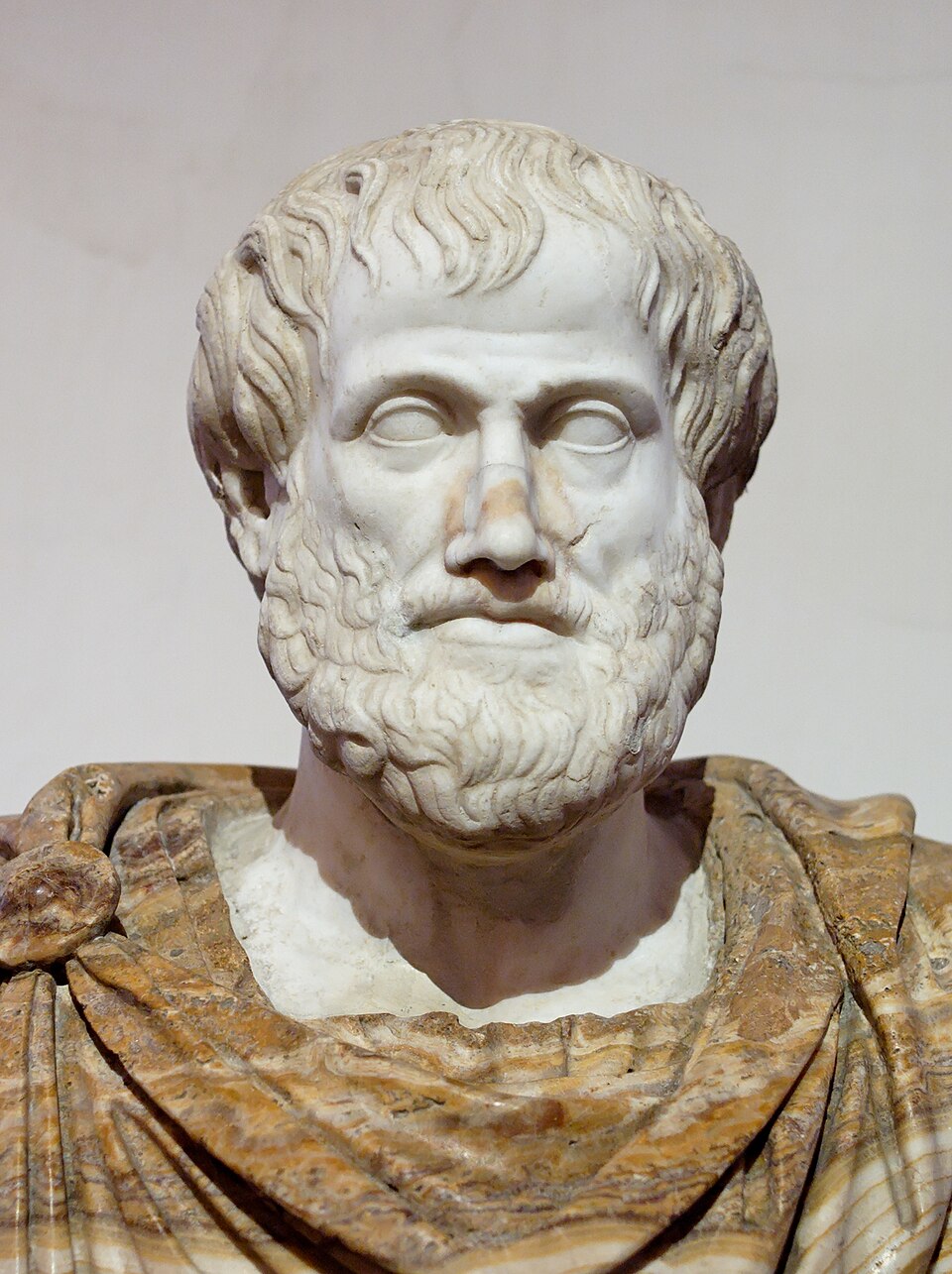
AristotleThe Greek philosopher who wrote the work, a student of Plato and teacher of Alexander the Great.
S
SocratesThe famous philosopher whose name Aristotle uses as an everyday example of an individual person.
Did you know?
The Categories traditionally comes first among Aristotle's six works on logic, which together are known as the Organon, meaning "tool" or "instrument."
Aristotle studied at Plato's Academy in Athens for about twenty years and later founded his own school, the Lyceum, which he mentions in this work as an example of a place.
Aristotle tutored the young Alexander the Great before Alexander became king of Macedon.
Questions to talk about
Aristotle says the individual man or horse is substance in the "truest" sense. Why might he put individual things ahead of general kinds?
Try placing ten words from your own day into Aristotle's ten categories. Which were hard to sort, and why?
What does Aristotle mean when he says a substance can admit contrary qualities? Can you think of examples from your own life?
Aristotle says every relative has a correlative, like master and slave or half and double. How does this idea work, and what does his choice of example tell us about his world?
Why do you think this short work was taught to beginning students of logic for centuries?
Chapters
The Categories chapters
ChapterStarts at
Part 10:19
Part 21:33
Part 33:07
Part 44:12
Part 55:23
Part 620:27
Part 730:15
Part 844:57
Part 959:02
Part 101:00:03
Show all 15 chapters
Part 111:13:50
Part 121:15:42
Part 131:18:22
Part 141:20:47
Part 151:23:39
New listeners
Get 25% off your first audiobook
Join our list and we'll email you 25% off, plus new releases from our store. Every one is read by a real person. No account needed.
Details
Length
1 hr 25 min
Narration
Solo narrator
Format
Unabridged audiobook
Publisher
Academy Voices
Language
English
ISBN
9798240128394
Questions
What is The Categories about?
Aristotle's short, foundational work of logic that sorts everything we can say about the world into ten basic kinds, or categories, such as substance, quantity, quality and relation.
Who are the main characters in The Categories?
Aristotle, the Greek philosopher who wrote the work, a student of Plato and teacher of Alexander the Great; Socrates, the famous philosopher whose name Aristotle uses as an everyday example of an individual person.
Who narrates The Categories audiobook?
This edition of The Categories by Aristotle is narrated by Martin G. Jewell.
How long is The Categories audiobook?
It runs 1 hr 25 min, unabridged, so you hear the complete text.
Is this audiobook narrated by a real person?
Yes. Every Academy Voices audiobook is Certified Human Voice: performed start to finish by a real narrator.
Where can I listen to The Categories?
Right here: buy it on Academy Voices and listen in your browser or our app. Hear a free sample on this page first.