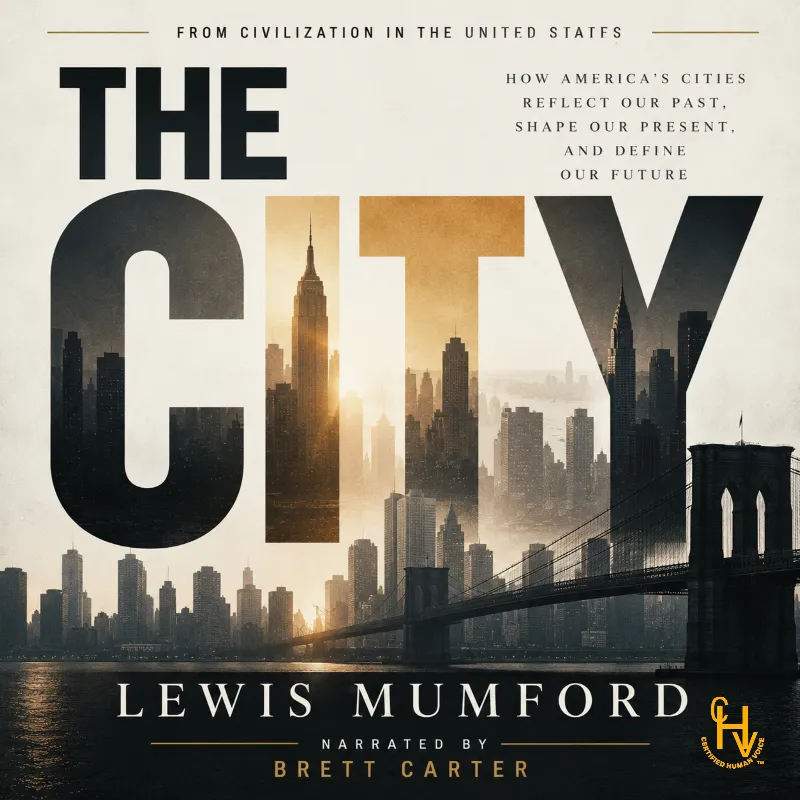
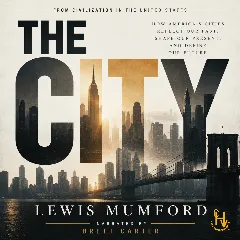
Lewis Mumford looks at the American city. He asks what Broadway is for, and what the five-and-ten-cent store gives the factory worker: a taste of spending in a place that is otherwise drab.
Hear it read by Brett Carter: the audiobook is right here
Story guide on this page: summary, characters, discussion questions
Yours to keep: a DRM-free EPUB for any device. Read it here, or on Kindle (with Send to Kindle), Apple Books, Kobo or Google Play Books.
Want both? Buy the audiobook and add the ebook for $0.99.
Free audiobook
Listen to the whole story free
Enter your email and we'll send you a link to the full audiobook of The City (from Civilization in the United States). No account needed.
We'll also ask if you'd like new audiobooks by email. Privacy Policy
✓ DRM-free, yours to keep. Download the files after you buy and play them anywhere.
Yours to keepBuy once, it stays in your library
Listen anywhereIn our app on your phone or computer
Bought by mistake, or something wrong with the file? Email apica@academyvoices.com within 14 days for a full refund.
Bought by mistake or something wrong with the audio? Email apica@academyvoices.com within 14 days for a full refund.
About this audiobookAbout this book
Lewis Mumford looks at the American city. He asks what Broadway is for, and what the five-and-ten-cent store gives the factory worker: a taste of spending in a place that is otherwise drab. The city, he argues, makes up for what the industrial town leaves out.
It is a short, thoughtful look at how people actually live in American cities, and what they do for pleasure when work leaves them tired.
This essay comes from Civilization in the United States, a 1922 collection edited by Harold Stearns. Read by Brett Carter in forty-seven minutes.
Story guide
The City (from Civilization in the United States) summary
Spoiler alert: this summary tells the whole story.
Lewis Mumford asks whether, in building our cities, we have built a civilization. He divides American city history into three periods: a provincial period of farming and small trade, a commercial period of canals and railroads, and the industrial period that still dominates. The best of the first was the New England town, a true community gathered around a common with its meeting-house and school, which bloomed late in the Concord of Emerson's day. But as farming moved west, that culture faded, and the new western towns, like Johnny Appleseed's wild apples grown from dry seeds, bore harsh fruit.
The commercial city, he says, began as a trading fort full of people "on the make," more concerned with "the goods life" than "the good life." Lodges stood in for real fellowship, and the lyceum lecture became a substitute for thought. New York's grid street plan was chosen for traffic and land profits, so every street became a shopping street and institutions like Columbia University kept moving. Broadway, in every town, became the city's false front: a place of shop windows, bright lights and the five-and-ten-cent store, where people who do not know how to spend their time spend their money instead.
The industrial city was worse, Mumford argues, a new form of barbarism in the coal and steel towns. Architects like H. H. Richardson, McKim and White tried to escape it with borrowed Romanesque and Renaissance styles, while the truly promising buildings were plain grain elevators and warehouses. Amusements like Coney Island and the Great White Way give jaded workers sensations instead of real life. The 1893 Chicago World's Fair launched the City Beautiful movement, but it treated beauty as a cosmetic to plaster on, ignoring land speculation and poverty.
Cities have added sewers, pavements and taller buildings, but growth is not improvement. Most city dwellers live a suburban life without parks, libraries or meeting places, and New York works best for travelers in its hotel and theater district, surrounded by miles of slums. New York has drained wealth and talent from industrial towns, and the countryside resents it. Mumford hopes for real regional cultures, like those of European cities, instead of copies of New York. He ends with a warning: our metropolitan civilization is not a success. It is still a wilderness, and unless cities reshape their mechanical and financial system, they may fall under its weight.
This early essay shows ideas Mumford developed over a long career as one of America's great writers on cities, and its worries about sprawl, commercial streets and soulless growth still sound current.
Famous lines
In building our cities we deflowered a wilderness.
Lewis Mumford
People who do not know how to spend their time must take what satisfaction they can in spending their money.
Lewis Mumford, on Broadway
There is a curious confusion in America between growth and improvement.
Lewis Mumford
Our metropolitan civilization is not a success.
Lewis Mumford
Main characters
LM
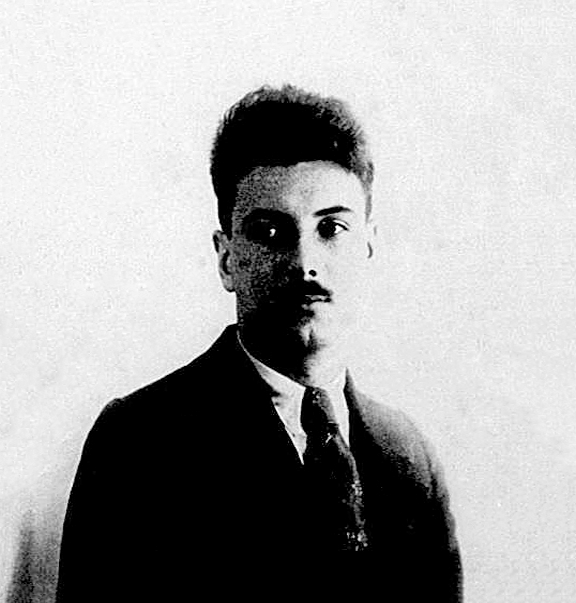
Lewis MumfordThe author, a young critic who became one of the leading American thinkers on cities and technology.
HH
H. H. RichardsonThe architect whose Romanesque buildings Mumford sees as a beautiful escape from the industrial city rather than an answer to it.
JA
Johnny AppleseedThe legendary planter whose wild apples Mumford uses as a symbol of the culture of the westward towns.
Did you know?
Civilization in the United States was a famous 1922 collection of essays on American life, edited by the critic Harold Stearns.
Mumford was in his twenties when he wrote this essay. Decades later his book The City in History won the National Book Award.
Gopher Prairie, the town Mumford mentions near the end, is the fictional small town of Sinclair Lewis's 1920 novel Main Street.
Questions to talk about
What does Mumford mean by the difference between "the goods life" and "the good life"?
Why does he think a grid street plan worked against community? Can you see this in a town you know?
He calls Broadway "the façade of the American city." What would he say about shopping malls or online shopping?
Why does he think the City Beautiful movement failed? What did it ignore?
Mumford hopes for strong regional cultures instead of everything copying New York. Has that happened, or has one center still won out?
New listeners
Get 25% off your first audiobook
Join our list and we'll email you 25% off, plus new releases from our store. Every one is read by a real person. No account needed.
Details
Length
43 min
Narration
Solo narrator
Format
Unabridged audiobook
Publisher
Academy Voices
Language
English
ISBN
9798182626972
Questions
What is The City (from Civilization in the United States) about?
The young critic Lewis Mumford traces the American city from the New England town to the industrial city and the giant metropolis, and argues that for all its growth it has not yet produced a real civilization.
Who are the main characters in The City (from Civilization in the United States)?
Lewis Mumford, the author, a young critic who became one of the leading American thinkers on cities and technology; H. H. Richardson, the architect whose Romanesque buildings Mumford sees as a beautiful escape from the industrial city rather than an answer to it; Johnny Appleseed, the legendary planter whose wild apples Mumford uses as a symbol of the culture of the westward towns.
Who narrates The City (from Civilization in the United States) audiobook?
This edition of The City (from Civilization in the United States) by Lewis Mumford is narrated by Brett Carter.
How long is The City (from Civilization in the United States) audiobook?
It runs 43 min, unabridged, so you hear the complete text.
Is this audiobook narrated by a real person?
Yes. Every Academy Voices audiobook is Certified Human Voice: performed start to finish by a real narrator.
Where can I listen to The City (from Civilization in the United States)?
Right here: buy it on Academy Voices and listen in your browser or our app. Hear a free sample on this page first.