The Small Town (from Civilization in the United States)
By Louis Raymond Reid
Narrated by Ryan Durham
 Audiobooks
Showing results for
Nothing matches yet. Try one word of the title, or the author's last name.
See all results for “” →
Katharine Susan Anthony was an American biographer, best known for The Lambs, a study of the British writers Charles and Mary Lamb that appeared in 1945 and caused debate.More about Katharine Anthony →

Hi, I’m Ryan Durham — husband, father, pastor and a passionate audiobook narrator!Hear more from Ryan → Tip Ryan for this narration →
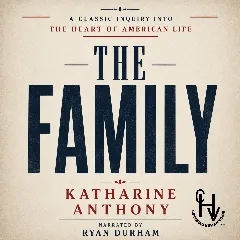
by Katharine Anthony · read by Ryan Durham · 52 min
Read more ↓Yours to keep: a DRM-free EPUB for any device. Read it here, or on Kindle (with Send to Kindle), Apple Books, Kobo or Google Play Books. Want both? Buy the audiobook and add the ebook for $0.99.
Enter your email and we'll send you a link to the full audiobook of The Family. No account needed.
We'll also ask if you'd like new audiobooks by email. Privacy Policy✓ DRM-free, yours to keep. Download the files after you buy and play them anywhere.
Bought by mistake, or something wrong with the file? Email apica@academyvoices.com within 14 days for a full refund.
Bought by mistake or something wrong with the audio? Email apica@academyvoices.com within 14 days for a full refund.
The American family is blamed for everything. Foreign critics say the children are rude and the wives spoiled. Home-grown critics say the family is falling apart. Katherine Anthony says look again. She finds a form that keeps its shape under the surface change, mixing the oldest ways of living with the newest. This essay comes from Civilization in the United States, a 1922 collection edited by Harold Stearns. It is read by Ryan Durham in fifty-two minutes.
Spoiler alert: this summary tells the whole story.
Katharine Anthony opens by noting that everyone blames the American family. Foreign visitors call the children spoiled and the husbands henpecked, and American preachers say the family is crumbling. She wants facts instead of sermons, but finds that America keeps poor records of births, marriages and deaths. One thing the numbers do show is that families are shrinking. The maiden aunt and the live-in servant are gone, Grandma often lives on her own, and couples have fewer children. Birth control is old, she says, going back to the Puritans, and the salaried middle class leads the way. Theodore Roosevelt's campaign against "race suicide" won no followers at all.
She turns to money. American families are richer in dollars than Prussian ones, but she wonders if the extra money buys much of real value. The American husband is a generous provider who buys life insurance for his widow, but he hands his wife charge accounts rather than a steady allowance. In working-class homes, less than half of families live on the father's wages alone, so wives and children must work. Middle-class families, squeezed hardest since 1896, have sent first daughters and then wives out to earn. The war sped this up.
Next she looks at marriage, widowhood and divorce. The very rich and the very poor marry youngest, while Boston brides and grooms wait past thirty. Wives usually outlive husbands, so the country has millions of widows, and sentiment about "the widow" led to widows' pensions, though prudishness blocked maternity insurance. Divorce has risen from one in sixteen marriages in 1890 to one in nine in 1916. Anthony argues it is expensive, not easy, that most divorced wives get no alimony, and that a federal divorce law would only make things worse.
Americans also move constantly, yet the more they move, the harder they cling to ancestry, society columns and the rules of women's magazines. Finally she turns to children. Spoiled children, she says, become childish adults, and rich American children were even found to be more underweight than poor immigrant children in Chicago. The family, not business stress, shapes the adult mind, and parents too often pass on rigid, standardized habits. With fewer brothers and sisters to play with, small children need nursery schools and parents who know how to share real joy.
Written by a feminist biographer, the essay is an early, data-minded look at the modern family, and many of its topics, such as working mothers, divorce, birth rates and parenting, are still debated today.
The American family is the scapegoat of the nations.
Though home is a sacred word in America, it is a portable affair.
Our materialistic civilization finds it hard to understand that liberty is not achieved through time-saving devices but only through the love of it.
We are, alas, what our families make us.
Join our list and we'll email you 25% off, plus new releases from our store. Every one is read by a real person. No account needed.
The writer Katharine Anthony takes a sharp, witty look at the American family around 1920, from shrinking families, birth control and working wives to divorce, constant moving and how parents shape children.
Katharine Anthony, the author, a feminist writer and biographer; Theodore Roosevelt, the former president whose campaign against "race suicide" Anthony says won no followers; Willford King, the economist she quotes on family income and the squeeze on the middle class; Edgar Sydenstricker, the researcher she quotes showing most working families need more than the father's wages.
This edition of The Family by Katharine Anthony is narrated by Ryan Durham.
It runs 52 min, unabridged, so you hear the complete text.
Yes. Every Academy Voices audiobook is Certified Human Voice: performed start to finish by a real narrator.
Right here: buy it on Academy Voices and listen in your browser or our app. Hear a free sample on this page first.
By Louis Raymond Reid
Narrated by Ryan Durham
By J. E. Spingarn
Narrated by Ryan Durham