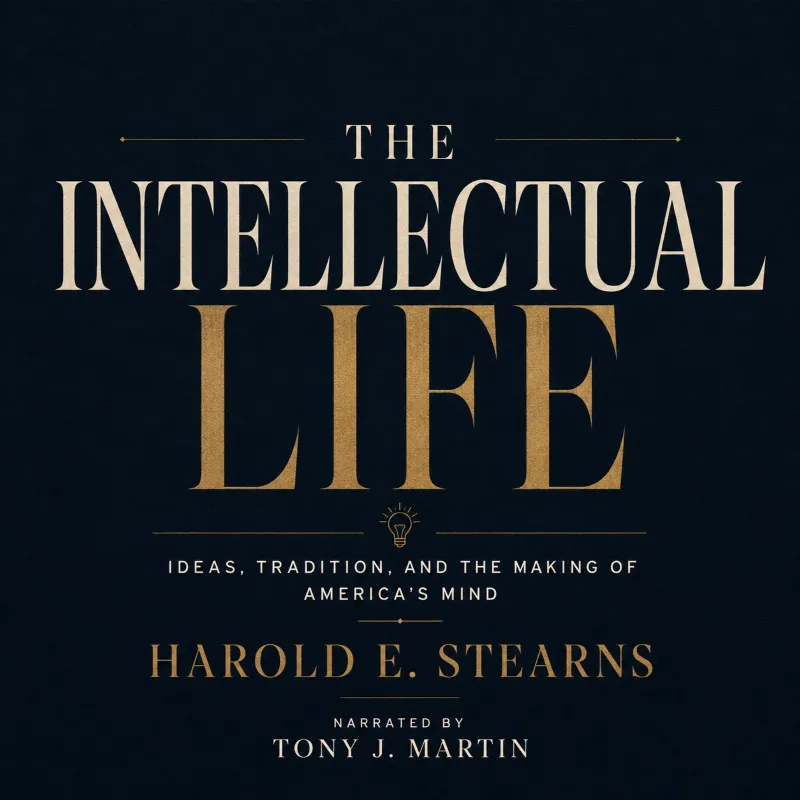
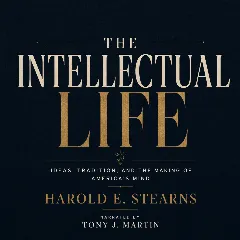
Harold E. Stearns asks why the United States, so rich and busy, has so little room for the intellectual life. Foreign visitors have long noticed a certain thinness in American thought.
Hear it read by Tony J Martin: the audiobook is right here
Story guide on this page: summary, characters, discussion questions
Yours to keep: a DRM-free EPUB for any device. Read it here, or on Kindle (with Send to Kindle), Apple Books, Kobo or Google Play Books.
Want both? Buy the audiobook and add the ebook for $0.99.
Free audiobook
Listen to the whole story free
Enter your email and we'll send you a link to the full audiobook of The Intellectual Life. No account needed.
We'll also ask if you'd like new audiobooks by email. Privacy Policy
✓ DRM-free, yours to keep. Download the files after you buy and play them anywhere.
Yours to keepBuy once, it stays in your library
Listen anywhereIn our app on your phone or computer
Bought by mistake, or something wrong with the file? Email apica@academyvoices.com within 14 days for a full refund.
Bought by mistake or something wrong with the audio? Email apica@academyvoices.com within 14 days for a full refund.
About this audiobookAbout this book
Harold E. Stearns asks why the United States, so rich and busy, has so little room for the intellectual life. Foreign visitors have long noticed a certain thinness in American thought. He starts from Einstein's remark that some American cities suffer from a poverty of intellectual things, and asks whether the charge is fair.
This essay comes from Civilization in the United States, the 1922 collection he edited. Read by Tony J Martin in forty-nine minutes.
Story guide
The Intellectual Life summary
Spoiler alert: this summary tells the whole story.
Harold Stearns opens with Albert Einstein's remark, made on a visit to the United States, that America's cities suffer from "the poverty of intellectual things." Stearns says foreign visitors who make this complaint are largely right, but that they miss its history. America, he argues, still thinks like a pioneer country. On the frontier there was no room for the thinker, who produced nothing and asked awkward questions about whether hard work was worth it. From 1783 to about 1883 the command was simply to work, and even the New England writers like Emerson were a quiet backwater beside the great current of farming, clearing and building.
The frontier is now closed and the country is rich, Stearns writes, but Americans have not changed their habits. They keep making money because they have no shared idea of a good life to do instead. When wealth arrived, men handed leisure to their wives, mothers and sisters, and along with it art, music, religion, literature and education. Culture became "women's business," while men kept to the "real" work of making money. Boys learned from schoolteachers that intellectual interests were for girls, and at Harvard the Western students thought only "sissies" studied poetry.
Stearns then defines what he calls the "masculine" and "feminine" approaches to ideas, saying he means habits of mind, not the abilities of either sex. True intellectual life, in his view, is disinterested curiosity, the love of truth for its own sake. The "feminine" approach judges ideas by their social usefulness and turns thinking into reform and "sociological activity." Combined with the pioneer's distrust of useless thought, this has made America worship applied knowledge. Without strong institutions or a shared culture, he says, independent thinkers turn into cranks, and the polished intellectuals are crippled by what George Santayana called "the genteel tradition," which has cut thought off from laughter, the body and real life.
Yet Stearns ends with hope. The young are restless and contemptuous of their elders, and their rebellion, however wild, may yet free the country. Picturing New York's lights from the Palisades and Fifth Avenue on a bright October morning, he insists that America's hidden beauty, energy and laughter can still win out, led by rebels whose revolt is founded on love of what they wish all to share.
The essay is a vivid snapshot of the restless, rebellious mood of the early 1920s. Many of its claims about women and men are dated and easy to argue with, which makes it lively material for debate about American culture.
Famous lines
Scepticism is an expensive luxury possible only to men in cities living off the fruit of others’ toil.
Harold Stearns
Unlike a real game, we must go on playing our game even after we have won.
Harold Stearns
Our intellectual life, when we judge it objectively on the side of vigour and diversity, too often seems like a democracy of mountebanks.
Harold Stearns
Thought is nourished by the soil it feeds on, and in America to-day that soil is choked with the feckless weeds of correctness.
Harold Stearns
Did you know?
Stearns edited the whole book this essay comes from, a collection of essays by thirty American writers judging the state of the nation's culture.
Soon after finishing the book, Stearns left for Paris, where he became a well-known figure among the American expatriates of the 1920s.
The "genteel tradition" he mentions is a phrase coined by the philosopher George Santayana in a famous 1911 lecture.
Questions to talk about
Stearns says the pioneer had to distrust the thinker. Do you find his explanation convincing? Why or why not?
What does he mean when he says Americans keep making money "because there is nothing else to do"?
Stearns says he uses "masculine" and "feminine" as habits of mind, not as judgments about men and women. Does the essay live up to that claim?
Is it better to value ideas for their own sake or for what they can do? Can the two be separated?
Why does Stearns place his hope in rebellious young people? Who might play that role today?
New listeners
Get 25% off your first audiobook
Join our list and we'll email you 25% off, plus new releases from our store. Every one is read by a real person. No account needed.
Details
Length
49 min
Narration
Solo narrator
Format
Unabridged audiobook
Publisher
Academy Voices
Language
English
ISBN
9798182615396
Questions
What is The Intellectual Life about?
A sharp, provocative 1922 essay arguing that America's pioneer past and its habit of leaving culture to women have starved the country's intellectual life.
Who narrates The Intellectual Life audiobook?
This edition of The Intellectual Life by Harold E. Stearns is narrated by Tony J Martin.
How long is The Intellectual Life audiobook?
It runs 49 min, unabridged, so you hear the complete text.
Is this audiobook narrated by a real person?
Yes. Every Academy Voices audiobook is Certified Human Voice: performed start to finish by a real narrator.
Where can I listen to The Intellectual Life?
Right here: buy it on Academy Voices and listen in your browser or our app. Hear a free sample on this page first.