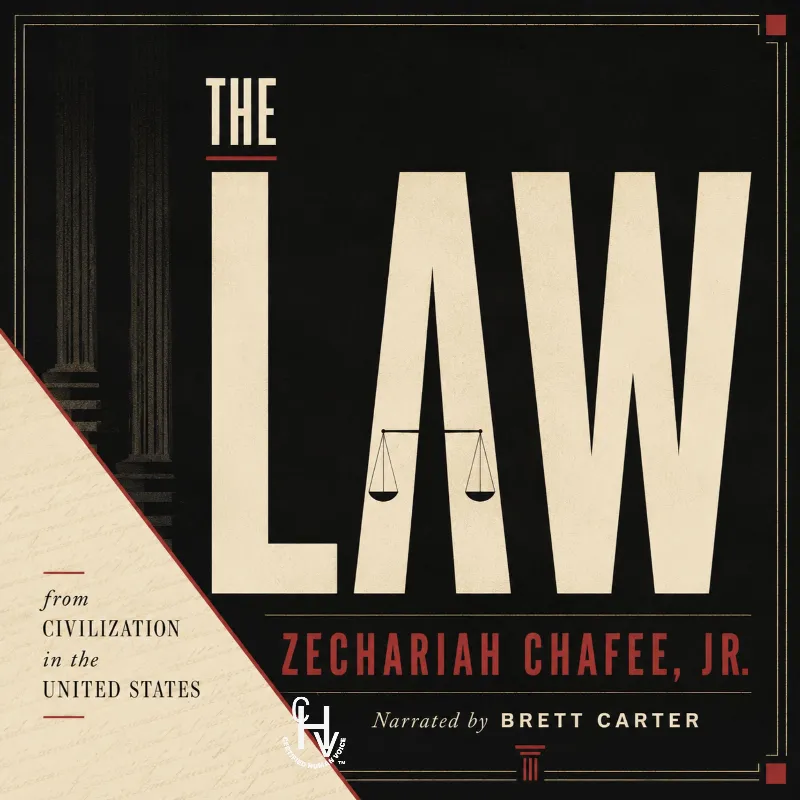
Everyone takes a swing at the law, says Zechariah Chafee Jr. Judges and lawyers are blamed by losing litigants and reformers alike, yet lawyers fill half the seats in Congress.
Hear it read by Brett Carter: the audiobook is right here
Story guide on this page: summary, characters, discussion questions
Yours to keep: a DRM-free EPUB for any device. Read it here, or on Kindle (with Send to Kindle), Apple Books, Kobo or Google Play Books.
Want both? Buy the audiobook and add the ebook for $0.99.
Free audiobook
Listen to the whole story free
Enter your email and we'll send you a link to the full audiobook of The Law (from Civilization in the United States). No account needed.
We'll also ask if you'd like new audiobooks by email. Privacy Policy
✓ DRM-free, yours to keep. Download the files after you buy and play them anywhere.
Yours to keepBuy once, it stays in your library
Listen anywhereIn our app on your phone or computer
Bought by mistake, or something wrong with the file? Email apica@academyvoices.com within 14 days for a full refund.
Bought by mistake or something wrong with the audio? Email apica@academyvoices.com within 14 days for a full refund.
About this audiobookAbout this book
Everyone takes a swing at the law, says Zechariah Chafee Jr. Judges and lawyers are blamed by losing litigants and reformers alike, yet lawyers fill half the seats in Congress. Chafee asks why Americans distrust the law and traces the habit back to the Puritans and Quakers. He compares old and new ideas of what a court should consider, and ends by saying that lawyers must work to make the law rational.
This essay is a chapter of Civilization in the United States, a 1922 collection by thirty writers, edited by Harold E. Stearns, that took a hard look at American life. It is read by Brett Carter.
For listeners interested in law, history or how Americans saw themselves a century ago.
Story guide
The Law (from Civilization in the United States) summary
Spoiler alert: this summary tells the whole story.
Zechariah Chafee, Jr. opens with Shakespeare's famous line about killing all the lawyers and notes that almost every American takes a swing at the law. He traces that hostility back through history. Puritans and Quakers remembered the English courts that persecuted them, ministers resented rivals, colonists wanted simple rules they could apply themselves, and after the Revolution many states even banned citing English cases. Frontier settlers saw law as a weapon used against them by townspeople and creditors, and newer immigrants often saw it as something imposed from above.
Chafee argues that disrespect also grew because the lawyer changed. Before the Civil War he was a public figure in the courtroom. After 1870 many able lawyers became quiet advisers to big corporations, while accident lawyers working for a share of damages were distrusted from the other side. He warns against the idea that a person may ignore any law he thinks wrong, quoting Judge Ebenezer Rockwood Hoar that someone who follows conscience against the law must accept the consequences.
The real fault of American law, he says, is not lawyers defending the guilty or judges relying on precedent. It is that the law has failed to keep up with the times. Rules built for farms and small towns a century earlier cannot handle modern cities and industry. He calls for better newspaper coverage of law, a Minister of Justice to organize reform, better pay and training for judges, and law schools that study how law works in real factories, banks and jails, not only in books.
He singles out criminal law as the most disgraceful part of the system, worries about the strain of nationwide Prohibition, and praises reforms like small claims courts, legal aid, and workmen's compensation. He contrasts a New York court that struck down a compensation law with the Supreme Court's acceptance of Louis Brandeis's fact-filled brief in Muller v. Oregon. He argues that as the state gains power over property, free speech must be protected all the more, and he closes with the words of Justice Oliver Wendell Holmes.
The essay is a clear snapshot of the legal debates of the early 1920s, and many of its questions, about trust in courts, access to justice and free speech, are still argued today.
Famous lines
The first thing we do, let’s kill all the lawyers.
The opening line, quoting Shakespeare
The real defect is failure to keep up to date.
Chafee
Law is the surface of contact where the pressure of society bears upon the individual.
Chafee
The mode in which the inevitable comes to pass is through effort.
Justice Holmes, quoted in the closing line
Main characters
ZC
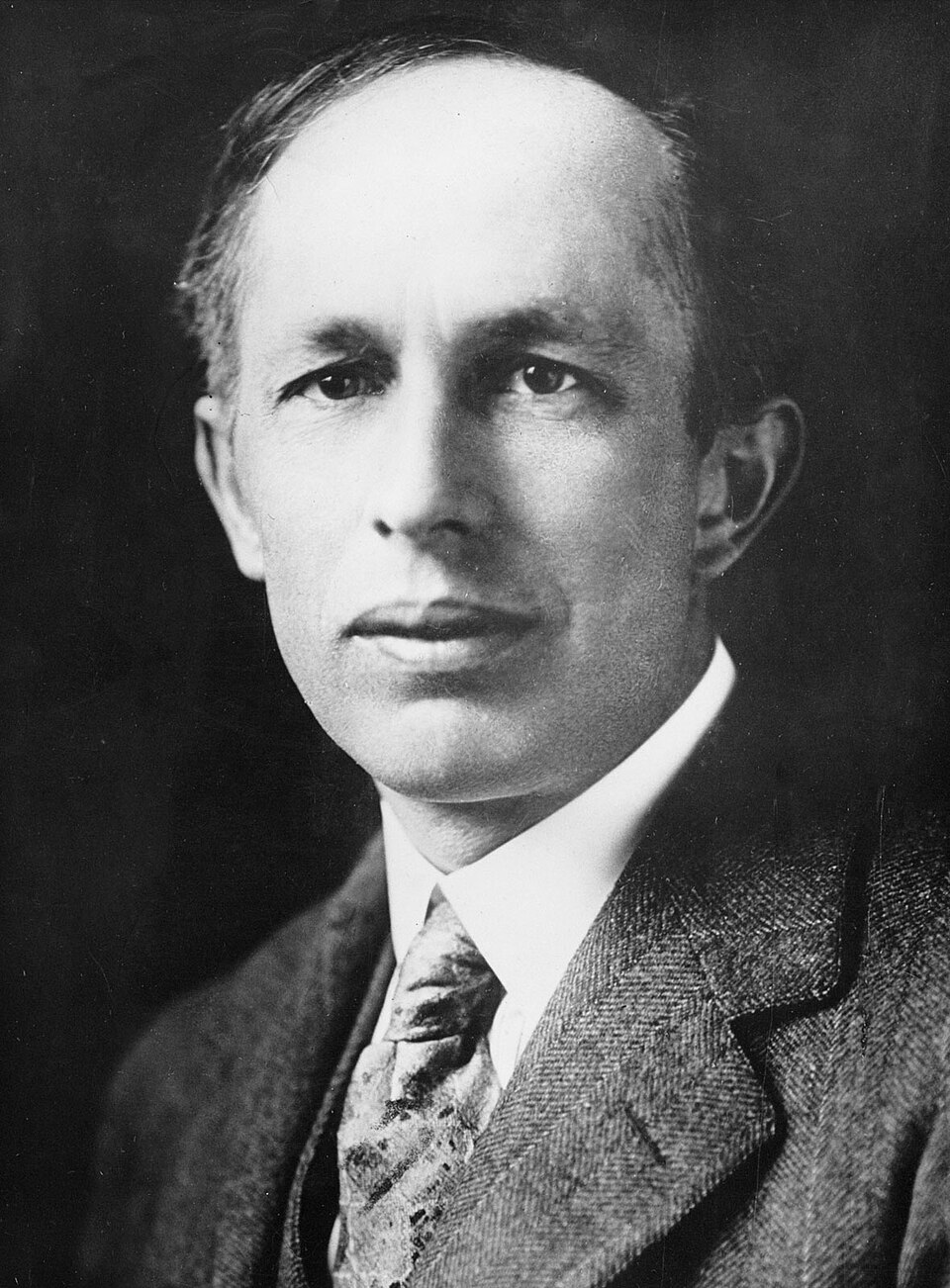
Zechariah Chafee, Jr.The author, a Harvard law professor and a leading defender of free speech.
OW
Oliver Wendell HolmesThe Supreme Court justice whose words Chafee uses to close the essay.
LD
Louis D. BrandeisThe lawyer, later a justice, whose fact-based brief in Muller v. Oregon Chafee holds up as a model.
JB
James BryceThe British writer on American government whom Chafee quotes several times.
CC
Christopher Columbus LangdellThe inventor of the case method of teaching law.
Did you know?
Civilization in the United States gathered essays by thirty American writers on different parts of American life.
Chafee's 1920 book Freedom of Speech made him one of the best-known free speech scholars of his time.
The opening line comes from Shakespeare's Henry VI, Part 2, spoken by one of Jack Cade's rebels.
Questions to talk about
Chafee lists many historical reasons Americans distrust lawyers. Which do you find most convincing, and do any still apply?
What does Chafee mean when he says the law must keep up to date? Can you think of a modern example?
Do you agree with Judge Hoar that someone who breaks a law out of conscience must accept the punishment?
Why does Chafee think the Brandeis brief was a better way to decide cases than the New York court's approach?
Why does Chafee argue that free speech matters more, not less, when the government gains new powers?
New listeners
Get 25% off your first audiobook
Join our list and we'll email you 25% off, plus new releases from our store. Every one is read by a real person. No account needed.
Details
Length
56 min
Narration
Solo narrator
Format
Unabridged audiobook
Publisher
Academy Voices
Language
English
ISBN
9798240184352
Questions
What is The Law (from Civilization in the United States) about?
A Harvard law professor's 1922 essay on why Americans distrust lawyers and courts, and how the law must be modernized to fit a crowded, industrial country.
Who are the main characters in The Law (from Civilization in the United States)?
Zechariah Chafee, Jr., the author, a Harvard law professor and a leading defender of free speech; Oliver Wendell Holmes, the Supreme Court justice whose words Chafee uses to close the essay; Louis D. Brandeis, the lawyer, later a justice, whose fact-based brief in Muller v. Oregon Chafee holds up as a model; James Bryce, the British writer on American government whom Chafee quotes several times; Christopher Columbus Langdell, the inventor of the case method of teaching law.
Who narrates The Law (from Civilization in the United States) audiobook?
This edition of The Law (from Civilization in the United States) by Zechariah Chafee, Jr. is narrated by Brett Carter.
How long is The Law (from Civilization in the United States) audiobook?
It runs 56 min, unabridged, so you hear the complete text.
Is this audiobook narrated by a real person?
Yes. Every Academy Voices audiobook is Certified Human Voice: performed start to finish by a real narrator.
Where can I listen to The Law (from Civilization in the United States)?
Right here: buy it on Academy Voices and listen in your browser or our app. Hear a free sample on this page first.