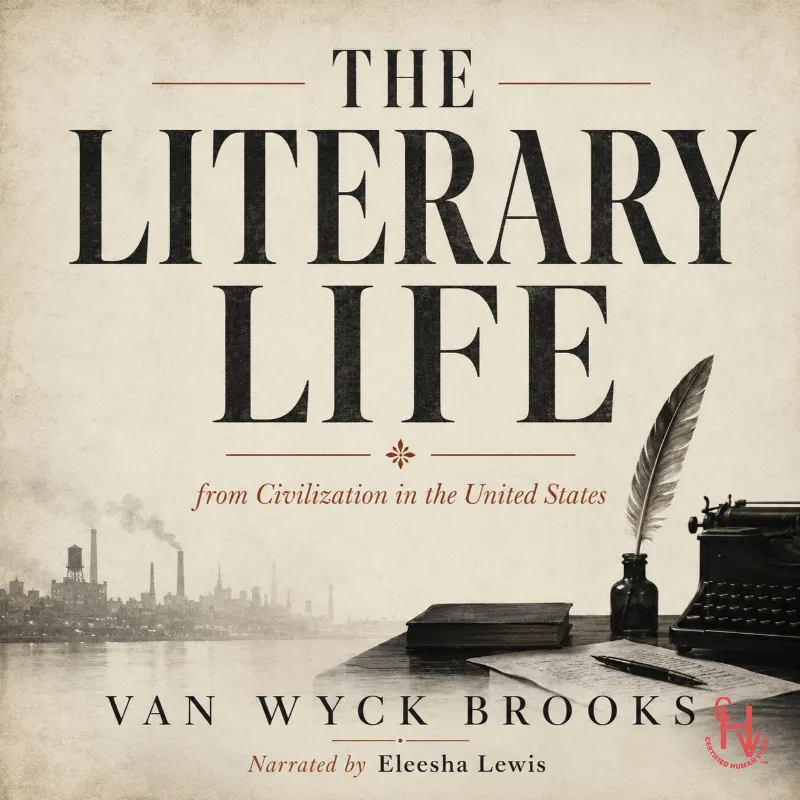
Van Wyck Brooks begins with a minor figure in Edith Wharton's The Age of Innocence: Ned Winsett, a man of letters born into a world that had no need of letters. He sold a hundred and twenty copies of his book and gave up.
Hear it read by Eleesha Lewis: the audiobook is right here
Story guide on this page: summary, characters, discussion questions
Yours to keep: a DRM-free EPUB for any device. Read it here, or on Kindle (with Send to Kindle), Apple Books, Kobo or Google Play Books.
Want both? Buy the audiobook and add the ebook for $0.99.
Free audiobook
Listen to the whole story free
Enter your email and we'll send you a link to the full audiobook of The Literary Life (from Civilization in the United States). No account needed.
We'll also ask if you'd like new audiobooks by email. Privacy Policy
✓ DRM-free, yours to keep. Download the files after you buy and play them anywhere.
Yours to keepBuy once, it stays in your library
Listen anywhereIn our app on your phone or computer
Bought by mistake, or something wrong with the file? Email apica@academyvoices.com within 14 days for a full refund.
Bought by mistake or something wrong with the audio? Email apica@academyvoices.com within 14 days for a full refund.
About this audiobookAbout this book
Van Wyck Brooks begins with a minor figure in Edith Wharton's The Age of Innocence: Ned Winsett, a man of letters born into a world that had no need of letters. He sold a hundred and twenty copies of his book and gave up. Brooks sees in this the fate of the writer's life in America.
This essay comes from Civilization in the United States, a 1922 collection edited by Harold Stearns. Read by Eleesha Lewis in fifty-two minutes.
Story guide
The Literary Life (from Civilization in the United States) summary
Spoiler alert: this summary tells the whole story.
Brooks opens with Ned Winsett, the minor figure in Edith Wharton's The Age of Innocence who publishes one fine little book, sells 120 copies and gives up. Winsett, he says, is a symbol of the literary life in America. The country has plenty of talent, but since the Civil War its writers have rarely kept growing. Where a European writer builds a world of his own over a lifetime, the American writer starts with a fresh note and then becomes less and less himself.
Why? Brooks refuses to simply blame convention or the public, as Theodore Dreiser does. American writers, he says, yield too easily. He traces the weakness to a society built by pioneers and devoted to business: childhoods hurried toward success, a culture that rewards the aggressive and money-making type, poverty that means isolation, and publishers who treat popularity as a virtue. He points to the bitterness of Mark Twain, Henry Adams and Ambrose Bierce, the crippled careers of Sidney Lanier and Herman Melville, and Jack London's regret at wasting his gift.
Above all, Brooks says, America has lacked great literary leaders and a self-respecting community of writers. Howells chose to look only at the smiling side of life, Mark Twain hid his real beliefs, and Henry Adams refused to sign his novels. Without such examples, younger writers lose faith that their work matters.
Brooks ends by arguing that change must come from writers themselves. They must stop feeling like victims, take responsibility for their own freedom and form a "school" of their generation, as Henry Adams once wished. The times, he thinks, are favorable, with a restless younger generation ready for new ideas, and an age of reaction can stir the few to awareness.
The essay is a key document of 1920s American criticism. Its demanding view of what writers owe their own gifts still provokes argument about art, money and culture in America.
Famous lines
The chronic state of our literature is that of a youthful promise which is never redeemed.
Van Wyck Brooks
Weeds and wild flowers! Weeds without beauty or fragrance, and wild flowers that cannot survive the heat of the day.
Van Wyck Brooks
Meanwhile, what constitutes a literature is the spiritual force of the individuals who compose it.
Van Wyck Brooks
Main characters
VW
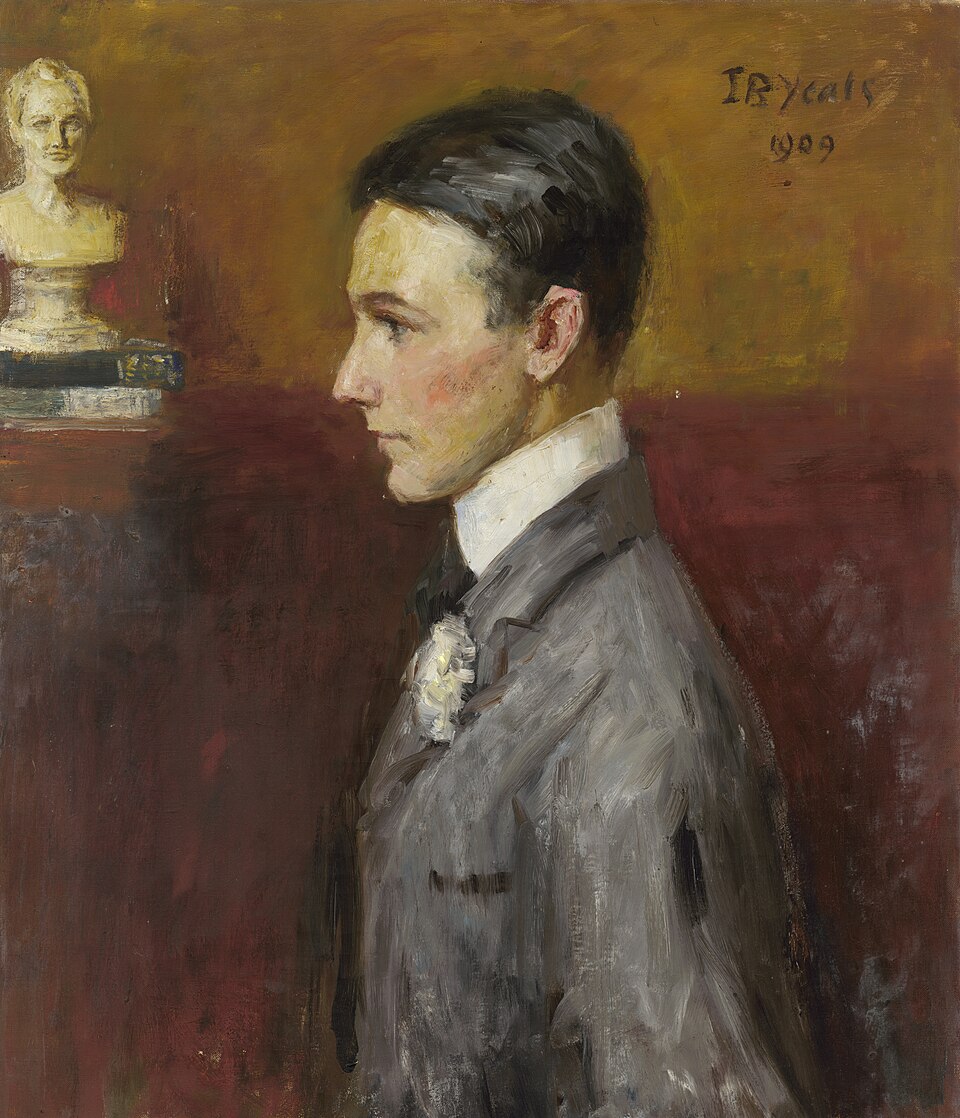
Van Wyck BrooksThe author, an American literary critic and historian.
NW
Ned WinsettA minor character in The Age of Innocence whom Brooks uses as a symbol of the failed American writer.
HA
Henry AdamsThe historian whose wish for a national "school" of young men frames the ending.
MT
Mark Twain and William Dean HowellsLeading writers Brooks believes compromised their gifts.
Van Wyck Brooks coined the phrase "usable past" in a 1918 essay calling on Americans to rediscover their own literary history.
Brooks's book The Ordeal of Mark Twain, published in 1920, argued that Twain's genius had been held back by American society, the same idea that runs through this essay.
Brooks won the Pulitzer Prize for History in 1937 for The Flowering of New England.
Questions to talk about
Why does Brooks begin with Ned Winsett, a minor character from a novel?
Brooks says American writers "yield" to convention rather than being crushed by it. What is the difference, and do you agree?
Which features of American society does he blame for weakening writers? Do any still apply today?
Why does Brooks think great leaders and a community of writers matter so much?
Is Brooks too harsh on writers like Mark Twain and Howells? Make a case for or against his view.
New listeners
Get 25% off your first audiobook
Join our list and we'll email you 25% off, plus new releases from our store. Every one is read by a real person. No account needed.
Details
Length
52 min
Narration
Solo narrator
Format
Unabridged audiobook
Publisher
Academy Voices
Language
English
ISBN
9798182620925
Questions
What is The Literary Life (from Civilization in the United States) about?
Critic Van Wyck Brooks argues that American writers of the past fifty years have shown great promise but rarely grown, because American life starves the creative spirit.
Who are the main characters in The Literary Life (from Civilization in the United States)?
Van Wyck Brooks, the author, an American literary critic and historian; Ned Winsett, a minor character in The Age of Innocence whom Brooks uses as a symbol of the failed American writer; Henry Adams, the historian whose wish for a national "school" of young men frames the ending; Mark Twain and William Dean Howells, leading writers Brooks believes compromised their gifts; Theodore Dreiser, the novelist whose view that convention crushes writers Brooks partly disputes.
Who narrates The Literary Life (from Civilization in the United States) audiobook?
This edition of The Literary Life (from Civilization in the United States) by Van Wyck Brooks is narrated by Eleesha Lewis.
How long is The Literary Life (from Civilization in the United States) audiobook?
It runs 52 min, unabridged, so you hear the complete text.
Is this audiobook narrated by a real person?
Yes. Every Academy Voices audiobook is Certified Human Voice: performed start to finish by a real narrator.
Where can I listen to The Literary Life (from Civilization in the United States)?
Right here: buy it on Academy Voices and listen in your browser or our app. Hear a free sample on this page first.