Written by
Maynard Shipley4 audiobooks with Academy Voices
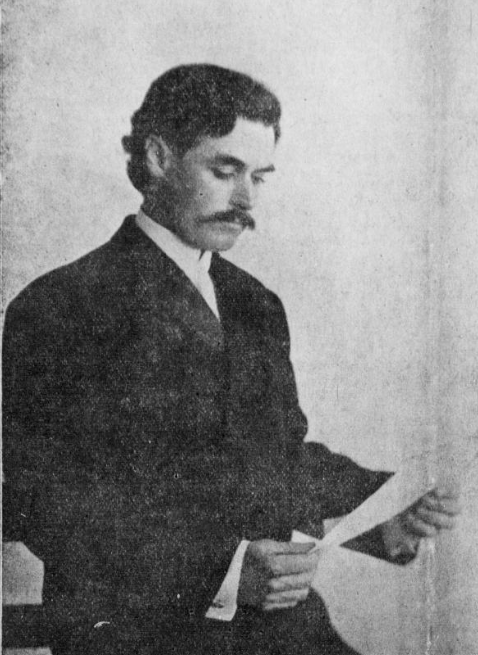
Maynard Shipley was an American writer and lecturer who explained science to general readers, including short books on radium, atoms and hypnotism.More about Maynard Shipley →
Read by a real person
Luke Oldham15 audiobooks with Academy Voices
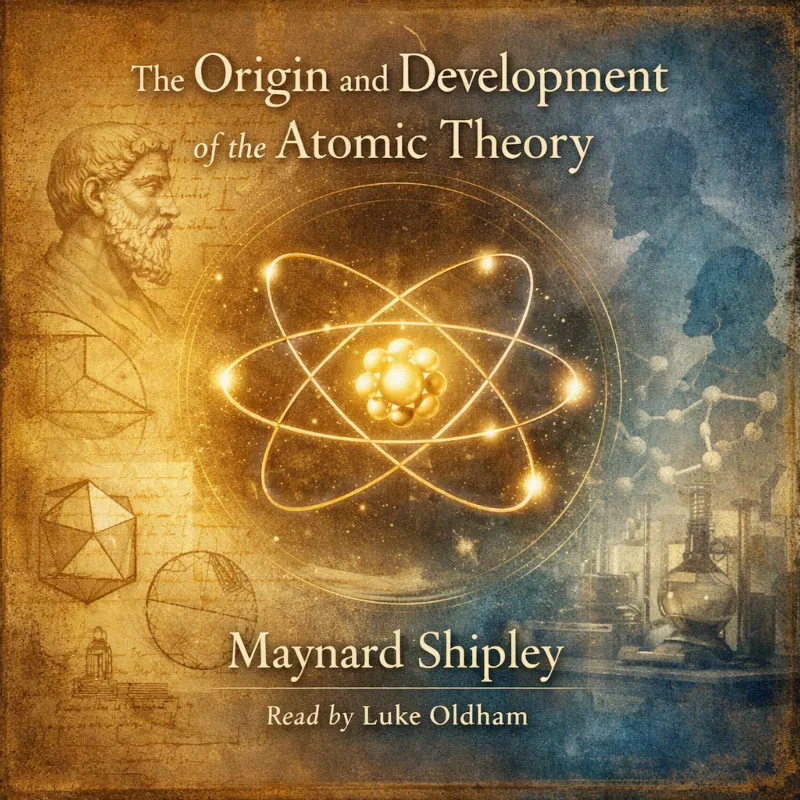
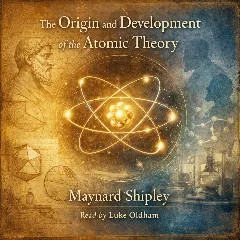
How do we know what everything is made of? This short book traces the idea of the atom from its first appearance among the ancient Greek philosophers up to the physics of the early twentieth century.
Hear it read by Luke Oldham: the audiobook is right here
Story guide on this page: summary, characters, discussion questions
Yours to keep: a DRM-free EPUB for any device. Read it here, or on Kindle (with Send to Kindle), Apple Books, Kobo or Google Play Books.
Want both? Buy the audiobook and add the ebook for $0.99.
Free audiobook
Listen to the whole story free
Enter your email and we'll send you a link to the full audiobook of The origin and development of the atomic theory. No account needed.
We'll also ask if you'd like new audiobooks by email. Privacy Policy
✓ DRM-free, yours to keep. Download the files after you buy and play them anywhere.
Yours to keepBuy once, it stays in your library
Listen anywhereIn our app on your phone or computer
Bought by mistake, or something wrong with the file? Email apica@academyvoices.com within 14 days for a full refund.
Bought by mistake or something wrong with the audio? Email apica@academyvoices.com within 14 days for a full refund.
About this audiobookAbout this book
How do we know what everything is made of? This short book traces the idea of the atom from its first appearance among the ancient Greek philosophers up to the physics of the early twentieth century. It begins with the Pythagoreans, Leucippus and Democritus, then moves on to Epicurus and Lucretius and the later thinkers who kept the idea alive.
Maynard Shipley wrote it as a Little Blue Book in 1924 for ordinary readers, not specialists. Luke Oldham reads it in about an hour and twenty minutes.
For anyone curious how an old idea became modern science.
Story guide
The origin and development of the atomic theory summary
Spoiler alert: this summary tells the whole story.
Maynard Shipley calls the atomic theory one of the most romantic stories in the history of science. He begins with ancient India, where thinkers such as Kanada described eternal atoms, and then turns to the Pythagoreans of Greece. Their follower Philolaus pictured each "element" as made of particles with a geometric shape: cubes for earth, pyramids for fire. Shipley compares this to the 1920s idea that electrons sit at the corners of shapes inside atoms, and he explains how adding or removing charges could turn one element into another.
The heart of the book is Leucippus and his famous pupil Democritus, who taught that all things are made of tiny, uncuttable atoms moving through empty space, differing only in size, shape and arrangement. Democritus said that tastes and colors exist only in our senses, and that in truth there are only atoms and the void. Shipley explains how Leucippus answered the Eleatic philosopher Parmenides, who denied that motion and empty space could exist, and how Aristotle argued against the atomists.
Next come Epicurus and the Roman poet Lucretius, who revived atomism. Epicurus believed in countless worlds and thought the atomic view could free people from superstition and fear of the gods. Finally, Shipley traces the idea through Descartes and Gassendi, Boyle and Newton, to John Dalton, whose New System of Chemical Philosophy (1808) founded modern chemical atomic theory. He explains Dalton's laws of definite and multiple proportions with simple examples using hydrogen, oxygen and nitrogen.
The book shows how an ancient guess became one of the foundations of modern science. It is also a time capsule of 1924, written just before quantum mechanics changed atomic physics again.
Famous lines
It is safe to say that there is no more romantic story in the history of science than that of the origin and development of the atomic theory of matter.
The opening line
Only in opinion consists sweetness, bitterness, cold, color; in truth there is nothing but the atoms and empty space,
Democritus, as quoted by Shipley
Nothing happens without a cause, but everything with a cause and by necessity
Leucippus, his one surviving fragment
Main characters
D
DemocritusThe Greek philosopher of Abdera who made the atomic theory famous.
L
LeucippusDemocritus's teacher and the true founder of Greek atomism.
PP
Pythagoras and PhilolausEarly Greek thinkers who linked tiny particles to geometric shapes.
E
EpicurusThe Greek philosopher who revived atomism to free people from fear.
L
LucretiusThe Roman poet who explained Epicurus's atomic ideas in verse.
JD
John DaltonThe English teacher who founded modern chemical atomic theory.
Did you know?
The word "atom" comes from the Greek atomos, meaning "uncuttable," as the book explains.
Little Blue Books were cheap pocket booklets, often sold for five cents, meant to bring learning to ordinary readers.
John Dalton published A New System of Chemical Philosophy, the foundation of modern chemical atomic theory, in 1808.
Questions to talk about
How could Democritus guess that matter is made of atoms without any modern tools?
Why did Parmenides think motion was impossible, and how did Leucippus answer him?
Why did Epicurus think atomic theory could make people happier?
Which ideas in this 1924 book have since been proven wrong or out of date?
What does this history teach about how scientific ideas grow and change?
Chapters
The origin and development of the atomic theory chapters
ChapterStarts at
Chapter 10:19
Chapter 223:00
Chapter 341:42
Chapter 41:00:30
Chapter 51:11:27
New listeners
Get 25% off your first audiobook
Join our list and we'll email you 25% off, plus new releases from our store. Every one is read by a real person. No account needed.
Details
Length
1 hr 22 min
Narration
Solo narrator
Format
Unabridged audiobook
Publisher
Academy Voices
Language
English
ISBN
9798295374944
Questions
What is The origin and development of the atomic theory about?
A short history of the idea that everything is made of tiny atoms, from the ancient Greek and Indian thinkers to John Dalton and the atomic science of the 1920s.
Who are the main characters in The origin and development of the atomic theory?
Democritus, the Greek philosopher of Abdera who made the atomic theory famous; Leucippus, democritus's teacher and the true founder of Greek atomism; Pythagoras and Philolaus, early Greek thinkers who linked tiny particles to geometric shapes; Epicurus, the Greek philosopher who revived atomism to free people from fear; Lucretius, the Roman poet who explained Epicurus's atomic ideas in verse; John Dalton, the English teacher who founded modern chemical atomic theory.
Who narrates The origin and development of the atomic theory audiobook?
This edition of The origin and development of the atomic theory by Maynard Shipley is narrated by Luke Oldham.
How long is The origin and development of the atomic theory audiobook?
It runs 1 hr 22 min, unabridged, so you hear the complete text.
Is this audiobook narrated by a real person?
Yes. Every Academy Voices audiobook is Certified Human Voice: performed start to finish by a real narrator.
Where can I listen to The origin and development of the atomic theory?
Right here: buy it on Academy Voices and listen in your browser or our app. Hear a free sample on this page first.