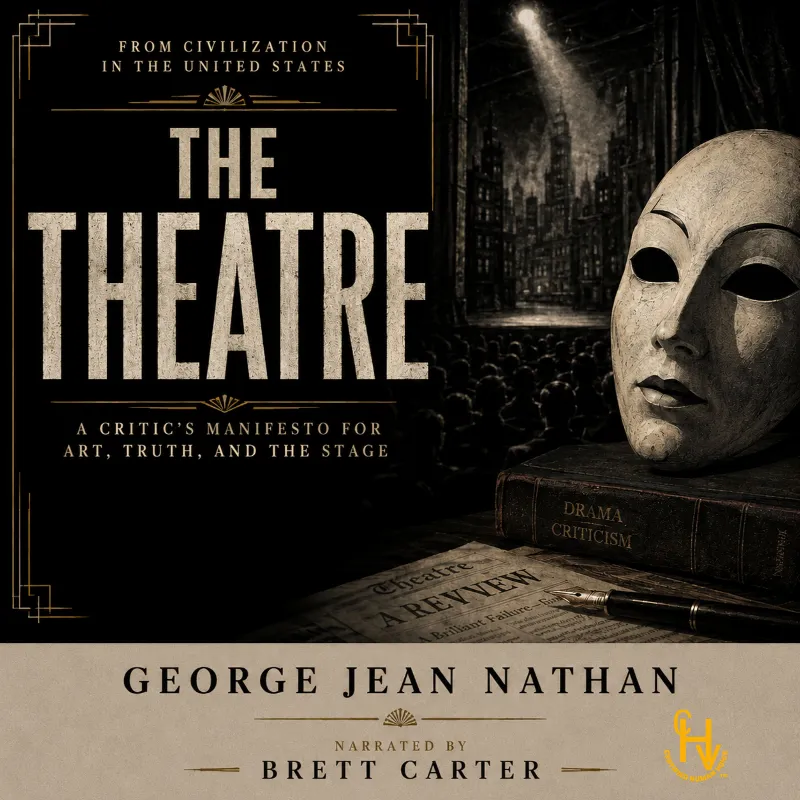
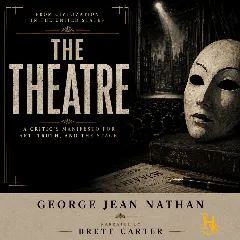
Why is it so hard for a good play to succeed in America? George Jean Nathan, the era's best known drama critic, says the answer is that outside New York hardly anyone will pay for one.
Hear it read by Brett Carter: the audiobook is right here
Story guide on this page: summary, characters, discussion questions
Yours to keep: a DRM-free EPUB for any device. Read it here, or on Kindle (with Send to Kindle), Apple Books, Kobo or Google Play Books.
Want both? Buy the audiobook and add the ebook for $0.99.
Free audiobook
Listen to the whole story free
Enter your email and we'll send you a link to the full audiobook of The Theatre (from Civilization in the United States). No account needed.
We'll also ask if you'd like new audiobooks by email. Privacy Policy
✓ DRM-free, yours to keep. Download the files after you buy and play them anywhere.
Yours to keepBuy once, it stays in your library
Listen anywhereIn our app on your phone or computer
Bought by mistake, or something wrong with the file? Email apica@academyvoices.com within 14 days for a full refund.
Bought by mistake or something wrong with the audio? Email apica@academyvoices.com within 14 days for a full refund.
About this audiobookAbout this book
Why is it so hard for a good play to succeed in America? George Jean Nathan, the era's best known drama critic, says the answer is that outside New York hardly anyone will pay for one. He argues that taste in music, books and painting is improving, but the theater lags behind, and that the road audience prefers fluff to Shaw, O'Neill and Galsworthy.
The essay comes from Civilization in the United States, a 1922 collection edited by Harold Stearns. Brett Carter reads it in thirty-three minutes.
For theater lovers who enjoy a good argument.
Story guide
The Theatre (from Civilization in the United States) summary
Spoiler alert: this summary tells the whole story.
Nathan begins by admitting that American taste in books, music and painting is slowly improving. The theatre, he says, shows the least improvement of all. A fine play like Eugene O'Neill's Beyond the Horizon has to fight to survive, while light farces and melodramas run on and on and earn half a million dollars.
He argues that serious drama can live only in New York. Outside it, in Boston, Chicago, Philadelphia, Washington and the rest, good plays fail unless a popular star carries them, while leg shows, bedroom farces and sentimental hits make fortunes. He gives examples: Chicago spending a few thousand dollars on an O'Neill drama the same week it spent many times that on an Al Jolson revue, and Boston crowding to shows sold with racy advertising. Even in New York, the best European and American playwrights are first heard in small theatres up side streets and alleys, so that American theatrical culture is an "alleyway culture."
Nathan puts the main blame not on producers, who he says will buy any good play, but on American playwrights. Most of them, he writes, care only for money and success. He names O'Neill as the one shining exception and dismisses many popular writers of the day. He also attacks newspapers, which, he says, give far more space to scandal than to Shakespeare or Galsworthy and praise plays whose producers buy advertising.
He sees young hope in a few people, among them the producer Arthur Hopkins, O'Neill and a handful of designers and writers, but says they are held back by Puritanism, hypocrisy, censors, moral reformers and ignorant critics. He ends by judging the national theatre as still not much better than a carnival midway.
Written with Nathan's famous bite, the essay is a lively snapshot of Broadway in the early 1920s, just as O'Neill was rising. It records the names, hits and arguments of a lost theatrical world.
Famous lines
The culture of the American theatre—in so far as it exists—may be said, in fact, to be an alleyway culture.
George Jean Nathan
No, the fault is not with the managers and producers, but with the playwrights.
George Jean Nathan
The American professional theatre is to-day at once the richest theatre in the world, and the poorest.
George Jean Nathan
Main characters
GJ
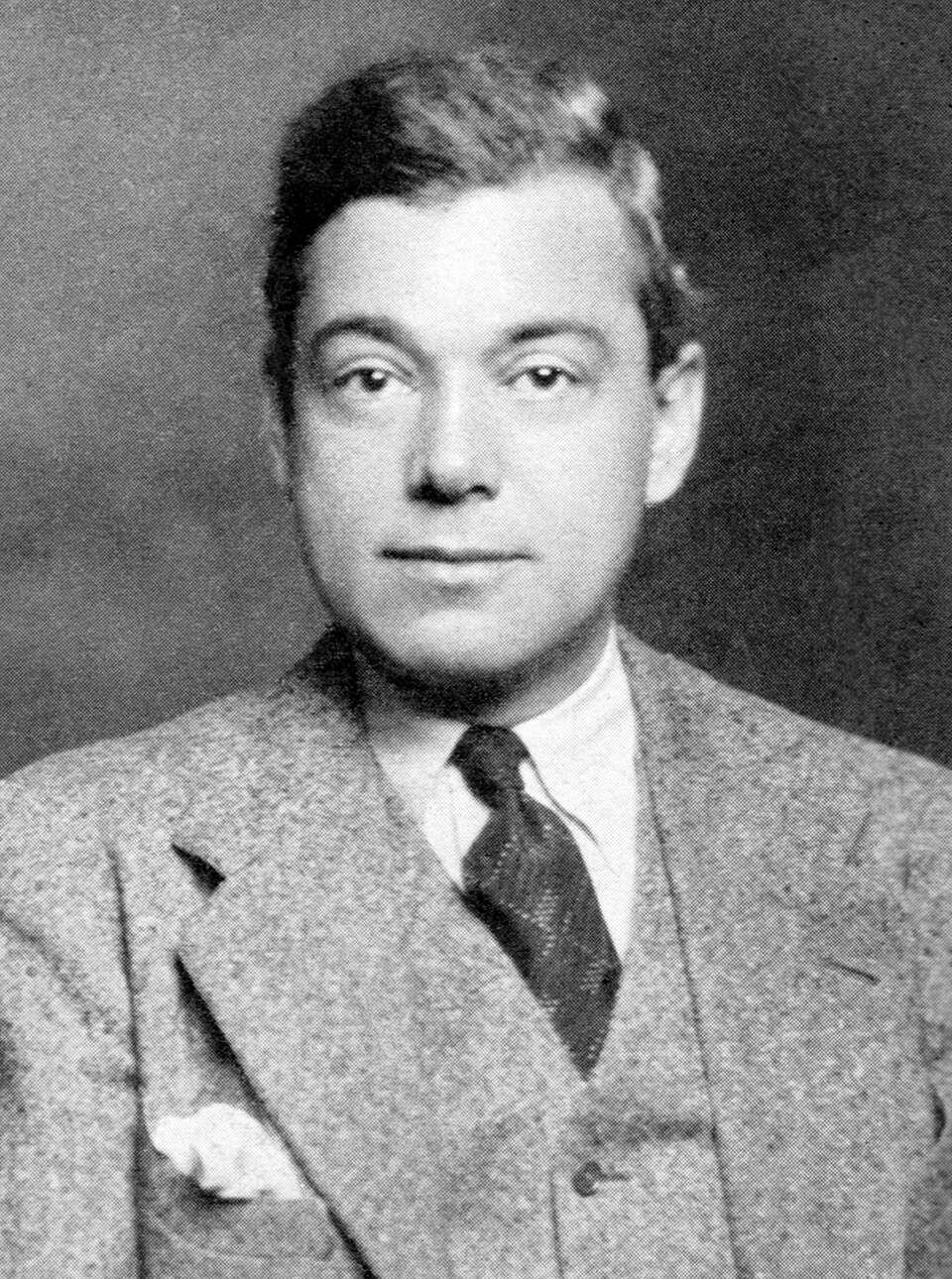
George Jean NathanThe author, an influential and witty New York drama critic.
EO
Eugene O'NeillThe young playwright Nathan holds up as the great hope of American drama.
AH
Arthur HopkinsA producer Nathan praises for his passion for fine and beautiful work.
AH
A. H. WoodsA producer who made fortunes with racy farces.
Did you know?
Nathan co-edited The Smart Set magazine with H. L. Mencken, and the two later founded The American Mercury.
Nathan was one of Eugene O'Neill's earliest champions, and The Smart Set published some of O'Neill's early plays.
Civilization in the United States gathered essays by thirty writers, each looking critically at one side of American life.
Questions to talk about
Why does Nathan say good plays can survive only in New York? Do you think something similar is true of the arts today?
Who does Nathan blame most for the poor state of the theatre, and why does he let producers off the hook?
What does he mean by calling American theatre an "alleyway culture"?
How does Nathan describe the newspapers' treatment of theatre? Is his criticism fair?
Nathan names Eugene O'Neill as the great exception. Knowing how O'Neill's career turned out, how good was Nathan's judgment?
New listeners
Get 25% off your first audiobook
Join our list and we'll email you 25% off, plus new releases from our store. Every one is read by a real person. No account needed.
Details
Length
29 min
Narration
Solo narrator
Format
Unabridged audiobook
Publisher
Academy Voices
Language
English
ISBN
9798240181986
Questions
What is The Theatre (from Civilization in the United States) about?
Drama critic George Jean Nathan's sharp 1922 essay arguing that the American theatre, outside a small corner of New York, rewards trash and starves good plays.
Who are the main characters in The Theatre (from Civilization in the United States)?
George Jean Nathan, the author, an influential and witty New York drama critic; Eugene O'Neill, the young playwright Nathan holds up as the great hope of American drama; Arthur Hopkins, a producer Nathan praises for his passion for fine and beautiful work; A. H. Woods, a producer who made fortunes with racy farces.
Who narrates The Theatre (from Civilization in the United States) audiobook?
This edition of The Theatre (from Civilization in the United States) by George Jean Nathan is narrated by Brett Carter.
How long is The Theatre (from Civilization in the United States) audiobook?
It runs 29 min, unabridged, so you hear the complete text.
Is this audiobook narrated by a real person?
Yes. Every Academy Voices audiobook is Certified Human Voice: performed start to finish by a real narrator.
Where can I listen to The Theatre (from Civilization in the United States)?
Right here: buy it on Academy Voices and listen in your browser or our app. Hear a free sample on this page first.