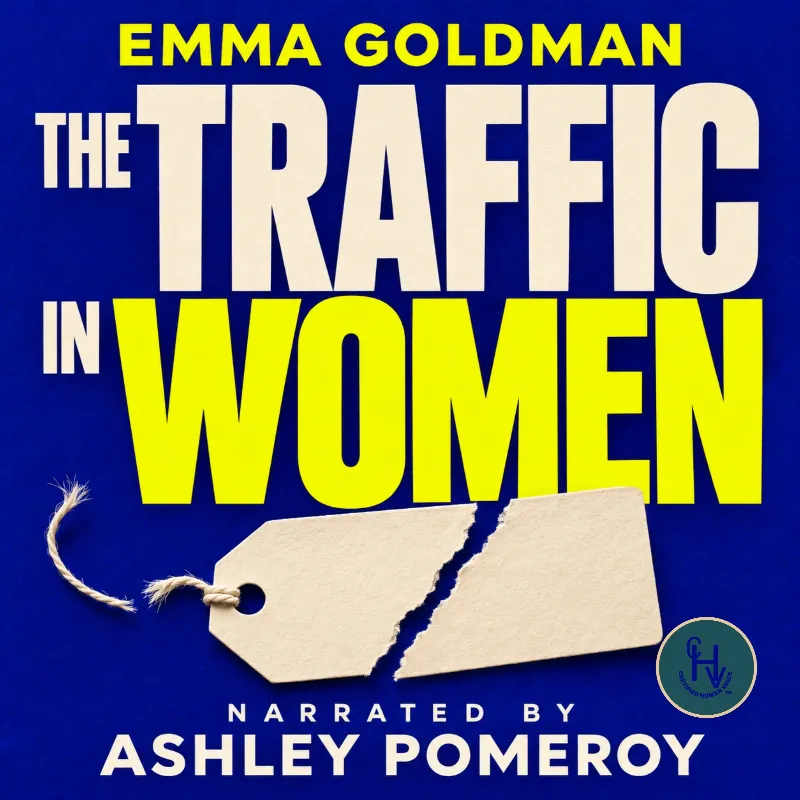
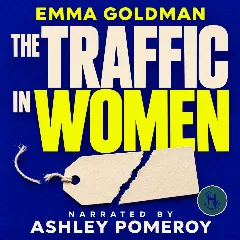
A blistering, clear-eyed takedown of the early 20th-century white-slave panic, Emma Goldman's The Traffic in Women exposes the real engines behind prostitution: poverty wages, industrial exploitation, sexual ignorance, and a hypocritical double standard.
Hear it read by Ashley Pomeroy: the audiobook is right here
Story guide on this page: summary, characters, discussion questions
Yours to keep: a DRM-free EPUB for any device. Read it here, or on Kindle (with Send to Kindle), Apple Books, Kobo or Google Play Books.
Want both? Buy the audiobook and add the ebook for $0.99.
Free audiobook
Listen to the whole story free
Enter your email and we'll send you a link to the full audiobook of The Traffic in Women. No account needed.
We'll also ask if you'd like new audiobooks by email. Privacy Policy
✓ DRM-free, yours to keep. Download the files after you buy and play them anywhere.
Yours to keepBuy once, it stays in your library
Listen anywhereIn our app on your phone or computer
Bought by mistake, or something wrong with the file? Email apica@academyvoices.com within 14 days for a full refund.
Bought by mistake or something wrong with the audio? Email apica@academyvoices.com within 14 days for a full refund.
About this audiobookAbout this book
A blistering, clear-eyed takedown of the early 20th-century white-slave panic, Emma Goldman's The Traffic in Women exposes the real engines behind prostitution: poverty wages, industrial exploitation, sexual ignorance, and a hypocritical double standard. With fearless logic and biting wit, Goldman indicts moral crusaders, police graft, and church-sanctioned prudery, arguing that suppression and scandal only drive the sex trade deeper and make it more dangerous.
Drawing on contemporary studies and on-the-ground observation, she shows how capitalism commodifies women, how marriage and respectability can mirror the very transactions they condemn, and why humane treatment and honest sex education—not raids and new laws—offer the only path to change.
Ashley Pomeroy delivers a lucid, engaged performance that lets Goldman's rhetoric crackle while keeping the argument crystal clear. The result is a compact, provocative listen that still feels startlingly current—essential for listeners interested in feminism, labor history, criminal justice, and the roots of sex work policy.
From the narrator
Even though this was written over a hundred years ago, the subject is still relevant today. Emma Goldman's passion for the subject is felt in her writing. I hope listeners feel that passion and are inspired after listening.
Story guide
The Traffic in Women summary
Spoiler alert: this summary tells the whole story.
Goldman opens by mocking the reformers who have suddenly "discovered" the white slave traffic. Prostitution, she says, is as old as society, and every child knows of it. Moral crusades against vice come and go like new toys for a fickle public, creating political jobs while changing nothing. The real cause, she argues, is economic. Women are paid about six dollars for a week of forty-eight to sixty hours, and are treated everywhere as a sex rather than for the merit of their work. She praises Reginald Wright Kauffman's novel The House of Bondage and cites Dr. Sanger, Alfred Blaschko and Havelock Ellis to show that most prostitutes come from poor working women and servants.
She turns next to religion, pointing to ancient temple prostitution and to medieval popes and Church officials who tolerated or profited from brothels. She then names a second cause: ignorance about sex. Girls are raised to please men yet taught nothing about their own bodies. Society forgives a man's experience but brands a woman forever for one step off the "path of virtue," which leaves her an outcast with nowhere to go but the street. Goldman goes further, arguing that a woman who marries purely for money is not so different from a prostitute.
Goldman attacks the claim that prostitutes are mostly imported from Europe, or that Jewish girls are brought over in large numbers. Most women on New York's streets, she says, were made by American conditions. She cites reports of American women being sent to Panama and to ports in Asia. She describes how police collect fines and bribes from the women they arrest, and argues that the pimp, or "cadet," grew out of police crackdowns that drove women from brothels onto the street.
She ends by rejecting harsher laws, which only drive the problem underground. What is needed, she says, is to see the prostitute as a product of social conditions, to drop the attitude of "better than thou," and finally to change our moral values and abolish "industrial slavery." The essay remains a sharp, early example of linking sex work to wages, education and women's rights.
Famous lines
Our reformers have suddenly made a great discovery—the white slave traffic.
The opening line
Nowhere is woman treated according to the merit of her work, but rather as a sex.
Emma Goldman
It is our sham and hypocrisy that create both the prostitute and the cadet.
Emma Goldman
We must rise above our foolish notions of "better than thou," and learn to recognize in the prostitute a product of social conditions.
Emma Goldman
Main characters
EG
Emma GoldmanThe anarchist writer and speaker whose voice and arguments drive the essay.
RW
Reginald Wright KauffmanThe journalist whose novel The House of Bondage Goldman praises as an honest treatment of the subject.
HE
Havelock EllisThe British writer on sex whose studies Goldman quotes most often.
S
Dr. SangerThe author of The History of Prostitution, whose study of 2,000 cases Goldman uses as evidence.
CG
Clifford G. RoeA former Illinois prosecutor who charged that American girls were being sent to Panama.
Did you know?
The same year this essay appeared, 1910, Congress passed the Mann Act, also called the White-Slave Traffic Act.
Emma Goldman founded the anarchist magazine Mother Earth in 1906.
In 1919 the United States deported Goldman to Soviet Russia along with her longtime partner Alexander Berkman.
Questions to talk about
Why does Goldman think the "white slave" panic is a distraction? Do you find her argument convincing?
What does she mean when she says the difference between marriage for money and prostitution is "merely a question of degree"?
How does Goldman connect sex education to prostitution?
Why does she argue that tougher laws and police raids make things worse?
Which of Goldman's arguments still come up in debates today, and which feel dated?
New listeners
Get 25% off your first audiobook
Join our list and we'll email you 25% off, plus new releases from our store. Every one is read by a real person. No account needed.
Details
Length
36 min
Narration
Solo narrator
Format
Unabridged audiobook
Publisher
Anthony Pica Productions, LLC
Language
English
Questions
What is The Traffic in Women about?
Emma Goldman argues that prostitution is caused not by foreign villains or a sudden "white slave" crisis but by low wages, sexual ignorance and society's double standard for women.
Who are the main characters in The Traffic in Women?
Emma Goldman, the anarchist writer and speaker whose voice and arguments drive the essay; Reginald Wright Kauffman, the journalist whose novel The House of Bondage Goldman praises as an honest treatment of the subject; Havelock Ellis, the British writer on sex whose studies Goldman quotes most often; Dr. Sanger, the author of The History of Prostitution, whose study of 2,000 cases Goldman uses as evidence; Clifford G. Roe, a former Illinois prosecutor who charged that American girls were being sent to Panama.
Who narrates The Traffic in Women audiobook?
This edition of The Traffic in Women by Emma Goldman is narrated by Ashley Pomeroy.
How long is The Traffic in Women audiobook?
It runs 36 min, unabridged, so you hear the complete text.
Is this audiobook narrated by a real person?
Yes. Every Academy Voices audiobook is Certified Human Voice: performed start to finish by a real narrator.
Where can I listen to The Traffic in Women?
Right here: buy it on Academy Voices and listen in your browser or our app. Hear a free sample on this page first.