10 Classic Horror Audiobooks for Halloween
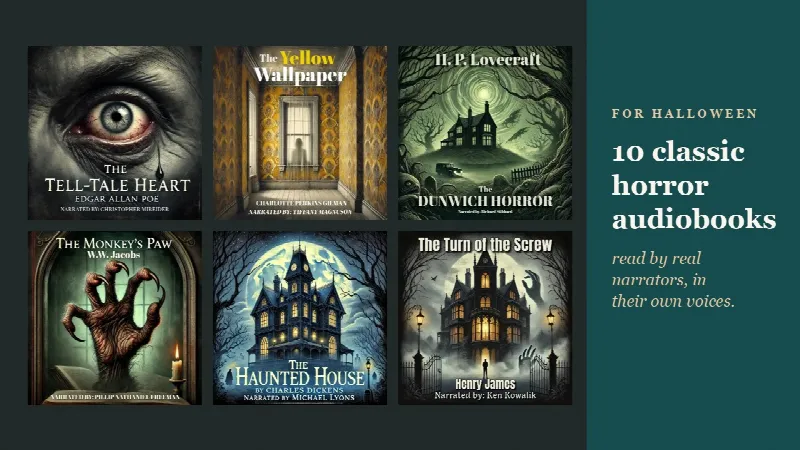
The best classic horror audiobooks for Halloween are the stories that were written to be heard: Poe's The Tell-Tale Heart, Jacobs's The Monkey's Paw, Lovecraft's The Dunwich Horror and Henry James's The Turn of the Screw. Here are ten from our catalog, from 20-minute scares to a full weekend with Dracula, each read by a real narrator in their own voice.
Every title below has a free sample you can play right on this page. Start with whatever fits the time you have.
Classic horror audiobooks at a glance
| Title | Author | Narrated by | Listening time | Best for |
|---|---|---|---|---|
| The Tell-Tale Heart | Edgar Allan Poe | Christopher Mireider | Under 30 minutes | A quick scare |
| The Yellow Wallpaper | Charlotte Perkins Gilman | Tiffany Magnuson | Under an hour | Slow, creeping dread |
| The Haunted House | Charles Dickens | Michael Lyons | An evening | Sharing with family |
| The Dunwich Horror | H. P. Lovecraft | Richard Stibbard | About two hours | Monsters and atmosphere |
| The Monkey's Paw | W. W. Jacobs | Phillip Nathaniel Freeman | Under 30 minutes | A quick scare |
| The Fall of the House of Usher | Edgar Allan Poe | Rob Sogomonian | Under an hour | Headphones in the dark |
| The Call of Cthulhu | H. P. Lovecraft | Gabrielle Nistico | About an hour and a half | Cosmic horror |
| The Turn of the Screw | Henry James | Ken Kowalik | An evening or two (about 5 hours) | A slow, uneasy evening |
| Dracula | Bram Stoker | Eric Priessman, Julie Ann Marra and Jane Wing | A long weekend (about 16 hours) | A long weekend |
| The Canterville Ghost | Oscar Wilde | Simon Relph | About an hour | Listening with kids |
Listening times are approximate.
Why horror works better out loud
Most of these stories were written in the 1800s and early 1900s, when reading aloud was how families spent their evenings. Poe, Dickens and Jacobs knew their stories would be performed, and they built them for the ear: short sentences, repeated sounds, a pause before the reveal.
An audiobook gives that back. You can't skim ahead to see what's behind the door. You hear it when the narrator decides you're ready. A good horror narrator does most of their work in pacing and restraint, not in spooky voices, and that's what to listen for in the samples below.
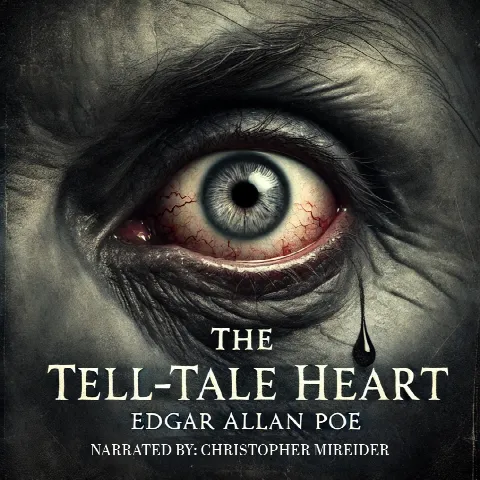
The Tell-Tale Heart by Edgar Allan Poe
A man insists he is not mad, then calmly explains how he killed the old man he lived with, and why he can still hear the old man's heart beating under the floorboards.
Poe wrote this story to be performed. It is one long, rising confession, and on the page you read it at your own speed. Out loud, you're trapped at the narrator's pace, which is exactly the point.
Listen for: how the voice tightens as the heartbeat gets louder. The story lives or dies on that build, and a good narrator never rushes it.
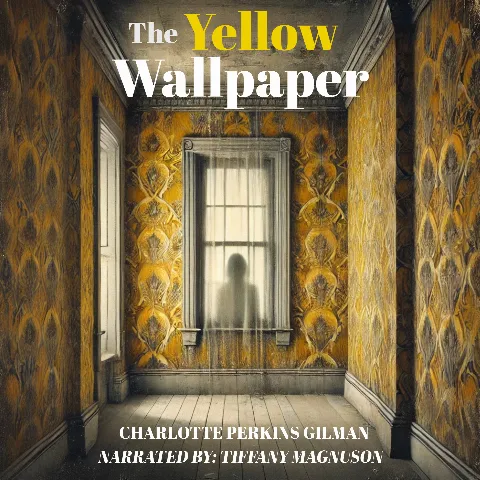
The Yellow Wallpaper by Charlotte Perkins Gilman
A woman is sent to rest in an old country house, shut in an upstairs room, and forbidden to write. She starts to see a figure moving behind the pattern of the wallpaper. The original story is free to read on Project Gutenberg.
It is written as her private journal, so hearing it feels like reading over her shoulder. There are no monsters. The fear comes from watching someone's mind slip while everyone around her insists she is fine.
Listen for: the small changes in tone from one entry to the next. It starts almost cheerful.
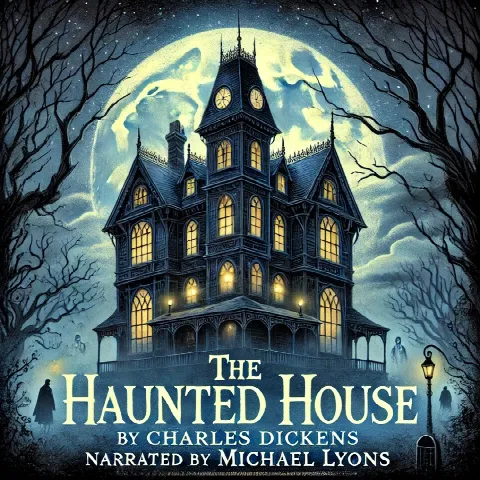
The Haunted House by Charles Dickens
A man rents a house the whole village says is haunted, invites a group of friends to spend the winter there, and asks each of them to report what they find in their room.
Dickens wrote ghost stories to be read aloud by the fire at Christmas (a Victorian tradition he helped make popular), and this one has his warmth and humor wrapped around the chills. It is the gentlest pick on this list and a good one to share.
Listen for: Dickens's characters. Each guest has a different voice, and the fun is in hearing them come alive.
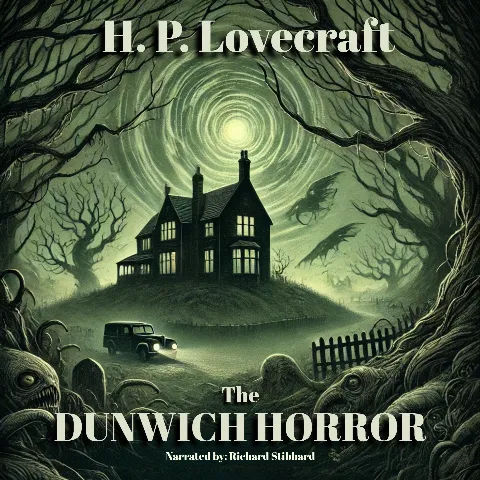
The Dunwich Horror by H. P. Lovecraft
In a decaying farm town in the hills of Massachusetts, a strange boy grows far too fast, cattle go missing, and something enormous and invisible starts leaving tracks.
This is Lovecraft at his most cinematic: a slow build, then a full-scale climax on a hilltop. It also has some of his thickest rural dialect, which is much easier to follow when someone performs it for you.
Listen for: the townspeople's voices against the scholarly narration. That contrast carries the whole story.
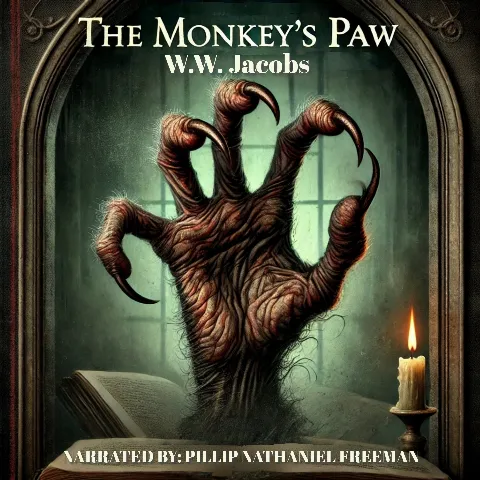
The Monkey's Paw by W. W. Jacobs
An old soldier brings a dried monkey's paw home from India and warns a family that it grants three wishes, at a terrible price. They make a wish anyway.
It is one of the most copied horror stories ever written, and the original is still the best. Almost everything frightening happens off the page, in a knock at the door you never see opened.
Listen for: the silences. The final scene depends on what the narrator does not say.
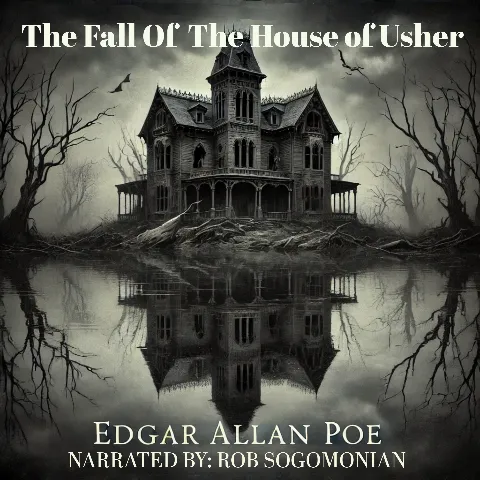
The Fall of the House of Usher by Edgar Allan Poe
A man visits his childhood friend Roderick Usher at his crumbling family mansion. Roderick is terrified of everything, his twin sister is dying, and the house itself seems to be listening.
Poe builds the whole story on atmosphere: sound, light, the cracks in the walls. It is a story about hearing things, which makes it ideal for headphones.
Listen for: the storm scene near the end, where the story being read aloud inside the story starts to match what is happening in the house.
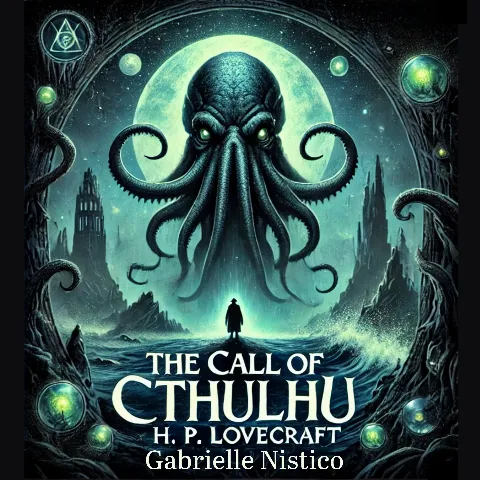
The Call of Cthulhu by H. P. Lovecraft
A man going through his late great-uncle's papers finds notes on a strange cult, a sculpture of a winged monster, and a sailor's account of something that rose from the sea.
Told as a set of documents pieced together, it moves from a quiet study to a ship in the South Pacific. It is the story that launched a thousand monsters, and it is surprisingly short.
Listen for: the sailor's account near the end, where the dry research turns into a first-hand nightmare.
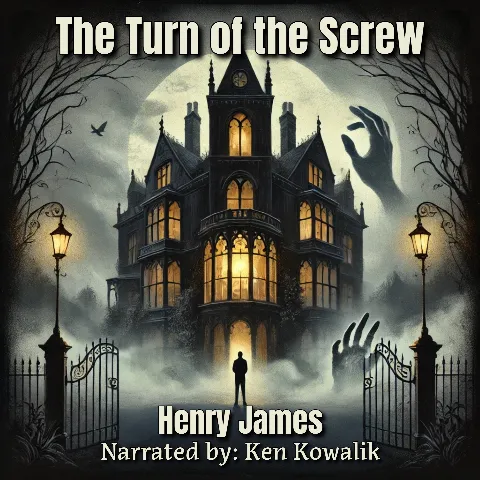
The Turn of the Screw by Henry James
A young governess takes charge of two children at a remote country estate and begins to see a man and a woman who should not be there. The original novella is free to read on Project Gutenberg.
Readers have argued for more than a century about whether the ghosts are real or the governess is losing her mind. Hearing it in her voice makes that question even harder to answer.
Listen for: how sure the governess sounds. Her certainty is the scariest thing in the book.
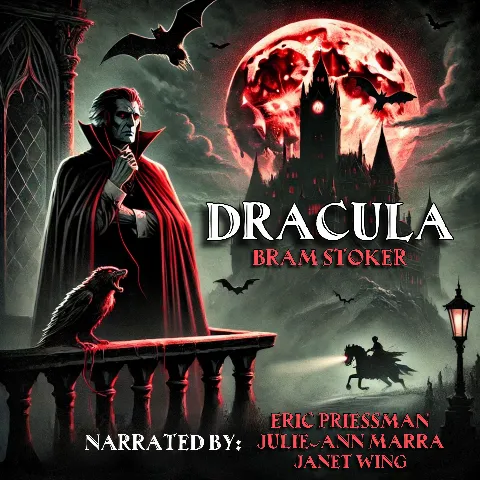
Dracula by Bram Stoker
A young lawyer travels to Transylvania to help a nobleman buy property in England, and slowly realizes he is a prisoner in the castle.
Dracula is told through diaries, letters and newspaper clippings, which is why our recording uses three narrators. Each voice belongs to the person writing, so you always know whose story you're in.
Listen for: the hand-offs between narrators. It turns the novel into something closer to a radio drama.
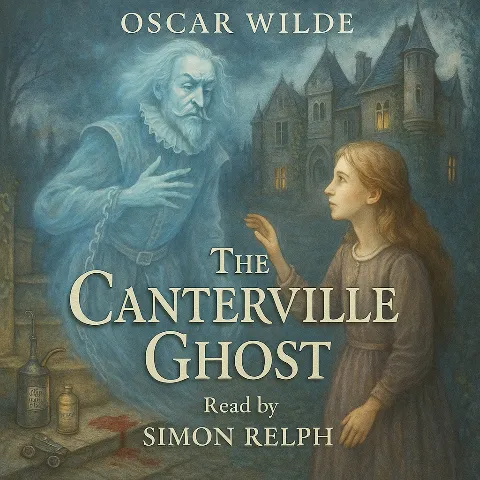
The Canterville Ghost by Oscar Wilde
An American family buys an English castle with a 300-year-old ghost, and refuses to be scared of him. The ghost, insulted, tries harder and harder to frighten them.
It is a comedy wearing a ghost story's clothes, and it ends somewhere surprisingly tender. If you're listening with children, start here.
Listen for: Wilde's jokes. They land best spoken out loud.
What makes a great horror narration
Horror is one of the hardest genres to narrate well, and one of the easiest to overdo. A few things separate a recording that gets under your skin from one that sounds like a haunted house ride:
- Restraint. The best narrators let the words do the work. A calm voice describing something terrible is far scarier than a dramatic one.
- Pacing. Dread comes from timing: a beat of silence before a door opens, a sentence that speeds up as a character panics. Rushing kills it.
- A believable first person. Many classic horror stories are confessions or diaries. The narrator has to sound like a real person you half trust, not a villain announcing himself.
- Clean audio. Quiet passages expose every hiss and room noise. Good horror recordings are recorded and edited so the silence is truly silent.
Every recording on this list was performed by a real person, in their own voice, start to finish. You can hear the choices each narrator made in the free samples above: where they slow down, where they go quiet, and where they let a line land.
How to choose your first one
- If you have a commute: The Tell-Tale Heart or The Monkey's Paw. Done before you park.
- If you want to be properly unsettled: The Yellow Wallpaper, then The Turn of the Screw.
- If you love creature features: The Dunwich Horror, then The Call of Cthulhu.
- If you're driving somewhere far: Dracula. Sixteen hours goes faster than you'd think.
- If the kids are in the car: The Canterville Ghost or The Haunted House.
If you enjoy these, our post on Frankenstein covers the story behind the most famous monster of all, and the best audiobook narrators of all time explains what separates a good reading from a great one.
Questions listeners ask
What is the scariest classic horror audiobook?
For most listeners it is The Monkey's Paw or The Yellow Wallpaper. Neither shows you much. Both leave the worst part to your imagination, which is why they still work more than a hundred years later.
What's a good horror audiobook for a short listen?
The Tell-Tale Heart and The Monkey's Paw both take under 30 minutes. The Fall of the House of Usher and The Yellow Wallpaper take under an hour.
Is there a classic horror audiobook that's good for kids?
The Canterville Ghost by Oscar Wilde is funny, a little spooky and ends kindly. Dickens's The Haunted House is another gentle choice.
Where can I listen to these audiobooks?
Each one has a free sample on this page. Follow the link under any player to its page in our catalog for the full details.
Are these audiobooks read by real people?
Yes. Every Academy Voices audiobook is Certified Human Voice™: performed by a real narrator, in their own voice, start to finish.
Find your next listen
Browse our full catalog for more horror, gothic and ghost stories, or meet the people behind these recordings on our narrators page. Writing something spooky yourself? See how authors turn their books into audiobooks with narrators like these.
The Author Audiobook Checklist
What it costs, how to choose a narrator, royalty share or pay per hour, and what happens after you publish.