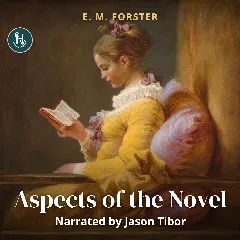
by E. M. Forster · read by
Jason Tibor · 7 hr 10 min
In 1927 the novelist E. M. Forster gave a series of lectures at Cambridge about how novels work. He looks at story, people, plot, fantasy, prophecy, pattern and rhythm, and uses examples from many authors to show what makes a novel succeed.
Hear it read by Jason Tibor: the audiobook is right here
Story guide on this page: summary, characters, discussion questions
Yours to keep: a DRM-free EPUB for any device. Read it here, or on Kindle (with Send to Kindle), Apple Books, Kobo or Google Play Books.
Want both? Buy the audiobook and add the ebook for $0.99.
✓ DRM-free, yours to keep. Download the files after you buy and play them anywhere.
Yours to keepBuy once, it stays in your library
Listen anywhereIn our app on your phone or computer
Bought by mistake, or something wrong with the file? Email apica@academyvoices.com within 14 days for a full refund.
Bought by mistake or something wrong with the audio? Email apica@academyvoices.com within 14 days for a full refund.
About this audiobookAbout this book
In 1927 the novelist E. M. Forster gave a series of lectures at Cambridge about how novels work. He looks at story, people, plot, fantasy, prophecy, pattern and rhythm, and uses examples from many authors to show what makes a novel succeed.
Aspects of the Novel is written in a friendly and witty voice and is still read by writers and readers today. Read by Jason Tibor. Over seven hours for anyone who wants to read, or write, with more attention.
Story guide
Aspects of the Novel summary
Spoiler alert: this summary tells the whole story.
Aspects of the Novel began as a series of lectures Forster gave at Trinity College, Cambridge, in the spring of 1927. Instead of tracing the history of the novel century by century, he asks his listeners to imagine all the great novelists sitting together in one circular room, writing at the same time. That way he can compare writers from different ages side by side and ask what the novel actually is.
He starts with the story, the most basic aspect, which he admits, with a sigh, that every novel must have. A story is events told in the order they happen, the thing that makes a reader ask "and then?" Next he turns to people. Here he makes his most famous distinction: flat characters, built around a single idea and easy to sum up in one sentence, and round characters, who can surprise us in a convincing way. He argues that both kinds have their uses.
Then comes plot. A story says the king died and then the queen died; a plot says the queen died of grief. Plot adds cause and asks "why?" Forster goes on to fantasy, in books such as Tristram Shandy and Zuleika Dobson, and to what he calls prophecy, a rare tone of deep, almost spiritual vision that he finds in Dostoevsky, Melville, D. H. Lawrence and Emily Brontë.
In his last lectures he looks at pattern and rhythm. Some novels have a clear shape, like the hourglass of Anatole France's Thais or Henry James's The Ambassadors, but strict patterns can squeeze the life out of characters. He prefers rhythm, repeated images and ideas that grow each time they return, like the little musical phrase in Proust. He ends by wondering whether human nature itself can change, since only that could truly change the novel.
Aspects of the Novel is still one of the most readable books ever written about fiction. Its ideas about flat and round characters and story versus plot are taught in classrooms every day, and Forster's humor makes it a pleasure for any reader or writer.
Famous lines
"The king died and then the queen died," is a story. "The king died, and then the queen died of grief" is a plot.
E. M. Forster, on plot
The test of a round character is whether it is capable of surprising in a convincing way.
E. M. Forster, on people in novels
History develops, art stands still.
E. M. Forster, in the conclusion
Did you know?
The book grew out of the Clark Lectures, which Forster gave at Trinity College, Cambridge, in 1927.
The terms "flat character" and "round character" come from this book and are still used in English classes today.
Forster also wrote the novels A Room with a View, Howards End and A Passage to India.
Questions to talk about
What is the difference between a story and a plot, according to Forster? Can you give an example from a book you know?
Think of a favorite novel. Which characters are flat and which are round?
Why does Forster imagine all novelists writing in one room instead of following history?
What does Forster mean by "rhythm" in a novel, and how is it different from pattern?
Forster says art stands still while history develops. Do you agree?
Chapters
Aspects of the Novel chapters
ChapterStarts at
One0:27
Two50:37
Three1:31:33
Four2:19:33
Five3:00:47
Six3:48:32
Seven4:34:38
Eight5:26:14
Nine6:12:46
New listeners
Get 25% off your first audiobook
Join our list and we'll email you 25% off, plus new releases from our store. Every one is read by a real person. No account needed.
Details
Length
7 hr 10 min
Narration
Solo narrator
Format
Unabridged audiobook
Publisher
Academy Voices
Language
English
ISBN
9798295342264
Cover art
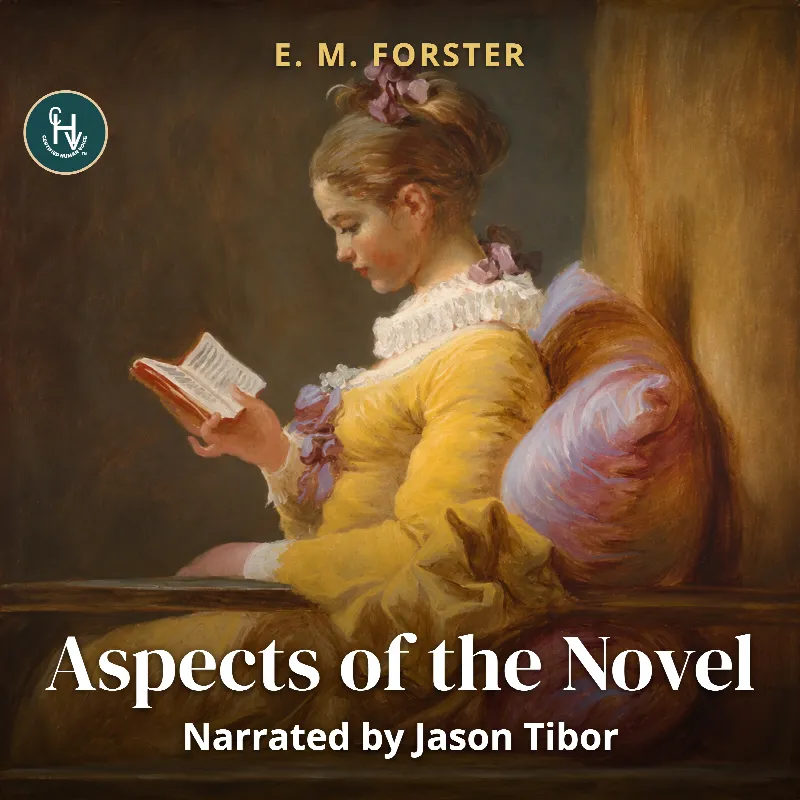
After Jean-Honore Fragonard, Young Girl Reading (about 1769)
Questions
What is Aspects of the Novel about?
Novelist E. M. Forster gives a witty, conversational tour of how novels work, from story and characters to plot, fantasy, prophecy, pattern and rhythm.
Who narrates the Aspects of the Novel audiobook?
This edition of Aspects of the Novel by E. M. Forster is narrated by Jason Tibor.
How long is the Aspects of the Novel audiobook?
It runs 7 hr 10 min, unabridged, so you hear the complete text.
Is this audiobook narrated by a real person?
Yes. Every Academy Voices audiobook is Certified Human Voice: performed start to finish by a real narrator.
Where can I listen to Aspects of the Novel?
Right here: buy it on Academy Voices and listen in your browser or our app. Hear a free sample on this page first.