Written by
Ralph Waldo Emerson7 audiobooks with Academy Voices
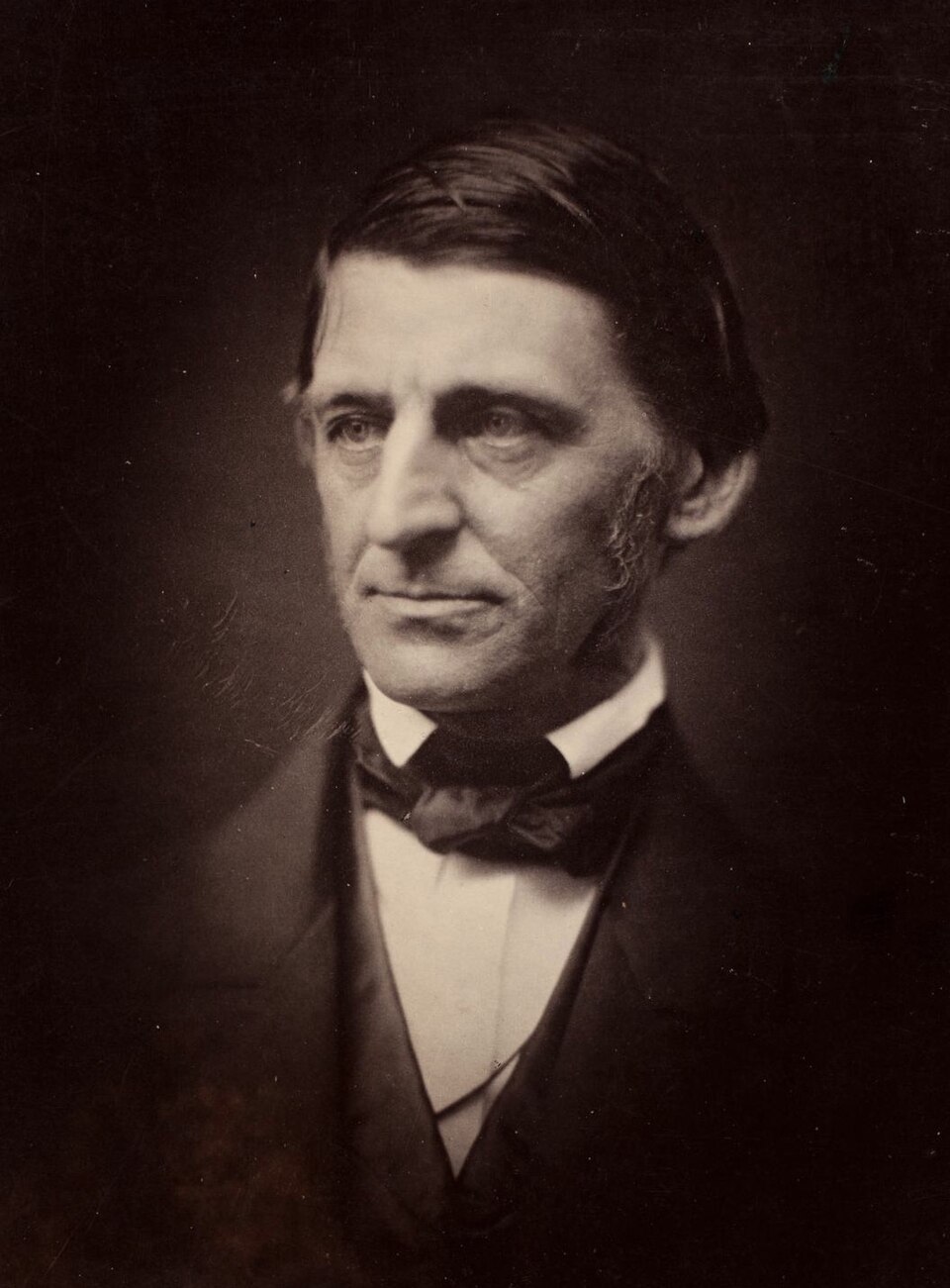
Ralph Waldo Emerson was born in Boston, studied at Harvard and became a Unitarian minister before leaving the pulpit in 1832.More about Ralph Waldo Emerson →
Read by a real person
JOHN RIDDLE20 audiobooks with Academy Voices
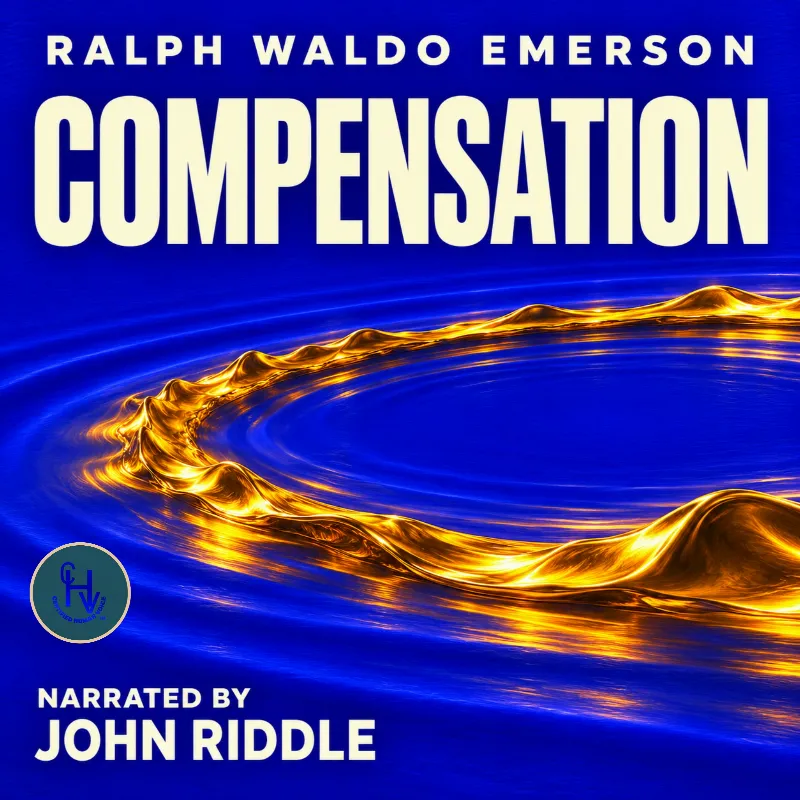
Hear it read by JOHN RIDDLE: the audiobook is right here
Story guide on this page: summary, characters, discussion questions
Yours to keep: a DRM-free EPUB for any device. Read it here, or on Kindle (with Send to Kindle), Apple Books, Kobo or Google Play Books.
Want both? Buy the audiobook and add the ebook for $0.99.
Free audiobook
Listen to the whole story free
Enter your email and we'll send you a link to the full audiobook of Compensation. No account needed.
We'll also ask if you'd like new audiobooks by email. Privacy Policy
✓ DRM-free, yours to keep. Download the files after you buy and play them anywhere.
Yours to keepBuy once, it stays in your library
Listen anywhereIn our app on your phone or computer
Bought by mistake, or something wrong with the file? Email apica@academyvoices.com within 14 days for a full refund.
Bought by mistake or something wrong with the audio? Email apica@academyvoices.com within 14 days for a full refund.
About this audiobookAbout this book
Emerson’s radiant meditation on justice, consequence, and character, Compensation reveals the moral arithmetic at work in every choice we make. With images drawn from tides, seasons, trade, and daily conduct, Emerson shows how gain and loss, pleasure and duty, action and reaction are bound in one living law: what we take, we must pay; what we give, returns transformed.
In language both bracing and compassionate, he overturns the notion that reward and punishment wait for some distant judgment. Equity operates now—in the soul, in society, and in nature. Crime carries its penalty within the act; virtue its power within the deed. From politics and labor to friendships and private ambition, he maps the quiet forces that shape a life and a nation.
Ideal for listeners seeking enduring wisdom for modern decisions at work and home, this classic essay offers a fearless call to integrity, responsibility, and hope. John Riddle’s clear, measured narration brings out the essay’s aphoristic sparkle and steady moral music, guiding you through a text that is as practical as it is profound.
Story guide
Compensation summary
Spoiler alert: this summary tells the whole story.
Emerson begins by saying he has wanted to write about compensation since he was a boy, because life seemed to teach more about it than the preachers did. He recalls a sermon which claimed that the wicked prosper on earth and the good will be paid back only in heaven. Emerson rejects this. Justice, he says, is not put off until later. It works here and now.
He points to polarity, or action and reaction, all through nature: light and dark, heat and cold, the tides, the beating of the heart. The same balance runs through human life. "Every sweet hath its sour; every evil its good." A great talent brings its own burden, power costs peace, and riches bring cares. The President, he notes, has paid dearly for his White House. Every action rewards or punishes itself, both in the thing itself and later in its consequences. "The dice of God are always loaded."
From this Emerson draws practical lessons. You cannot cheat without cheating yourself: "The thief steals from himself." If you treat people as tools, you shall suffer too. It is wise to pay every debt, of money, time or kindness, because first or last you must pay in full. Honest labor is never wasted, since its real reward is knowledge and character. Even our enemies and hard luck can make us stronger, as a wound can turn into a strength.
Emerson then sets one thing outside the system of give and take: the soul itself, which simply is. Virtue and love add real being to a person and are never taken away. He closes by saying that our calamities, such as illness, loss of wealth or the death of someone dear, look at first like pure loss, but over the years reveal their healing power. They break up old ways of life and let us grow, so that a sheltered garden flower can become a great banyan tree giving shade and fruit to many.
"Compensation" is one of Emerson's best known essays and a central text of American Transcendentalism. Its ideas about balance, honesty and growth through hardship still inspire readers today.
Famous lines
Every sweet hath its sour; every evil its good.
Ralph Waldo Emerson
The dice of God are always loaded.
Ralph Waldo Emerson
The thief steals from himself. The swindler swindles himself.
Ralph Waldo Emerson
For every thing you have missed, you have gained something else; and for every thing you gain, you lose something.
Ralph Waldo Emerson
Main characters
RW
Ralph Waldo EmersonThe essayist, speaking in his own voice about the laws of life.
P
The preacherAn unnamed orthodox minister whose sermon Emerson argues against.
Did you know?
"Compensation" appeared in Emerson's Essays (1841), the same book that contains his famous essay "Self-Reliance."
Emerson was trained as a Unitarian minister but left the pulpit in 1832 and became a lecturer and writer.
This edition was hand-printed by the Roycrofters, an Arts and Crafts community founded by Elbert Hubbard in East Aurora, New York.
Questions to talk about
Emerson disagrees with the preacher about when justice happens. What is his argument, and do you find it convincing?
Can you think of a gain in your own life that came with a cost, as Emerson describes?
What does Emerson mean by "The thief steals from himself"?
Why does Emerson set the soul apart from the law of compensation?
How can a loss become what Emerson calls "a guide or genius"? Do you agree?
New listeners
Get 25% off your first audiobook
Join our list and we'll email you 25% off, plus new releases from our store. Every one is read by a real person. No account needed.
Details
Length
1 hr 2 min
Narration
Solo narrator
Format
Unabridged audiobook
Publisher
Anthony Pica Productions, LLC
Language
English
Questions
What is Compensation about?
In this famous essay, Ralph Waldo Emerson argues that life keeps a perfect balance, so that every gain has a cost, every wrong punishes itself, and even our worst losses lead to growth.
Who are the main characters in Compensation?
Ralph Waldo Emerson, the essayist, speaking in his own voice about the laws of life; The preacher, an unnamed orthodox minister whose sermon Emerson argues against.
Who narrates the Compensation audiobook?
This edition of Compensation by Ralph Waldo Emerson is narrated by JOHN RIDDLE.
How long is the Compensation audiobook?
It runs 1 hr 2 min, unabridged, so you hear the complete text.
Is this audiobook narrated by a real person?
Yes. Every Academy Voices audiobook is Certified Human Voice: performed start to finish by a real narrator.
Where can I listen to Compensation?
Right here: buy it on Academy Voices and listen in your browser or our app. Hear a free sample on this page first.