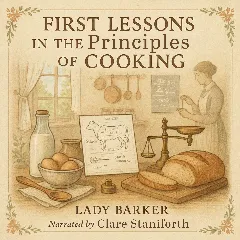
In the 1870s Lady Barker found herself on a remote New Zealand sheep station with no idea how to cook. The cookbooks she found assumed she already knew the basics.
Hear it read by Clare Staniforth: the audiobook is right here
Story guide on this page: summary, characters, discussion questions
Yours to keep: a DRM-free EPUB for any device. Read it here, or on Kindle (with Send to Kindle), Apple Books, Kobo or Google Play Books.
Want both? Buy the audiobook and add the ebook for $0.99.
✓ DRM-free, yours to keep. Download the files after you buy and play them anywhere.
Yours to keepBuy once, it stays in your library
Listen anywhereIn our app on your phone or computer
Bought by mistake, or something wrong with the file? Email apica@academyvoices.com within 14 days for a full refund.
Bought by mistake or something wrong with the audio? Email apica@academyvoices.com within 14 days for a full refund.
About this audiobookAbout this book
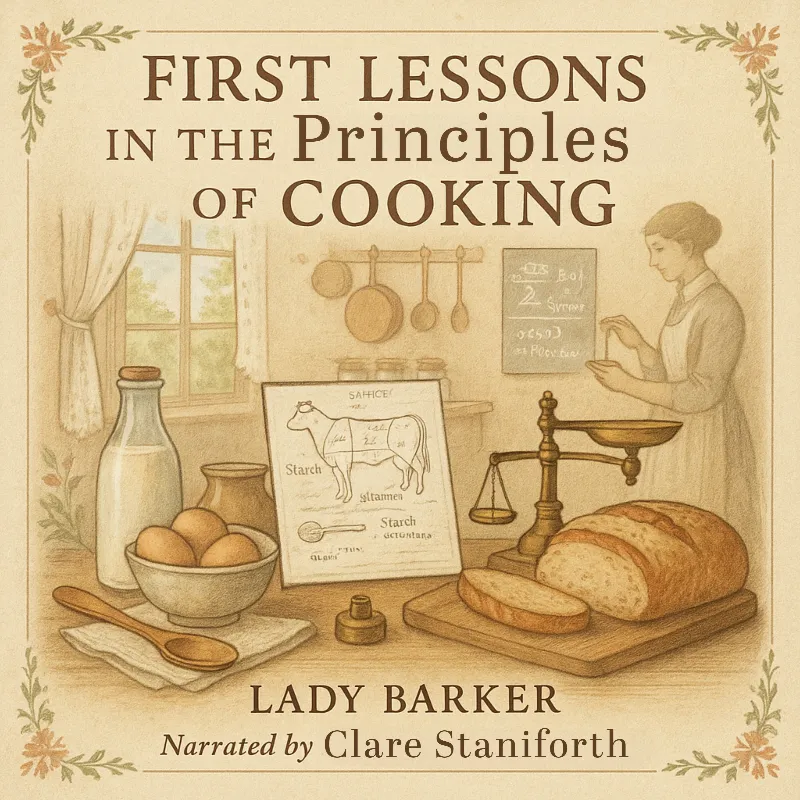
In the 1870s Lady Barker found herself on a remote New Zealand sheep station with no idea how to cook. The cookbooks she found assumed she already knew the basics. So she wrote her own, built on one idea: learn why food behaves as it does, and the recipes follow.
The lessons start with what food is made of, then bread, beef, fish and vegetables. Later lessons cover soups, potatoes, fuel and fire, and the main ways to cook: boiling, stewing, baking, roasting and frying. Economy runs through every chapter.
Read by Clare Staniforth. Good for anyone who likes old kitchens and plain practical advice.
Story guide
First Lessons in Principles of Cooking summary
Spoiler alert: this summary tells the whole story.
Lady Barker opens with a call to action. Food and fuel prices in England have nearly doubled in ten years, and she argues that every household, rich or poor, has a duty to stop wasting food. Economy, she insists, is not stinginess but the opposite, since a thrifty home has more to spare for charity and hospitality. She blames much of the waste on ignorance and urges middle-class women to learn the principles of good cooking so they can teach their servants with explanation instead of scolding.
Part I explains the chemistry of food in simple terms, drawing on the scientists of the day such as Justus von Liebig. She describes which foods build the body and which supply energy, and why bread and beef suit people who work hard outdoors. Separate lessons cover fish and vegetables and their nutritional value.
Part II turns to practical preparation. She explains how flour is made into bread and other foods, insists that potatoes should be boiled in their skins, and gives careful instructions for making nourishing broth and beef tea for invalids. A lesson on fuel and fire shows how to build and manage a kitchen fire without waste.
Part III sets out the principles of diet, chiefly that the stomach should not be given more than it can digest and that food should suit each person. It explains the right way to boil, stew, bake, roast and fry, such as plunging meat into boiling water to seal in its juices, and ends with advice on bacon, the poor family's staple. In a final summing up, Lady Barker describes the National School of Cookery being founded at South Kensington, a nonprofit school meant to teach women of every class how to cook well and cheaply.
The book is a window into Victorian home life and an early example of teaching cooking as a science. Its mix of chemistry, thrift and social reform still makes for interesting reading.
Famous lines
“Take care of the scraps, and the joints will take care of themselves,”
The author's suggested household motto
I should like to endeavour to disabuse my readers’ minds of the idea that economy and stinginess are synonymous terms. In point of fact they are precisely opposite.
The author
Explanation is a good deal better than scolding
The author, on teaching cooks
Main characters
LB
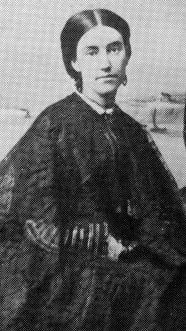
Lady BarkerThe author, an experienced household manager writing to promote better, thriftier cooking.
JV
Justus von LiebigThe German chemist whose food science she quotes.
L
Dr. LethebyA medical authority she cites on the nutritional value of grains.
Did you know?
Lady Barker was also known for Station Life in New Zealand, a popular book of letters about her life on a New Zealand sheep station.
She served as lady superintendent of the National Training School of Cookery at South Kensington, the school this book promotes.
She later became Lady Broome when her second husband, Frederick Napier Broome, was knighted.
Questions to talk about
Why does Lady Barker insist that economy and stinginess are opposites? Do you agree?
Which of her cooking tips, such as boiling potatoes in their skins, still match modern advice?
What does the book reveal about the relationship between Victorian mistresses and their servants?
Why does she believe cooking should be taught as a science and not just by imitation?
How do her worries about rising food prices compare with concerns about food costs today?
Chapters
First Lessons in Principles of Cooking chapters
ChapterStarts at
Introductory0:19
Part 1 Lesson 111:39
Part 1 Lesson 223:25
Part 1 Lesson 334:50
Part 1 Lesson 440:19
Part 2 Remarks45:23
Part 2 Lesson 550:10
Part 2 Lesson 659:29
Part 2 Lesson 71:11:40
Part 2 Lesson 81:20:43
Show all 15 chapters
Part 3 Remarks1:30:15
Part 3 Lesson 91:40:20
Part 3 Lesson 101:49:26
Part 3 Lesson 112:00:27
Part 3 Lesson 122:04:01
New listeners
Get 25% off your first audiobook
Join our list and we'll email you 25% off, plus new releases from our store. Every one is read by a real person. No account needed.
Details
Length
2 hr 24 min
Narration
Solo narrator
Format
Unabridged audiobook
Publisher
Academy Voices
Language
English
ISBN
9798347387571
Questions
What is First Lessons in Principles of Cooking about?
A Victorian guide that explains, in plain language, the science of food and the best cheap and healthy ways to cook it, written to support England's new National School of Cookery.
Who are the main characters in First Lessons in Principles of Cooking?
Lady Barker, the author, an experienced household manager writing to promote better, thriftier cooking; Justus von Liebig, the German chemist whose food science she quotes; Dr. Letheby, a medical authority she cites on the nutritional value of grains.
Who narrates the First Lessons in Principles of Cooking audiobook?
This edition of First Lessons in Principles of Cooking by Lady Barker is narrated by Clare Staniforth.
How long is the First Lessons in Principles of Cooking audiobook?
It runs 2 hr 24 min, unabridged, so you hear the complete text.
Is this audiobook narrated by a real person?
Yes. Every Academy Voices audiobook is Certified Human Voice: performed start to finish by a real narrator.
Where can I listen to First Lessons in Principles of Cooking?
Right here: buy it on Academy Voices and listen in your browser or our app. Hear a free sample on this page first.