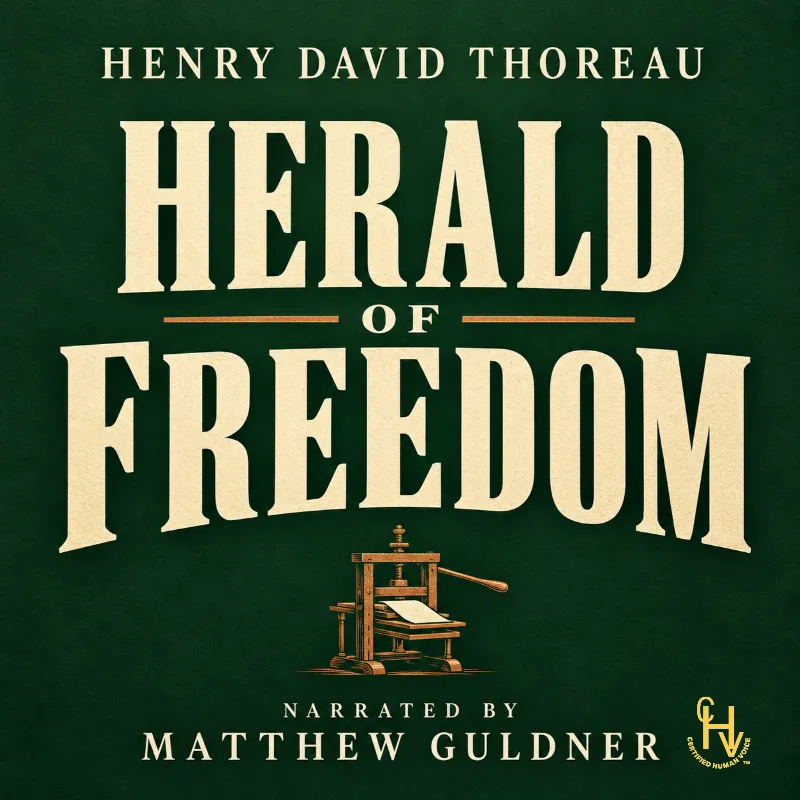
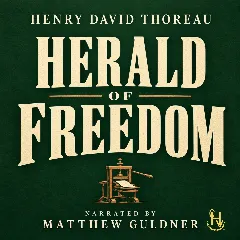
First published in April 1844 in The Dial, Henry David Thoreau’s Herald of Freedom is a blistering, big-hearted tribute to the radical anti-slavery newspaper of New Hampshire and its fearless editor, Nathaniel Peabody Rogers.
Hear it read by Matthew Guldner: the audiobook is right here
Story guide on this page: summary, characters, discussion questions
Yours to keep: a DRM-free EPUB for any device. Read it here, or on Kindle (with Send to Kindle), Apple Books, Kobo or Google Play Books.
Want both? Buy the audiobook and add the ebook for $0.99.
Free audiobook
Listen to the whole story free
Enter your email and we'll send you a link to the full audiobook of Herald of Freedom. No account needed.
We'll also ask if you'd like new audiobooks by email. Privacy Policy
✓ DRM-free, yours to keep. Download the files after you buy and play them anywhere.
Yours to keepBuy once, it stays in your library
Listen anywhereIn our app on your phone or computer
Bought by mistake, or something wrong with the file? Email apica@academyvoices.com within 14 days for a full refund.
Bought by mistake or something wrong with the audio? Email apica@academyvoices.com within 14 days for a full refund.
About this audiobookAbout this book
First published in April 1844 in The Dial, Henry David Thoreau’s Herald of Freedom is a blistering, big-hearted tribute to the radical anti-slavery newspaper of New Hampshire and its fearless editor, Nathaniel Peabody Rogers. With wit, mountain-air clarity, and moral thunder, Thoreau celebrates a press that refuses to flatter power, calls slavery by its true name, and rallies New England to a higher courage.
In this invigorating essay, Thoreau admires Rogers’s prose—its “rainbow sprays” and clear trumpet-calls—while urging readers to trade timid debate for ringing denunciation. It’s journalism as conscience, reform as joyful defiance, and a vivid snapshot of abolitionist energy before the Civil War.
Narrated by Matthew Guldner with crisp, purposeful intensity, this audiobook delivers Thoreau’s cadence and conviction in full, making a 19th-century call to freedom feel startlingly present. Essential listening for fans of American history, Transcendentalism, civil rights, and anyone drawn to the language of moral courage brought to life.
Story guide
Herald of Freedom summary
Spoiler alert: this summary tells the whole story.
This short piece is a review of a newspaper rather than a story. Henry David Thoreau writes about the Herald of Freedom, a weekly abolitionist paper edited by Nathaniel P. Rogers, a former lawyer from Plymouth, New Hampshire. Thoreau says that reading Rogers's editorials is like drinking from a mountain stream: clear, sparkling, sometimes foaming, but never muddy. He praises Rogers for his "pure, youthful, and hearty indignation at all wrong."
Thoreau contrasts Rogers with the ordinary press, which only waits for news to arrive and records marriages and deaths. Rogers, he says, stands on the beak of his ship like a Yankee sealer heading into unexplored waters. His prose is full of poetry, wit and love of the outdoors, and he treats slavery as an evil to be abolished with courage and cheer, not only with sorrow. Thoreau compares his free, original style to Thomas Carlyle's, though he wishes Rogers would sometimes slow down and let his ideas deepen.
Most of the review is made of long extracts from the paper. In them Rogers argues that slavery must be "cried down, denounced down, ridiculed down," not politely debated. He summons antislavery men and women from every corner of New Hampshire and New England to conventions, naming rivers, mountains and towns in a kind of roll call. He defends free speech at antislavery meetings, mocks clergy who lean on Daniel Webster's arguments, and writes a bitter protest about the 1844 explosion aboard the warship Princeton. Several officials were buried with honors, but no one asked about the body of the President's enslaved servant, who died beside them.
Thoreau closes by hoping these editorials will be gathered into a book that might reach people the "unpopular cause of freedom" has not yet reached. He ends: "Long may we hear the voice of this Herald."
The piece matters as an early public sign of Thoreau's antislavery convictions, years before his famous essays on civil disobedience and John Brown, and as a tribute to a once well-known New England reformer.
Famous lines
Slavery must be cried down, denounced down, ridiculed down, and pro-slavery with it, or rather before it.
Nathaniel P. Rogers, quoted by Thoreau
It has a life above grammar, and a meaning which need not be parsed to be understood.
Thoreau, on Rogers's style
Long may we hear the voice of this Herald.
The closing line
Main characters
NP
Nathaniel P. RogersFormer lawyer and editor of the Herald of Freedom, whose fiery antislavery writing Thoreau admires.
HD
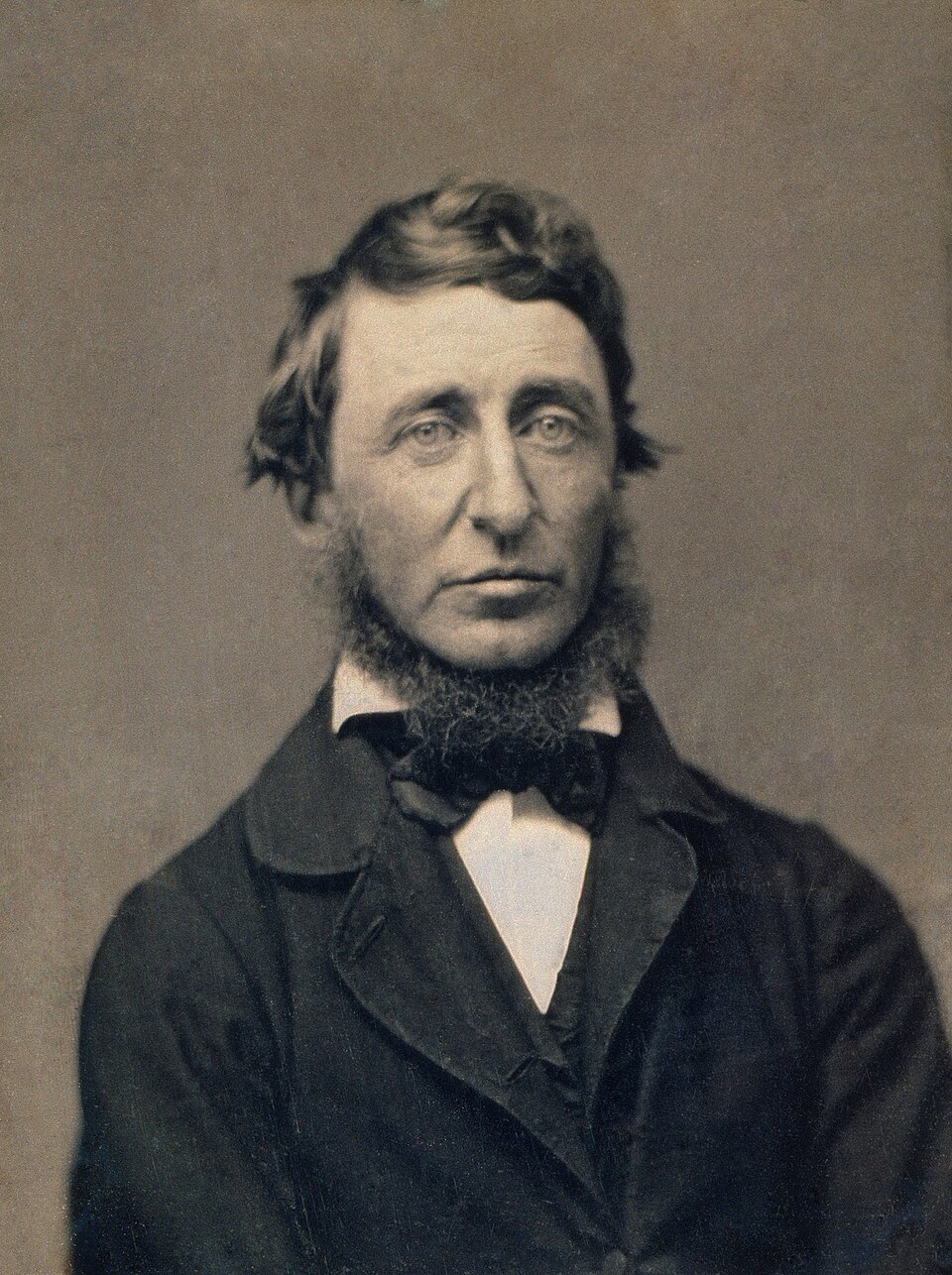
Henry David ThoreauThe reviewer, who praises Rogers's style and his cause.
DW
Daniel WebsterThe famous senator and lawyer whose argument in the Girard will case Rogers mocks the clergy for borrowing.
Did you know?
The Dial, where this review appeared, was the magazine of the New England Transcendentalists, edited for a time by Ralph Waldo Emerson.
The Herald of Freedom was published in Concord, New Hampshire, not Thoreau's hometown of Concord, Massachusetts.
The Princeton explosion that Rogers protests happened in February 1844, when a large cannon burst aboard the U.S. Navy warship and killed several people, including two members of President John Tyler's cabinet.
Questions to talk about
Thoreau keeps comparing Rogers's writing to mountain streams. What is he saying about the style through that image?
Why does Rogers believe slavery should be "cried down" rather than argued with calmly? Do you agree?
What point is Rogers making about the funeral after the Princeton explosion?
Thoreau praises Rogers but also wishes he would slow down. What does this tell you about Thoreau's own idea of good writing?
How does this short review connect to Thoreau's later writing about conscience and slavery?
New listeners
Get 25% off your first audiobook
Join our list and we'll email you 25% off, plus new releases from our store. Every one is read by a real person. No account needed.
Details
Length
17 min
Narration
Solo narrator
Format
Unabridged audiobook
Publisher
Academy Voices
Language
English
ISBN
9798182668842
Questions
What is Herald of Freedom about?
Thoreau's warm review of the Herald of Freedom, an antislavery newspaper edited by Nathaniel P. Rogers in Concord, New Hampshire, praising its fiery, free, mountain-fresh style and quoting its best passages.
Who are the main characters in Herald of Freedom?
Nathaniel P. Rogers, former lawyer and editor of the Herald of Freedom, whose fiery antislavery writing Thoreau admires; Henry David Thoreau, the reviewer, who praises Rogers's style and his cause; Daniel Webster, the famous senator and lawyer whose argument in the Girard will case Rogers mocks the clergy for borrowing.
Who narrates the Herald of Freedom audiobook?
This edition of Herald of Freedom by Henry David Thoreau is narrated by Matthew Guldner.
How long is the Herald of Freedom audiobook?
It runs 17 min, unabridged, so you hear the complete text.
Is this audiobook narrated by a real person?
Yes. Every Academy Voices audiobook is Certified Human Voice: performed start to finish by a real narrator.
Where can I listen to Herald of Freedom?
Right here: buy it on Academy Voices and listen in your browser or our app. Hear a free sample on this page first.