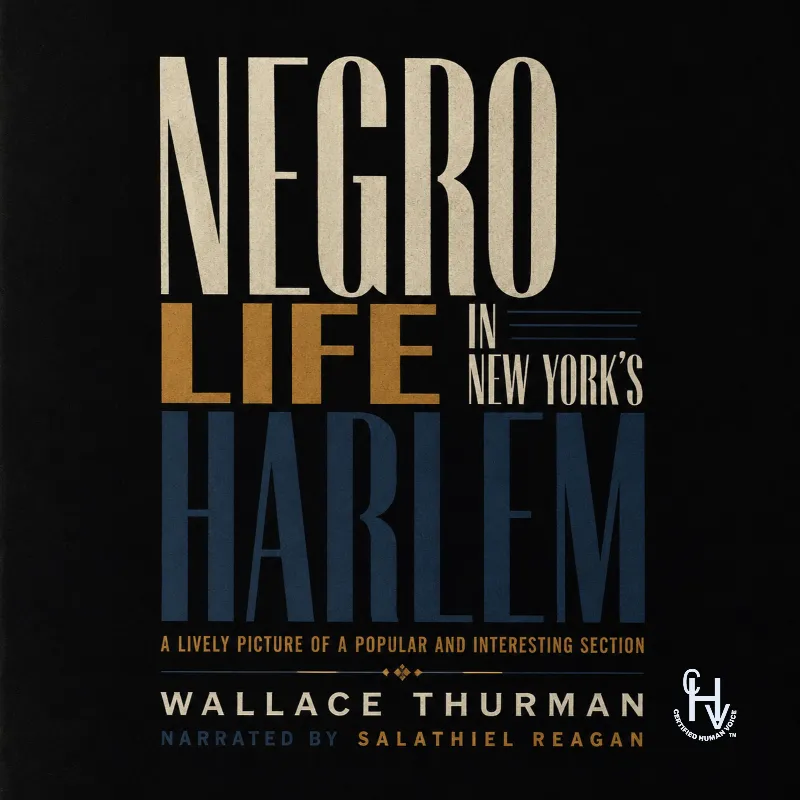
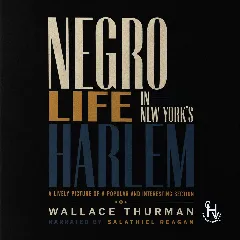
A guided walk through Harlem in the 1920s. Wallace Thurman describes its streets, its two hundred thousand residents, its crowded housing, its night life and amusements, its house rent parties, its churches and its Black newspapers.
Hear it read by Salathiel Reagan: the audiobook is right here
Story guide on this page: summary, characters, discussion questions
Yours to keep: a DRM-free EPUB for any device. Read it here, or on Kindle (with Send to Kindle), Apple Books, Kobo or Google Play Books.
Want both? Buy the audiobook and add the ebook for $0.99.
Free audiobook
Listen to the whole story free
Enter your email and we'll send you a link to the full audiobook of Negro Life in New York's Harlem. No account needed.
We'll also ask if you'd like new audiobooks by email. Privacy Policy
✓ DRM-free, yours to keep. Download the files after you buy and play them anywhere.
Yours to keepBuy once, it stays in your library
Listen anywhereIn our app on your phone or computer
Bought by mistake, or something wrong with the file? Email apica@academyvoices.com within 14 days for a full refund.
Bought by mistake or something wrong with the audio? Email apica@academyvoices.com within 14 days for a full refund.
About this audiobookAbout this book
A guided walk through Harlem in the 1920s. Wallace Thurman describes its streets, its two hundred thousand residents, its crowded housing, its night life and amusements, its house rent parties, its churches and its Black newspapers. He closes with chapters on the New Negro and on Harlem as a cultural capital.
It was published in 1928 as a Little Blue Book. Thurman, a Harlem Renaissance writer, saw the place as a resident. Salathiel Reagan reads it in seventy-four minutes.
For readers interested in the history of Harlem.
Story guide
Negro Life in New York's Harlem summary
Spoiler alert: this summary tells the whole story.
Wallace Thurman sets out to show Harlem as it really was in the late 1920s, beyond its fame as the "Mecca of the New Negro." He walks the reader down its main avenues: shabby Fifth Avenue, noisy Lenox Avenue, elegant Seventh Avenue, Harlem's "Black Broadway," and the fine apartment houses of Edgecombe and St. Nicholas. He points out "strivers' row" on 139th Street, where Harlem's wealthiest Black families live.
He explains how about 200,000 people came to be packed into the neighborhood. Black New Yorkers began moving to Harlem around 1900, white residents fled, and during World War I thousands arrived from the South and the Caribbean. Rents are so high that families crowd into cots in hallways and parlors. Thurman describes Harlem's mix of people, the tension between American-born and West Indian residents, the parades of Marcus Garvey, and a class system topped by a snobbish upper set he calls the "dictys."
The longest sections cover Harlem at play. Famous nightclubs such as the Cotton Club and Small's Paradise have become "side shows" for white tourists, while Black Harlem dances at the Savoy and the Renaissance Casino and parties in small, hidden speak-easies. He describes rowdy midnight shows at the Lafayette Theater, rent parties where tenants charge a quarter at the door to pay the landlord, the illegal "numbers" lottery that nearly everyone plays, and the "hot men" who sell supposedly stolen clothes.
Thurman then surveys Harlem's crowded churches, from wealthy St. Philip's to small storefront congregations, and its five weekly newspapers. He ends with the young writers and artists of the "New Negro" movement and a portrait of Harlem as a "mad medley" that holds every type of person. Sharp, funny and often unsparing, this little book is a valuable firsthand record of Harlem at the height of the Harlem Renaissance, written by one of the movement's own members.
Famous lines
Harlem is Harlem because it is part and parcel of greater New York.
Wallace Thurman
Harlem is a magic melting pot, a modern Babel mocking the gods with its cosmopolitan uniqueness.
Wallace Thurman
Every other person one meets is writing a novel, a poem or a drama.
Wallace Thurman, on Harlem's would-be artists
Harlem is a dream city pregnant with wide-awake realities.
Wallace Thurman
Main characters
WT
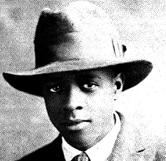
Wallace ThurmanThe author and guide, a young Harlem Renaissance writer who mixes reporting with personal stories.
MG
Marcus GarveyThe Jamaican-born leader of the Back-to-Africa movement, famous for his colorful parades down Seventh Avenue.
JW
James Weldon JohnsonA writer Thurman quotes on how white residents fled as Black families moved into Harlem.
D
The "dictys"Harlem's small, wealthy upper class, whom Thurman satirizes as snobbish.
HM
The "hot men"Peddlers who sell cheap goods they claim are stolen.
Did you know?
Thurman edited Fire!!, a 1926 magazine for young Black artists with work by Langston Hughes and Zora Neale Hurston; only one issue was ever published.
Thurman's best-known novel, The Blacker the Berry (1929), deals with prejudice about skin color within the Black community, a theme he also raises here.
Little Blue Books were tiny, cheap paperbacks sold by the millions from Girard, Kansas, to bring reading to working people.
Questions to talk about
Thurman says Harlem's famous nightclubs have become "side shows" for white visitors. What does he mean, and why does it bother him?
How does Thurman explain rent parties? Why does he say they are "not on the whole a vicious institution"?
What divisions within Harlem does Thurman describe, and why do you think he includes them?
Thurman is both an insider and a critic. Where does he sound proud of Harlem, and where does he sound harsh?
How does this picture of Harlem compare with the poems or stories of the Harlem Renaissance you have read?
Chapters
Negro Life in New York's Harlem chapters
ChapterStarts at
Chapter 10:22
Chapter 29:06
Chapter 314:34
Chapter 422:28
Chapter 534:56
Chapter 640:13
Chapter 754:29
Chapter 859:55
Chapter 91:04:02
Chapter 101:06:48
New listeners
Get 25% off your first audiobook
Join our list and we'll email you 25% off, plus new releases from our store. Every one is read by a real person. No account needed.
Details
Length
1 hr 9 min
Narration
Solo narrator
Format
Unabridged audiobook
Publisher
Academy Voices
Language
English
ISBN
9798240196836
Questions
What is Negro Life in New York's Harlem about?
Harlem Renaissance writer Wallace Thurman's frank, lively 1920s tour of Black Harlem: its streets, crowded homes, nightclubs, rent parties, numbers game, churches, newspapers and young artists.
Who are the main characters in Negro Life in New York's Harlem?
Wallace Thurman, the author and guide, a young Harlem Renaissance writer who mixes reporting with personal stories; Marcus Garvey, the Jamaican-born leader of the Back-to-Africa movement, famous for his colorful parades down Seventh Avenue; James Weldon Johnson, a writer Thurman quotes on how white residents fled as Black families moved into Harlem; The "dictys", harlem's small, wealthy upper class, whom Thurman satirizes as snobbish; The "hot men", peddlers who sell cheap goods they claim are stolen.
Who narrates the Negro Life in New York's Harlem audiobook?
This edition of Negro Life in New York's Harlem by Wallace Thurman is narrated by Salathiel Reagan.
How long is the Negro Life in New York's Harlem audiobook?
It runs 1 hr 9 min, unabridged, so you hear the complete text.
Is this audiobook narrated by a real person?
Yes. Every Academy Voices audiobook is Certified Human Voice: performed start to finish by a real narrator.
Where can I listen to Negro Life in New York's Harlem?
Right here: buy it on Academy Voices and listen in your browser or our app. Hear a free sample on this page first.