Written by
Henry David Thoreau11 audiobooks with Academy Voices
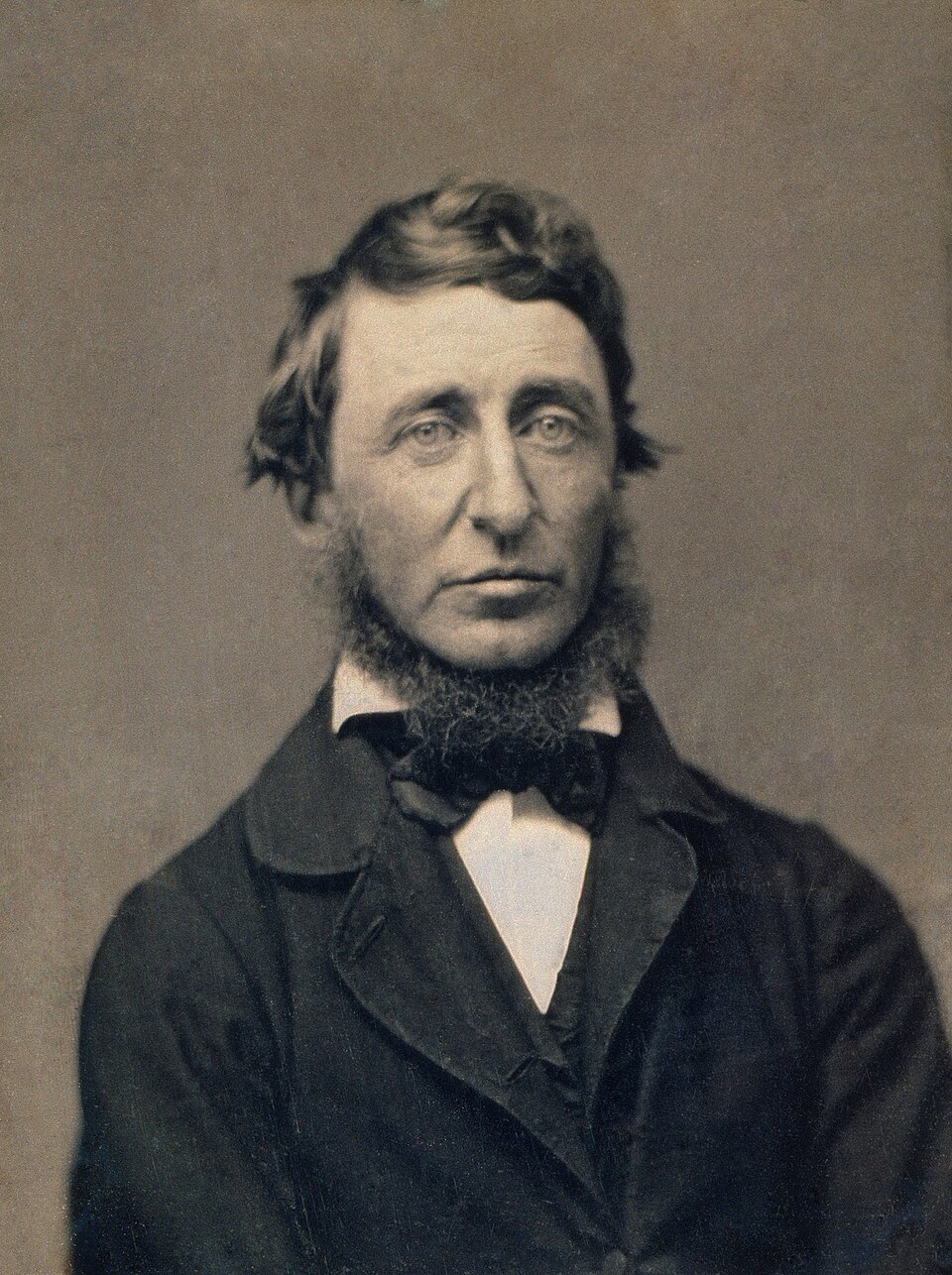
Henry David Thoreau was an American essayist, naturalist and philosopher from Concord, Massachusetts.More about Henry David Thoreau →
Read by a real person
Mike Polischuk36 audiobooks with Academy Voices
Being able to read stories for youngsters or parents, or for those who are too busy in the moment and don't have the time to read - and make it a plea…Hear more from Mike →Tip Mike for this narration →
Hear it read by Mike Polischuk: the audiobook is right here
Story guide on this page: summary, characters, discussion questions
Yours to keep: a DRM-free EPUB for any device. Read it here, or on Kindle (with Send to Kindle), Apple Books, Kobo or Google Play Books.
Want both? Buy the audiobook and add the ebook for $0.99.
Free audiobook
Listen to the whole story free
Enter your email and we'll send you a link to the full audiobook of Night and Moonlight. No account needed.
We'll also ask if you'd like new audiobooks by email. Privacy Policy
✓ DRM-free, yours to keep. Download the files after you buy and play them anywhere.
Yours to keepBuy once, it stays in your library
Listen anywhereIn our app on your phone or computer
Bought by mistake, or something wrong with the file? Email apica@academyvoices.com within 14 days for a full refund.
Bought by mistake or something wrong with the audio? Email apica@academyvoices.com within 14 days for a full refund.
About this audiobookAbout this book
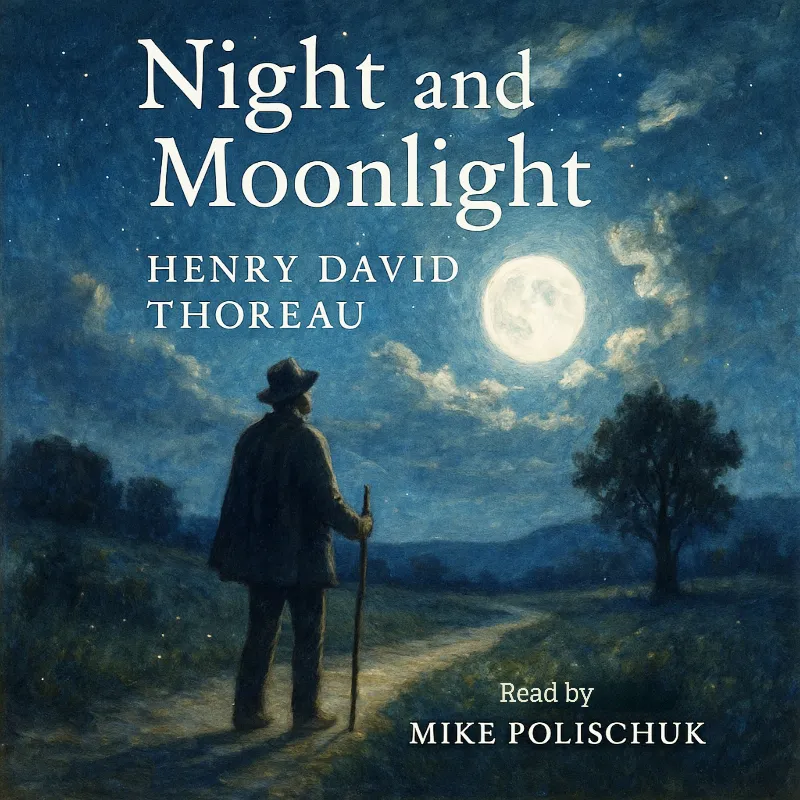
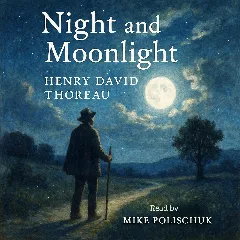
Why do people stay inside once the sun goes down? Henry David Thoreau thought the night was worth knowing. In this essay he walks by moonlight and writes about how the world looks and sounds different, and what the soft light shows that daylight hides.
A short, calm essay from one of America's great nature writers, read by Mike Polischuk. Twenty-one minutes.
For anyone who likes walking at night.
Story guide
Night and Moonlight summary
Spoiler alert: this summary tells the whole story.
Thoreau begins by saying that after one memorable moonlight walk, he decided to take many more and get to know "another side of nature." To most people, he says, midnight is as unknown as the heart of Africa. He wants to explore it and bring back reports, to show that there is beauty awake while everyone else is asleep.
He describes a July night in the Concord countryside. The moon and stars replace the sun, the whip-poor-will replaces the wood thrush, and fireflies float over the meadows instead of butterflies. Shadows look larger than the things that cast them, white objects glow, and the senses of smell and hearing grow sharp. He notices warm pockets of air left over from the day and rocks that hold the sun's heat into the night.
Thoreau defends "moonshine" against people who sneer at it as foolish. The moon's light is weaker than the sun's, he admits, but it suits thought and imagination. He follows the moon's "war" with the clouds, quotes poets and old writers from Pliny to Sir Walter Raleigh, and imagines the moon as a source of quiet inner light.
In the end he suggests that night is not just the absence of day. It restores the tired world, and some nights are so beautiful that anyone would be wiser for spending them outdoors, even if they slept all the next day to make up for it.
Published after Thoreau's death, this short piece shows the same close attention to nature found in Walden, turned toward a part of the day most people never really see.
Famous lines
Chancing to take a memorable walk by moonlight some years ago, I resolved to take more such walks, and make acquaintance with another side of nature.
The opening line
Is not the midnight like Central Africa to most of us?
Henry David Thoreau
Night is certainly more novel and less profane than day.
Henry David Thoreau
Many men walk by day; few walk by night.
Henry David Thoreau
Main characters
HD
Henry David ThoreauThe writer and naturalist who walks the Concord fields by moonlight.
Did you know?
The essay was published in 1863, about a year and a half after Thoreau died of tuberculosis in May 1862.
Thoreau kept a journal for most of his adult life, and many of his moonlight observations first appeared there.
Thoreau lived in a cabin by Walden Pond from 1845 to 1847, the experience behind his famous book Walden.
Questions to talk about
What does Thoreau notice at night that people miss in the daytime?
Why does he compare midnight to unexplored Central Africa?
What does Thoreau mean when he defends "moonshine"?
Try a short walk outside after dark. What did you notice that surprised you?
How is this essay like, or unlike, Walden?
New listeners
Get 25% off your first audiobook
Join our list and we'll email you 25% off, plus new releases from our store. Every one is read by a real person. No account needed.
Details
Length
21 min
Narration
Solo narrator
Format
Unabridged audiobook
Publisher
Academy Voices
Language
English
ISBN
9798295327247
Questions
What is Night and Moonlight about?
Henry David Thoreau's short, dreamy essay inviting readers to walk outside at night and discover the world by moonlight.
Who are the main characters in Night and Moonlight?
Henry David Thoreau, the writer and naturalist who walks the Concord fields by moonlight.
Who narrates the Night and Moonlight audiobook?
This edition of Night and Moonlight by Henry David Thoreau is narrated by Mike Polischuk.
How long is the Night and Moonlight audiobook?
It runs 21 min, unabridged, so you hear the complete text.
Is this audiobook narrated by a real person?
Yes. Every Academy Voices audiobook is Certified Human Voice: performed start to finish by a real narrator.
Where can I listen to Night and Moonlight?
Right here: buy it on Academy Voices and listen in your browser or our app. Hear a free sample on this page first.