Written by
Sigmund Freud1 audiobook with Academy Voices
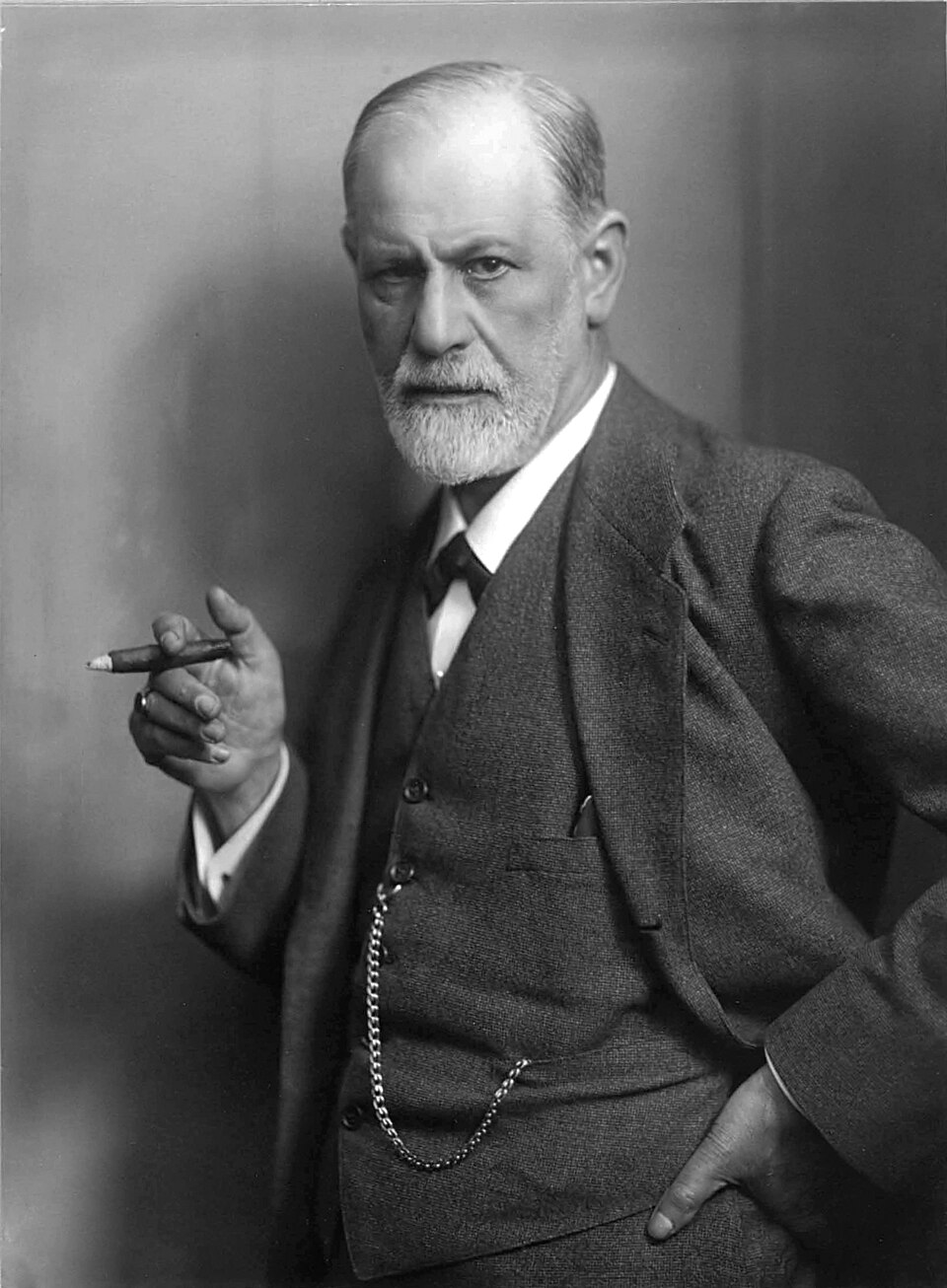
Sigmund Freud was born in Freiberg, Moravia, and lived most of his life in Vienna, where he trained as a doctor.More about Sigmund Freud →
Read by a real person
Ram Ranjini6 audiobooks with Academy Voices
With nearly two decades of broadcast experience backed by classic theatre and screen acting training, Ram Ranjini delivers a warm, confident voice with smooth mid-low tones.More read by Ram ↓
Self-Help
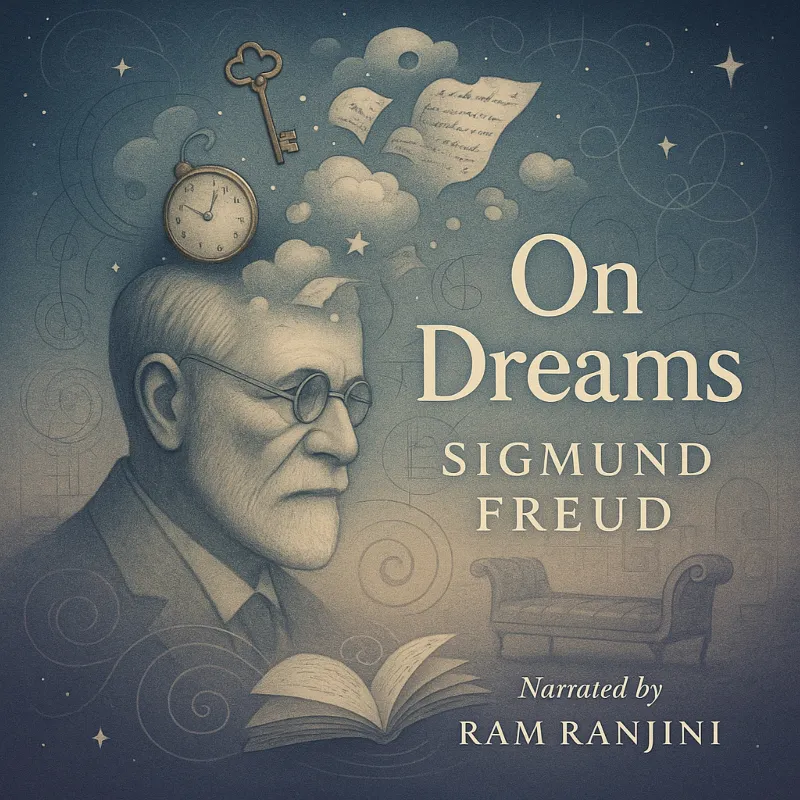
On Dreams Ebook
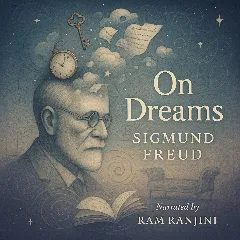
by Sigmund Freud · read by
Ram Ranjini · 2 hr 24 min
Sigmund Freud wrote On Dreams as a short guide to the ideas in his big work The Interpretation of Dreams.
Hear it read by Ram Ranjini: the audiobook is right here
Story guide on this page: summary, characters, discussion questions
Yours to keep: a DRM-free EPUB for any device. Read it here, or on Kindle (with Send to Kindle), Apple Books, Kobo or Google Play Books.
Want both? Buy the audiobook and add the ebook for $0.99.
✓ DRM-free, yours to keep. Download the files after you buy and play them anywhere.
Yours to keepBuy once, it stays in your library
Listen anywhereIn our app on your phone or computer
Bought by mistake, or something wrong with the file? Email apica@academyvoices.com within 14 days for a full refund.
Bought by mistake or something wrong with the audio? Email apica@academyvoices.com within 14 days for a full refund.
About this audiobookAbout this book
Sigmund Freud wrote On Dreams as a short guide to the ideas in his big work The Interpretation of Dreams. He explains why we dream, how a dream hides a wish, and how a dream's strange images come from ordinary daytime thoughts and old memories.
He walks through his method plainly, with everyday examples. Read by Ram Ranjini, a little under two and a half hours.
For anyone who has woken up wondering what a dream could mean.
Story guide
On Dreams summary
Spoiler alert: this summary tells the whole story.
Freud begins by contrasting two old views of dreams: the scientific view that they are meaningless brain activity during sleep, and the popular view that they mean something and can be interpreted. He sides, surprisingly, with the popular view, but he offers a new method. Instead of using a dream dictionary, the dreamer breaks the dream into pieces and says freely whatever thoughts each piece brings to mind.
Using one of his own dreams about a dinner party, Freud shows how a confusing dream links back to the events and worries of the previous day. He names the dream as remembered its manifest content, and the hidden thoughts uncovered by analysis its latent content. The work of turning one into the other he calls the dream work.
Children's dreams are simple, he says: they plainly fulfill wishes left over from the day, like the toddler who dreamed of eating all the cherries. Adult dreams look strange because the dream work disguises their meaning. It condenses many thoughts into one image, displaces strong feelings onto minor details, and turns ideas into pictures. A kind of inner censor allows forbidden or painful wishes into the dream only in disguise.
Freud argues that dreams protect sleep rather than disturb it, by dealing with wishes that would otherwise wake us. He closes by discussing dream symbols, links between dreams and myths and folklore, and the way the same mental processes appear in neurotic symptoms. Our edition also includes an introduction by the Scottish physician W. Leslie Mackenzie.
Freud's ideas about dreams changed how the modern world thinks about the mind. Many of them are now debated or rejected by scientists, but this short book remains the clearest way to meet his thinking in his own words.
Famous lines
In fundamental contrast with those saws which assume that sleep is disturbed by dreams, we hold the dream as the guardian of sleep.
Sigmund Freud
They are simply and undisguisedly realisations of wishes.
Freud, on children's dreams
“Hermann eaten up all the cherries.”
A little boy of twenty-two months, reporting his dream
Main characters
SF
Sigmund FreudThe Viennese doctor who founded psychoanalysis and uses his own dreams as examples.
MD
M. D. EderThe British physician who translated the book into English.
WL
W. Leslie MackenzieThe Scottish doctor who wrote the introduction for English readers.
Did you know?
Freud wrote On Dreams as a short, popular version of his much longer book The Interpretation of Dreams, which came out in late 1899.
The translator, M. D. Eder, was one of the very first doctors to practice psychoanalysis in Britain.
Freud often used his own dreams as evidence, and he admits in this book that he stopped one analysis because it touched matters he did not want strangers to know.
Questions to talk about
What is the difference between a dream's manifest content and its latent content?
Think of a recent dream. Can you link any part of it to something that happened the day before?
Why does Freud say children's dreams are easier to understand than adults' dreams?
Do you agree that dreams protect sleep? What evidence supports or challenges that idea?
Which of Freud's ideas here still feel familiar in everyday speech today?
Chapters
On Dreams chapters
ChapterStarts at
Introduction0:17
Chapter 131:34
Chapter 236:15
Chapter 351:46
Chapter 41:04:36
Chapter 51:16:21
Chapter 61:25:52
Chapter 71:40:34
Chapter 81:51:21
Chapter 91:57:29
Show all 14 chapters
Chapter 102:02:07
Chapter 112:05:59
Chapter 122:14:35
Chapter 132:21:35
New listeners
Get 25% off your first audiobook
Join our list and we'll email you 25% off, plus new releases from our store. Every one is read by a real person. No account needed.
Details
Length
2 hr 24 min
Narration
Solo narrator
Format
Unabridged audiobook
Publisher
Academy Voices
Language
English
ISBN
9798347361458
Questions
What is On Dreams about?
Sigmund Freud's own short, popular explanation of his theory that dreams have hidden meanings and are disguised fulfillments of our wishes.
Who are the main characters in On Dreams?
Sigmund Freud, the Viennese doctor who founded psychoanalysis and uses his own dreams as examples; M. D. Eder, the British physician who translated the book into English; W. Leslie Mackenzie, the Scottish doctor who wrote the introduction for English readers.
Who narrates the On Dreams audiobook?
This edition of On Dreams by Sigmund Freud is narrated by Ram Ranjini.
How long is the On Dreams audiobook?
It runs 2 hr 24 min, unabridged, so you hear the complete text.
Is this audiobook narrated by a real person?
Yes. Every Academy Voices audiobook is Certified Human Voice: performed start to finish by a real narrator.
Where can I listen to On Dreams?
Right here: buy it on Academy Voices and listen in your browser or our app. Hear a free sample on this page first.