How far should a government, or a crowd, be allowed to control what a person says, thinks or does? John Stuart Mill argues that the only good reason to limit someone's freedom is to prevent harm to others.
Hear it read by Luke Oldham: the audiobook is right here
Story guide on this page: summary, characters, discussion questions
Yours to keep: a DRM-free EPUB for any device. Read it here, or on Kindle (with Send to Kindle), Apple Books, Kobo or Google Play Books.
Want both? Buy the audiobook and add the ebook for $0.99.
✓ DRM-free, yours to keep. Download the files after you buy and play them anywhere.
Yours to keepBuy once, it stays in your library
Listen anywhereIn our app on your phone or computer
Bought by mistake, or something wrong with the file? Email apica@academyvoices.com within 14 days for a full refund.
Bought by mistake or something wrong with the audio? Email apica@academyvoices.com within 14 days for a full refund.
About this audiobookAbout this book
How far should a government, or a crowd, be allowed to control what a person says, thinks or does? John Stuart Mill argues that the only good reason to limit someone's freedom is to prevent harm to others. He makes the case for free speech, free thought and the right to live differently.
On Liberty (1859) is a founding work of liberal thought, read by Luke Oldham. Over five hours for readers interested in freedom and society.
Story guide
On Liberty summary
Spoiler alert: this summary tells the whole story.
Mill begins by saying that the old struggle between liberty and authority has changed. In a democracy the danger is no longer only a cruel king. It is "the tyranny of the majority," both through laws and through the quieter pressure of public opinion and custom, which can crush anyone who is different. To guard against this he proposes one simple principle: the only reason power can rightly be used over any adult against his will is to prevent harm to others. A person's own good is not enough. Over his own body and mind, the individual is sovereign.
The second chapter defends freedom of thought and discussion. Silencing any opinion is wrong, Mill says, because the opinion might be true, and no one is infallible. Even a false opinion usually holds part of the truth. And even a true belief, if never challenged, becomes a "dead dogma" that people repeat without understanding. He points to Socrates and Jesus, both executed by respectable people who were sure they were right.
Next Mill praises individuality. Human nature, he writes, is not a machine built to a model but a tree that needs to grow in its own way. He worries that society is pressing everyone into the same shape, and that progress depends on people who try new ways of living, even odd ones.
In the fourth chapter he asks where society's authority ends. People owe each other basic duties and must not harm others' interests, but conduct that mainly affects oneself should be left alone, even if others dislike it. In the final chapter Mill applies these ideas to real questions such as the sale of poisons, drinking, gambling, education and the power of government.
On Liberty is one of the most important books ever written about freedom. Its harm principle and its defense of free speech still shape debates in law, politics and everyday life around the world.
Famous lines
That the only purpose for which power can be rightfully exercised over any member of a civilised community, against his will, is to prevent harm to others.
John Stuart Mill, stating the harm principle
Over himself, over his own body and mind, the individual is sovereign.
John Stuart Mill
If all mankind minus one, were of one opinion, and only one person were of the contrary opinion, mankind would be no more justified in silencing that one person, than he, if he had the power, would be justified in silencing mankind.
John Stuart Mill, on free speech
He who knows only his own side of the case, knows little of that.
John Stuart Mill
Main characters
JS
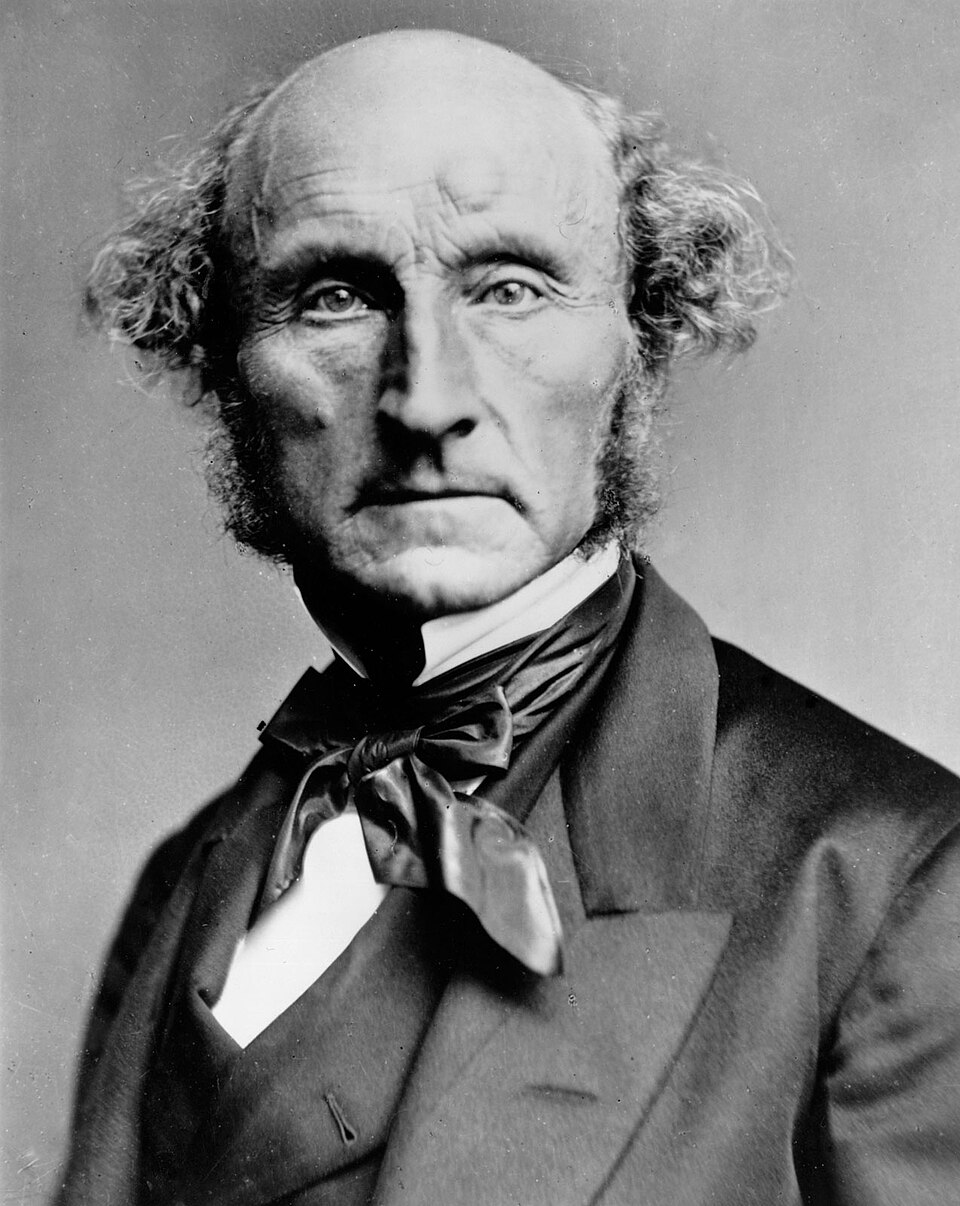
John Stuart MillThe English philosopher and economist who wrote the essay.
HT
Harriet Taylor MillMill's wife and intellectual partner, to whose memory the book is dedicated.
S
SocratesThe Greek philosopher Mill uses as an example of a wise man put to death for his opinions.
Did you know?
On Liberty came out in 1859, the same year as Charles Darwin's On the Origin of Species.
Mill dedicated the book to his wife, Harriet Taylor Mill, who had died the year before and whom he called a partner in his work.
As a member of Parliament, Mill proposed giving women the vote in 1867, decades before it happened.
Questions to talk about
What is the harm principle? Can you think of a case where it is hard to apply?
Mill says even false opinions should be heard. Do you agree? Are there limits?
What does Mill mean by a "dead dogma"? Have you ever believed something without knowing why?
Is social pressure ever as powerful as the law in controlling how people live?
How would Mill view social media and online speech today?
Chapters
On Liberty chapters
ChapterStarts at
Chapter 10:19
Chapter 240:18
Chapter 2 Continued1:40:11
Chapter 32:30:17
Chapter 43:26:35
Chapter 54:20:53
New listeners
Get 25% off your first audiobook
Join our list and we'll email you 25% off, plus new releases from our store. Every one is read by a real person. No account needed.
Details
Length
5 hr 26 min
Narration
Solo narrator
Format
Unabridged audiobook
Publisher
Academy Voices
Language
English
ISBN
9798347343454
Cover art
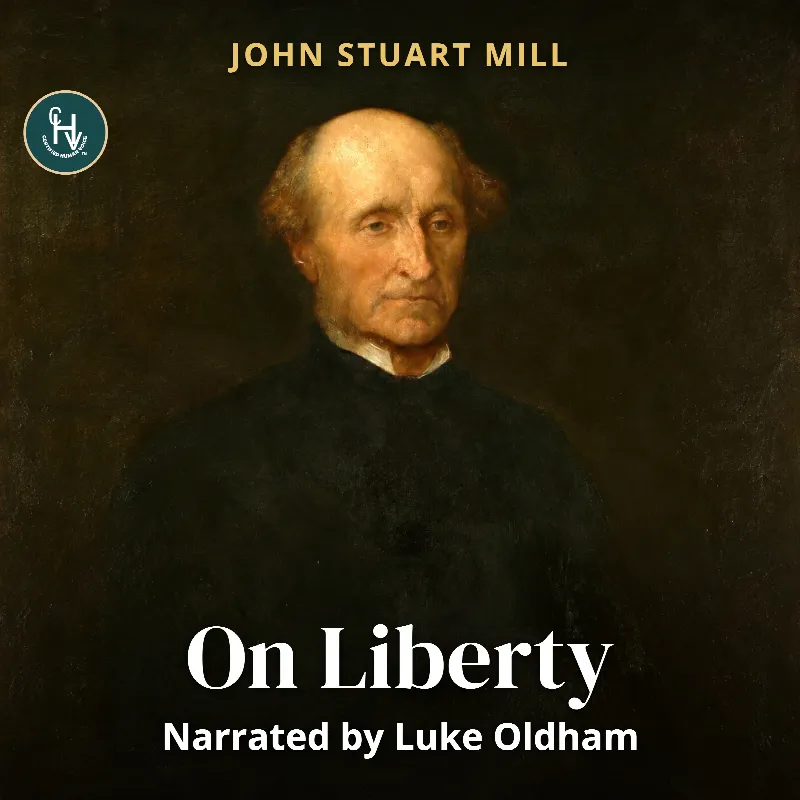
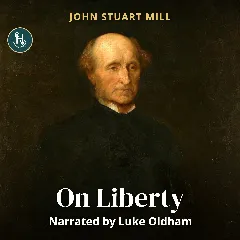
After G. F. Watts, John Stuart Mill (1873)
Questions
What is On Liberty about?
John Stuart Mill argues that people should be free to think, speak and live as they choose, and that society may only limit someone's freedom to prevent harm to others.
Who are the main characters in On Liberty?
John Stuart Mill, the English philosopher and economist who wrote the essay; Harriet Taylor Mill, mill's wife and intellectual partner, to whose memory the book is dedicated; Socrates, the Greek philosopher Mill uses as an example of a wise man put to death for his opinions.
Who narrates the On Liberty audiobook?
This edition of On Liberty by John Stuart Mill is narrated by Luke Oldham.
How long is the On Liberty audiobook?
It runs 5 hr 26 min, unabridged, so you hear the complete text.
Is this audiobook narrated by a real person?
Yes. Every Academy Voices audiobook is Certified Human Voice: performed start to finish by a real narrator.
Where can I listen to On Liberty?
Right here: buy it on Academy Voices and listen in your browser or our app. Hear a free sample on this page first.