Written by
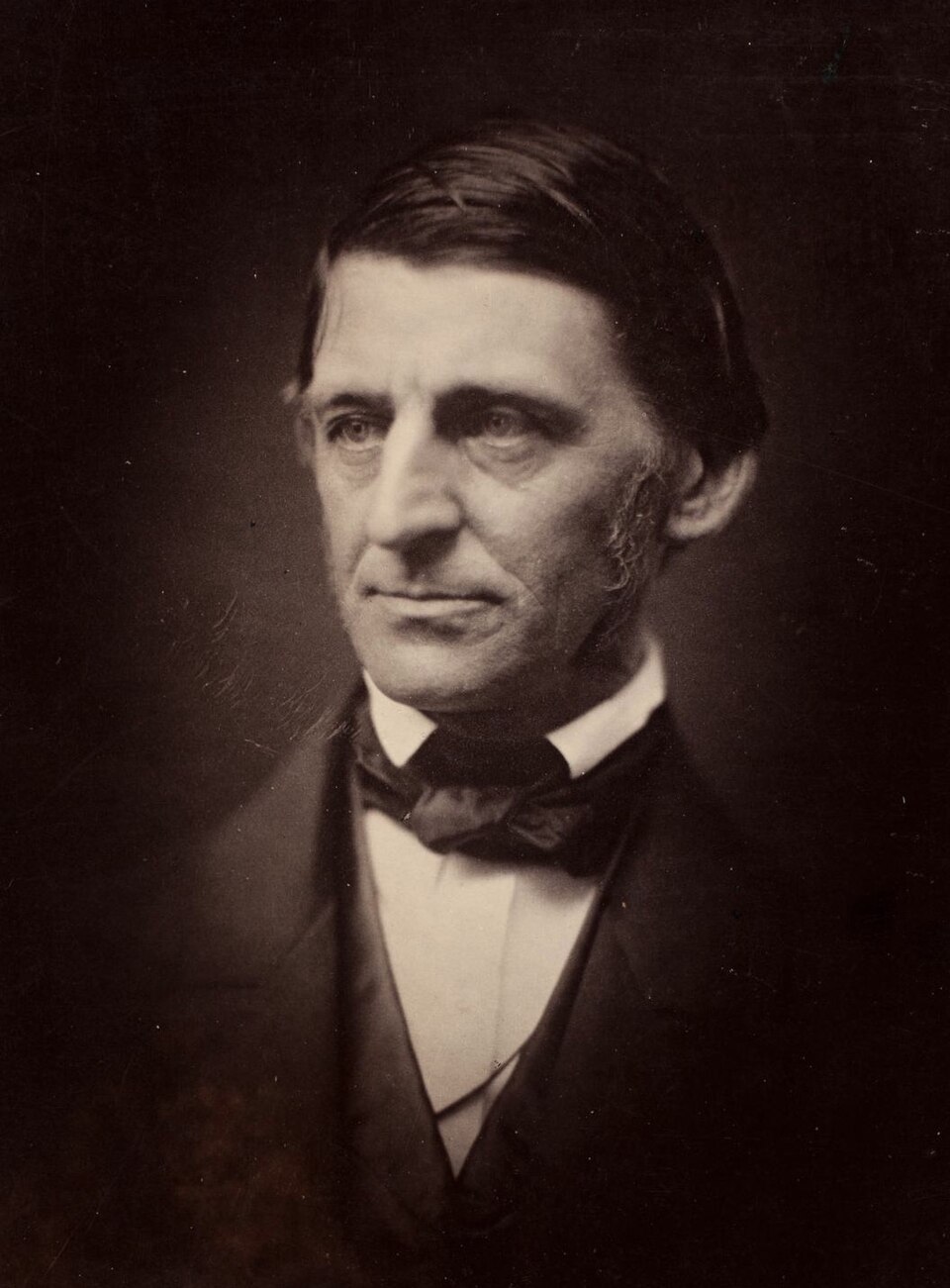
Ralph Waldo Emerson7 audiobooks with Academy Voices
Ralph Waldo Emerson was born in Boston, studied at Harvard and became a Unitarian minister before leaving the pulpit in 1832.More about Ralph Waldo Emerson →
Read by a real person
Gid Newell9 audiobooks with Academy Voices
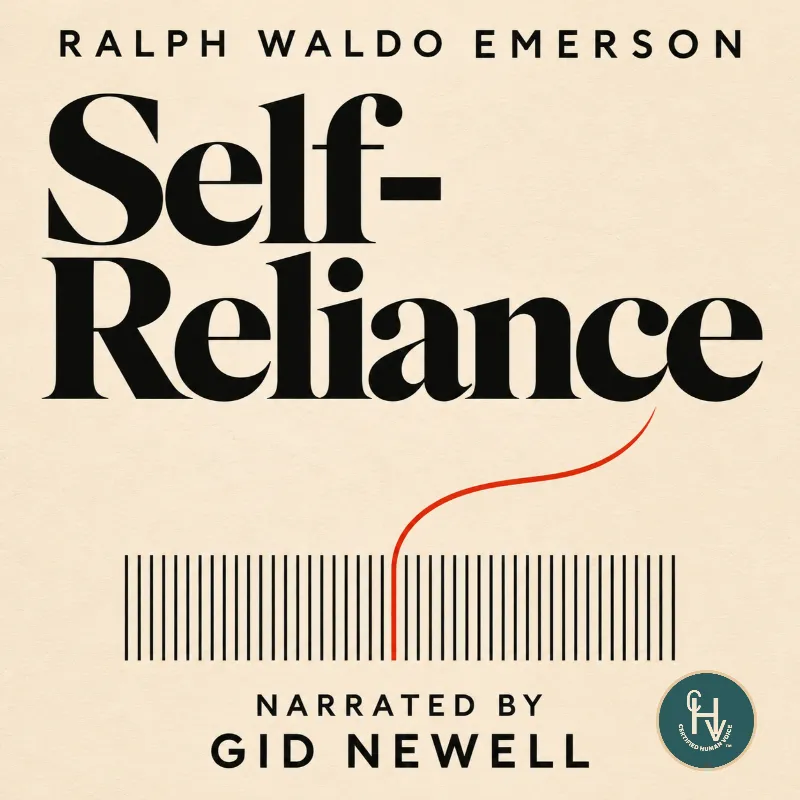
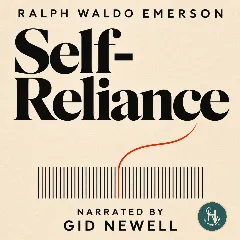
Trust thyself. In this stirring manifesto of independence, Ralph Waldo Emerson urges you to honor your own intuition, reject conformity, and live from authentic inner conviction.
Hear it read by Gid Newell: the audiobook is right here
Story guide on this page: summary, characters, discussion questions
Yours to keep: a DRM-free EPUB for any device. Read it here, or on Kindle (with Send to Kindle), Apple Books, Kobo or Google Play Books.
Want both? Buy the audiobook and add the ebook for $0.99.
Free audiobook
Listen to the whole story free
Enter your email and we'll send you a link to the full audiobook of Self-Reliance. No account needed.
We'll also ask if you'd like new audiobooks by email. Privacy Policy
✓ DRM-free, yours to keep. Download the files after you buy and play them anywhere.
Yours to keepBuy once, it stays in your library
Listen anywhereIn our app on your phone or computer
Bought by mistake, or something wrong with the file? Email apica@academyvoices.com within 14 days for a full refund.
Bought by mistake or something wrong with the audio? Email apica@academyvoices.com within 14 days for a full refund.
About this audiobookAbout this book
Trust thyself. In this stirring manifesto of independence, Ralph Waldo Emerson urges you to honor your own intuition, reject conformity, and live from authentic inner conviction. With vivid, memorable lines—“imitation is suicide,” “a foolish consistency is the hobgoblin of little minds”—Emerson challenges the joint‑stock expectations of society and calls you to act boldly, think freshly, and stand alone with integrity. Gid Newell’s clear, confident narration brings the essay’s rhythmic prose and bracing ideas to life, making a 19th‑century classic feel powerfully current. Hear why to be great is often to be misunderstood, how spiritual insight arises from direct experience, and what it takes to carry your purpose through criticism, chaos, and doubt. Whether you seek creative courage, philosophical clarity, or a shot of no‑excuses motivation, this concise audiobook delivers evergreen wisdom you can use today—and every day you choose yourself.
Story guide
Self-Reliance summary
Spoiler alert: this summary tells the whole story.
Emerson begins with genius, which he defines as believing your own thought and trusting that what is true for you in your private heart is true for all people. We push aside our own ideas, he says, only to hear them later from someone else. Envy is ignorance and imitation is suicide. Each person has something to do that no one else can do, so "Trust thyself."
He then turns to society, which he calls a conspiracy against the individual. Society wants people to conform, to repeat accepted opinions and to follow customs they do not believe. Emerson says a true person must be a nonconformist and should not worry about what others think. He also rejects the fear of being inconsistent. We should say what we think today, even if it contradicts what we said yesterday. "A foolish consistency is the hobgoblin of little minds," and great people like Socrates, Jesus and Galileo were misunderstood.
Next, Emerson explores where self-trust comes from. He says it rests on an inner source of wisdom, a deep intuition that connects each person to the universe. He praises living fully in the present, like the roses under his window that do not compare themselves to other roses. He criticizes people who lean on old books, borrowed prayers and other people's authority instead of their own experience.
In the last part, Emerson applies these ideas to everyday life. He questions prayer that begs for things, creeds that bind the mind, travel taken to escape oneself, and art and buildings that copy foreign models. Society never truly advances, he argues, because people rely on property, tools and government instead of their own character. He ends by saying that nothing can bring you peace but yourself.
"Self-Reliance" became one of the defining works of American thought. Its call for independence, courage and honesty with oneself still inspires students, writers and leaders today.
Famous lines
To believe your own thought, to believe that what is true for you in your private heart is true for all men,—that is genius.
The opening paragraph
Trust thyself: every heart vibrates to that iron string.
Ralph Waldo Emerson
A foolish consistency is the hobgoblin of little minds, adored by little statesmen and philosophers and divines.
Ralph Waldo Emerson
Nothing can bring you peace but yourself. Nothing can bring you peace but the triumph of principles.
The closing lines
Did you know?
Emerson had given up his job as a Unitarian minister in 1832 because he could no longer follow some of the church's practices.
His friend Henry David Thoreau built his famous cabin at Walden Pond on land that Emerson owned.
The essay begins with a Latin motto, "Ne te quaesiveris extra," which means "Do not seek yourself outside yourself."
Questions to talk about
What does Emerson mean by "Trust thyself"? Is that always good advice?
Do you agree that society works against individuality? Give examples from your own life.
Why does Emerson think consistency can be foolish?
How would Emerson feel about social media and the pressure to fit in?
Is there a danger in too much self-reliance? Where should we draw the line?
Chapters
Self-Reliance chapters
ChapterStarts at
Part 10:14
Part 240:22
New listeners
Get 25% off your first audiobook
Join our list and we'll email you 25% off, plus new releases from our store. Every one is read by a real person. No account needed.
Details
Length
1 hr 20 min
Narration
Solo narrator
Format
Unabridged audiobook
Publisher
Anthony Pica Productions, LLC
Language
English
Questions
What is Self-Reliance about?
Emerson's bold essay urges every person to trust their own mind, ignore the pressure to conform, and live by their own inner sense of truth.
Who narrates the Self-Reliance audiobook?
This edition of Self-Reliance by Ralph Waldo Emerson is narrated by Gid Newell.
How long is the Self-Reliance audiobook?
It runs 1 hr 20 min, unabridged, so you hear the complete text.
Is this audiobook narrated by a real person?
Yes. Every Academy Voices audiobook is Certified Human Voice: performed start to finish by a real narrator.
Where can I listen to Self-Reliance?
Right here: buy it on Academy Voices and listen in your browser or our app. Hear a free sample on this page first.