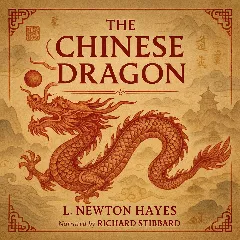
Hear it read by Richard Stibbard: the audiobook is right here
Story guide on this page: summary, characters, discussion questions
Yours to keep: a DRM-free EPUB for any device. Read it here, or on Kindle (with Send to Kindle), Apple Books, Kobo or Google Play Books.
Want both? Buy the audiobook and add the ebook for $0.99.
Free audiobook
Listen to the whole story free
Enter your email and we'll send you a link to the full audiobook of The Chinese Dragon. No account needed.
We'll also ask if you'd like new audiobooks by email. Privacy Policy
✓ DRM-free, yours to keep. Download the files after you buy and play them anywhere.
Yours to keepBuy once, it stays in your library
Listen anywhereIn our app on your phone or computer
Bought by mistake, or something wrong with the file? Email apica@academyvoices.com within 14 days for a full refund.
Bought by mistake or something wrong with the audio? Email apica@academyvoices.com within 14 days for a full refund.
About this audiobookAbout this book
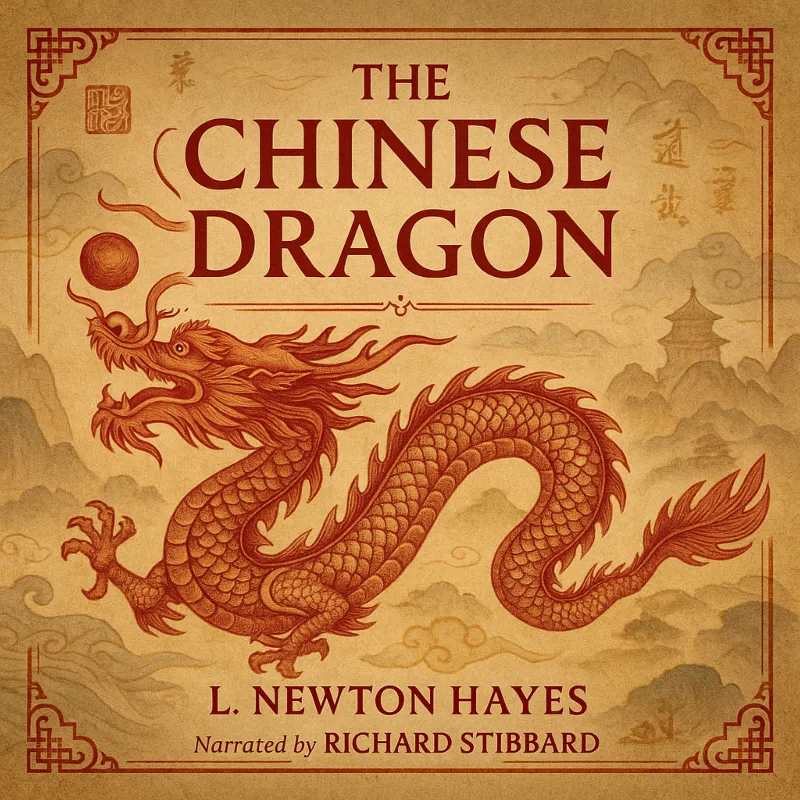
In China the dragon is far more than a creature of legend. It has played a large part in Chinese thought for more than four thousand years.
L. Newton Hayes was born in Soochow to American missionary parents and spent about twenty-five years in China, mostly with the YMCA. His short 1922 book looks at the dragon in Chinese life, literature and mythology. Read by Richard Stibbard. Forty-nine minutes.
A good listen for anyone curious about Chinese folklore and the symbols behind it.
Story guide
The Chinese Dragon summary
Spoiler alert: this summary tells the whole story.
L. Newton Hayes explains that his interest began in 1909, during a week as the guest of the veteran missionary scholar W. A. P. Martin near Peking. Over the following years he gathered stories, pictures, proverbs and interviews from ten provinces. In an introduction, Fong F. Sec notes that little had been written on the subject in either Chinese or English, though the dragon had filled Chinese thought for more than four thousand years.
Hayes argues that Chinese dragons are not the evil monsters of Western legend but friendly, revered creatures that bring rain and rule the rivers, lakes and seas. He estimates that most Chinese of his day believed dragons were real, and he traces the dragon through art, literature, history and religion, from temple carvings and porcelain to the dragon king worshiped in nearly every city. He suggests the idea may have begun with some early encounter with a huge prehistoric reptile, and he describes the many kinds of dragons, the imperial five-clawed dragon, and the classic description of a creature with the head of a camel, the horns of a deer and the claws of an eagle.
One chapter records people who said they had seen dragons, including a teacher who saw a dead one in Shantung and boatmen who watched three cross a mountain beside the Yangtze. Another compares the Chinese dragon with Western dragons. Later chapters collect folk beliefs: lazy dragons punished by the Thunder God, dragons that love bamboo, arsenic and roasted swallows, and the geomancers' "dragon paths" that bring luck to a grave or bad fortune to anyone who disturbs them. He lists the many everyday things named for dragons, from fire engines to wedding cakes, and the emperor's titles as the True Dragon.
In his last chapter Hayes considers whether the 1911 Revolution and the end of the Dragon Flag will kill the dragon idea. He is sure it will not. The dragon, he writes, belongs to the Chinese people themselves, not to any dynasty, and it will last as long as they do.
The book is a readable record of beliefs and customs in early Republican China, seen through the eyes of a sympathetic Western observer of the 1920s.
Famous lines
The dragon has played a large part in Chinese thought through four thousand and more years.
Fong F. Sec, in the introduction
He says that it has the head of a camel, the horns of a deer, the ears of a cow, the neck of a snake, the body of a fish, the scales of a carp, the claws of an eagle, the eyes of a devil, and the paws of a tiger.
Hayes, quoting an earlier writer
Fire engines are called “water dragons.”
Hayes
The idea is distinctly a heritage of the Chinese race itself, and as such it will probably live as long as this people.
Hayes, near the end
Main characters
LN
L. Newton HayesThe author, an American who spent many years in China collecting material on the dragon.
FF
Fong F. SecThe Chinese scholar who wrote the book's introduction.
WA
W. A. P. MartinThe veteran missionary scholar whose dinner-table quizzes first turned Hayes toward the subject.
Did you know?
The book was first printed in Shanghai in 1922 and was reprinted twice by 1923.
Under the Qing dynasty, China's flag showed a dragon; it was replaced after the 1911 Revolution ended the empire.
Dragon boat races, which Hayes pictures at Foochow, are still held across China during the Dragon Boat Festival.
Questions to talk about
How is the Chinese dragon different from the dragons of European stories? Why might those differences matter?
Why do you think Hayes includes accounts from people who said they had seen dragons? How does he treat their stories?
Hayes lists many everyday things named after dragons. What does that tell you about how a symbol lives in a language?
Why was Hayes sure the dragon would survive the end of the empire? Was he right?
What can a book like this, written by an outsider in 1922, teach us, and what should we be careful about when reading it?
Chapters
The Chinese Dragon chapters
ChapterStarts at
Chapter 10:20
Chapter 26:38
Chapter 310:19
Chapter 414:57
Chapter 519:56
Chapter 626:00
Chapter 732:16
Chapter 836:44
Chapter 941:53
New listeners
Get 25% off your first audiobook
Join our list and we'll email you 25% off, plus new releases from our store. Every one is read by a real person. No account needed.
Details
Length
49 min
Narration
Solo narrator
Format
Unabridged audiobook
Publisher
Academy Voices
Language
English
ISBN
9798347360017
Questions
What is The Chinese Dragon about?
A short 1922 study, written by an American who lived in China for years, of what the Chinese dragon looks like, where the idea came from, and how deeply it shaped Chinese life and belief.
Who are the main characters in The Chinese Dragon?
L. Newton Hayes, the author, an American who spent many years in China collecting material on the dragon; Fong F. Sec, the Chinese scholar who wrote the book's introduction; W. A. P. Martin, the veteran missionary scholar whose dinner-table quizzes first turned Hayes toward the subject.
Who narrates The Chinese Dragon audiobook?
This edition of The Chinese Dragon by L. Newton Hayes is narrated by Richard Stibbard.
How long is The Chinese Dragon audiobook?
It runs 49 min, unabridged, so you hear the complete text.
Is this audiobook narrated by a real person?
Yes. Every Academy Voices audiobook is Certified Human Voice: performed start to finish by a real narrator.
Where can I listen to The Chinese Dragon?
Right here: buy it on Academy Voices and listen in your browser or our app. Hear a free sample on this page first.