Written by
Joseph Conrad & Ford Madox Ford1 audiobook with Academy Voices
Joseph Conrad (1857 to 1924) was a Polish born British novelist who wrote of the sea and colonial adventures, such as Heart of Darkness.More about Joseph Conrad & Ford Madox Ford →
M
Read by a real person
Mark W. Cohan3 audiobooks with Academy Voices
A lawyer has gambled away most of a rich client's money. When the client announces his marriage and demands the funds back at once, the lawyer sees no way out and nearly ends his own life.
Hear it read by Mark W. Cohan: the audiobook is right here
Story guide on this page: summary, characters, discussion questions
Yours to keep: a DRM-free EPUB for any device. Read it here, or on Kindle (with Send to Kindle), Apple Books, Kobo or Google Play Books.
Want both? Buy the audiobook and add the ebook for $0.99.
✓ DRM-free, yours to keep. Download the files after you buy and play them anywhere.
Yours to keepBuy once, it stays in your library
Listen anywhereIn our app on your phone or computer
Bought by mistake, or something wrong with the file? Email apica@academyvoices.com within 14 days for a full refund.
Bought by mistake or something wrong with the audio? Email apica@academyvoices.com within 14 days for a full refund.
About this audiobookAbout this book
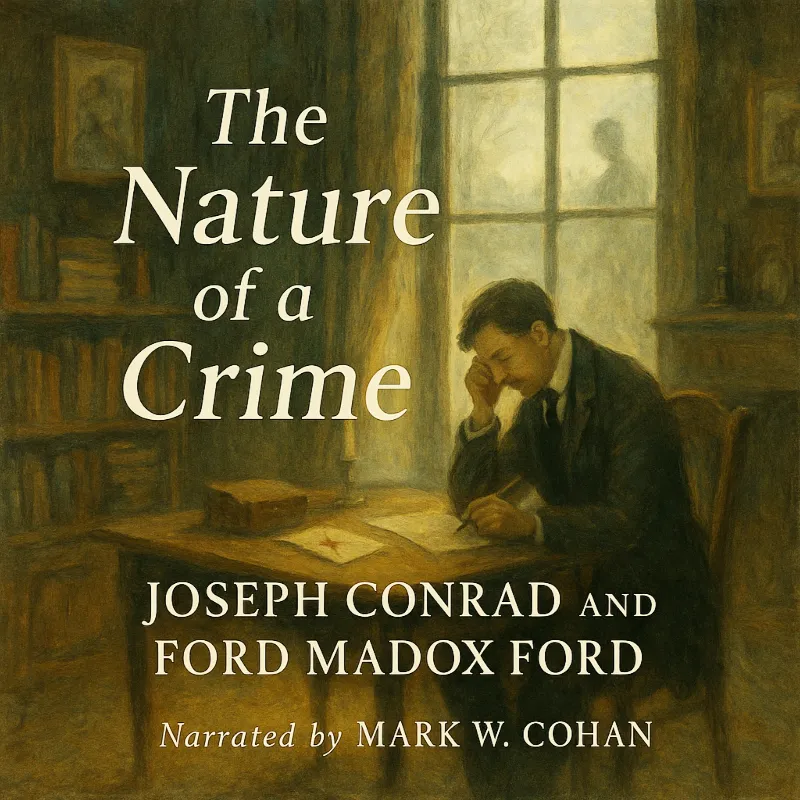
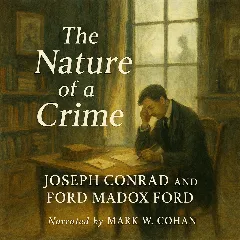
A lawyer has gambled away most of a rich client's money. When the client announces his marriage and demands the funds back at once, the lawyer sees no way out and nearly ends his own life. In the dark, he sits down and writes to the married woman he loves.
The Nature of a Crime is a short work by Joseph Conrad and Ford Madox Ford, told as a confession in a series of letters. It asks what a crime really is, and how thin the line of respectability can be. Read by Mark W. Cohan.
Story guide
The Nature of a Crime summary
Spoiler alert: this summary tells the whole story.
The narrator is a wealthy, admired London man of affairs, a connoisseur with houses in Gordon Square, fine pictures and important public posts. For more than seven years he has loved a married woman, whose husband, Robert, is addicted to the drug chloral. They have spent almost every evening together in talk, but he has never once told her his feelings. Now she is away in Rome, and he begins writing to her late at night from his office. His news: he is a dead man. He wears a ring with a glass bead of poison inside, and he means to bite through it before he can be arrested.
His crime, he explains, is that for nine years, as sole trustee of the great Burden fortune, he has gambled with money that was not his. He forged repair bills and invented defaulting tenants, and his houses, art and reputation were all paid for with Burden money. He did it, he says, to escape his longing for her. Now young Edward Burden is to marry Miss Annie Averies on April 5, and her solicitors will inspect his accounts. He cannot repay what he has taken.
Over several nights the letters wander through his thoughts on love, gambling, Wagner's Tristan and Isolde, and death. He describes Edward Burden with scorn: a pompous, self-satisfied young man who comes to confess an old affair, and who is already laying down rules for his shy fiancée, down to how she must make the tea. The narrator imagines himself as a kind of mocking god to Edward. He also reveals that he has secretly been curing her husband by having the chemist water down his chloral. He makes his will, leaving everything to Edward, which after his debts will amount to a five-pound note, so that Edward will have to cover up the crime himself. At eight in the morning he posts the parcel of letters to her.
In a final letter written days later, he reports that he is "reprieved." Walking home ready to die, he opened a note from Edward. Believing the trustee had been hurt by the idea of an inspection, Edward had insisted that the accounts be returned unchecked and is leaving on a year-long honeymoon. The narrator now has time to set everything right, or to keep deceiving Edward forever. But having spoken, he says, his fate is in her hands: if she will share her thoughts with him, he will repair the Burden estate and live soberly; if not, he will go on gambling wildly toward ruin and death.
Written together by two masters of modern fiction, this short, strange novel is a study of a man who is respectable on the outside and a thief within. It is less a crime story than a dark, ironic confession about love, pride and the hidden lives of the "safe" men society trusts. Our edition also includes the authors' prefaces and a note on their earlier joint novel, Romance.
Famous lines
For I am dead: I have only lived through you for how many years now!
The narrator
Believe nothing: be harsh to no one.
The narrator, recalling a saying he shared with her
My good Edward, you are the most debauched person I have ever met.
The narrator, to Edward Burden
So then, I stand reprieved—and the final verdict is in your hands.
The closing line
Main characters
N
The narratorA rich, cultivated, highly respected London trustee who has secretly embezzled the Burden fortune.
BW
The beloved womanThe married woman in Rome to whom the letters are written, whom the narrator has loved silently for years.
R
RobertHer brilliant husband, addicted to chloral, whom the narrator is secretly helping to cure.
EB
Edward BurdenThe pompous, trusting young heir whose fortune the narrator has stolen.
AA
Annie AveriesEdward's shy, perceptive fiancée, who senses that the narrator is "dangerous."
Did you know?
Conrad and Ford also wrote two novels together, The Inheritors (1901) and Romance (1903).
The story first appeared in the English Review, the literary magazine Ford founded and edited in 1908, and was not published as a book until 1924.
In his preface Conrad called the work "a fragment" and said it could never have become anything else.
Questions to talk about
Why do you think the narrator never told the woman he loved her until he believed he was about to die?
The narrator says he gambled with the Burden money to escape his thoughts of her. Do you believe him?
Why does the narrator despise Edward Burden so much? Is Edward really worse than the narrator?
What role does the mouse play in the narrator's thinking about fate and Providence?
Is the "reprieve" at the end a happy ending? What do you think the woman should answer?
Chapters
The Nature of a Crime chapters
ChapterStarts at
Chapter 10:27
Chapter 224:32
Chapter 333:56
Chapter 438:35
Chapter 555:59
Chapter 61:13:47
Chapter 71:32:07
Chapter 81:43:38
New listeners
Get 25% off your first audiobook
Join our list and we'll email you 25% off, plus new releases from our store. Every one is read by a real person. No account needed.
Details
Length
1 hr 57 min
Narration
Solo narrator
Format
Unabridged audiobook
Publisher
Academy Voices
Language
English
ISBN
9798347358915
Questions
What is The Nature of a Crime about?
In a series of letters written over his last days, a respected London trustee confesses to the married woman he has silently loved for years that he has secretly stolen a fortune, and that he plans to poison himself before he is found out.
Who are the main characters in The Nature of a Crime?
The narrator, a rich, cultivated, highly respected London trustee who has secretly embezzled the Burden fortune; The beloved woman, the married woman in Rome to whom the letters are written, whom the narrator has loved silently for years; Robert, her brilliant husband, addicted to chloral, whom the narrator is secretly helping to cure; Edward Burden, the pompous, trusting young heir whose fortune the narrator has stolen; Annie Averies, edward's shy, perceptive fiancée, who senses that the narrator is "dangerous.".
Who narrates The Nature of a Crime audiobook?
This edition of The Nature of a Crime by Joseph Conrad & Ford Madox Ford is narrated by Mark W. Cohan.
How long is The Nature of a Crime audiobook?
It runs 1 hr 57 min, unabridged, so you hear the complete text.
Is this audiobook narrated by a real person?
Yes. Every Academy Voices audiobook is Certified Human Voice: performed start to finish by a real narrator.
Where can I listen to The Nature of a Crime?
Right here: buy it on Academy Voices and listen in your browser or our app. Hear a free sample on this page first.