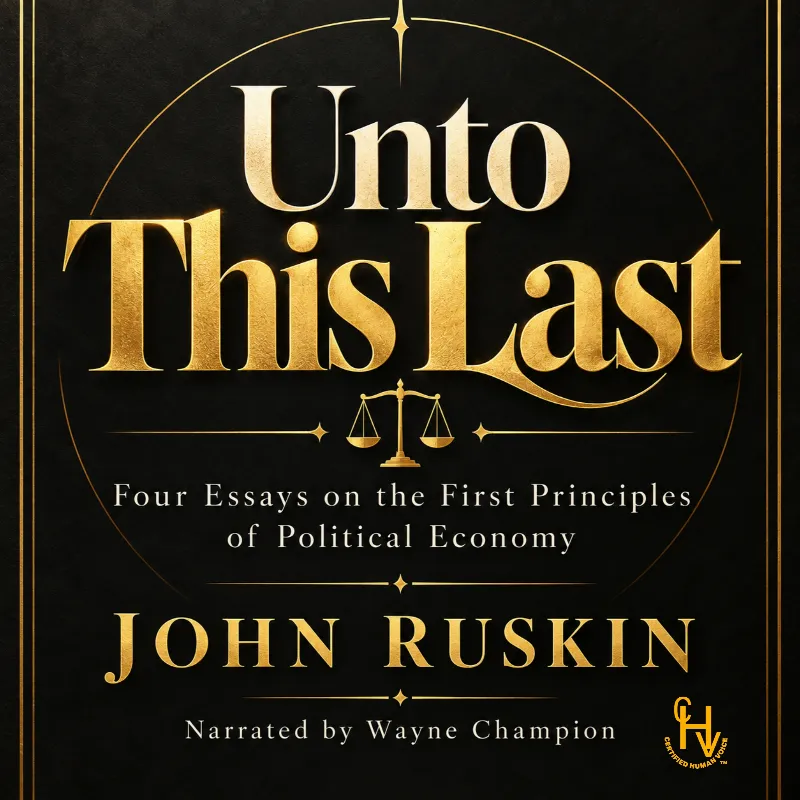
In 1860 John Ruskin wrote four essays on money, work and wealth, and the magazine that printed them was forced to stop. He argues that the economics of his day is wrong about what a person is worth and what a good society owes the poor.
Hear it read by Wayne Champion: the audiobook is right here
Story guide on this page: summary, characters, discussion questions
Yours to keep: a DRM-free EPUB for any device. Read it here, or on Kindle (with Send to Kindle), Apple Books, Kobo or Google Play Books.
Want both? Buy the audiobook and add the ebook for $0.99.
✓ DRM-free, yours to keep. Download the files after you buy and play them anywhere.
Yours to keepBuy once, it stays in your library
Listen anywhereIn our app on your phone or computer
Bought by mistake, or something wrong with the file? Email apica@academyvoices.com within 14 days for a full refund.
Bought by mistake or something wrong with the audio? Email apica@academyvoices.com within 14 days for a full refund.
About this audiobookAbout this book
In 1860 John Ruskin wrote four essays on money, work and wealth, and the magazine that printed them was forced to stop. He argues that the economics of his day is wrong about what a person is worth and what a good society owes the poor. The title comes from a parable in the Bible: unto this last, as unto thee.
Ruskin asks what wealth really is, and what justice in business would look like. Read by Wayne Champion in a little over two and a half hours.
For readers curious about the book that Gandhi later admired.
From the narrator
John Ruskin wrote this in 1860 to challenge the economic theories of his day, and his writing is still valid in our 21st century. I always enjoyed his writings and used some of his honest thoughts to run a business of my own. His Victorian style is poetic, the language is clean, and he was a joy to narrate.
Story guide
Unto This Last: Four Essays on the First Principles of Political Economy summary
Spoiler alert: this summary tells the whole story.
Unto This Last is a short book of four essays. Ruskin takes his title from Jesus's parable of the workers in the vineyard, in which the master pays the men hired last the same as those hired first. In a preface he says the essays were attacked violently when they first appeared, yet he believes they are the truest things he has written.
In "The Roots of Honour" Ruskin attacks the political economists of his day for treating a person as "a covetous machine." Workers have souls, he says, and masters get the best work by treating them with justice and affection, as a good master treats a household servant or a good officer his regiment. He names five great professions: the soldier, pastor, physician, lawyer and merchant. Each has a duty worth dying for, and the merchant's is to provide for the nation honestly and to care for his workers like a father, not to make the most money.
In "The Veins of Wealth" he argues that money is really power over other people, and that making yourself rich in the usual way means keeping your neighbor poor. Wealth gained by fraud or cruelty is not true wealth at all. In "Qui Judicatis Terram" ("You who judge the earth") he draws on the wisdom of Solomon to condemn robbing the poor because they are poor, and he argues for fair, fixed wages.
In the final essay, "Ad Valorem," Ruskin redefines the key words of economics: value, wealth, price and production. His answer is "There is no Wealth but Life," and the richest country is the one that raises the greatest number of noble and happy people. He ends with a call to face the suffering that luxury hides and to work for a world where all share in Christ's gift of bread and peace.
The essays were so unpopular that the magazine stopped printing them, yet they went on to inspire many social reformers and, most famously, Mahatma Gandhi. They remain a powerful argument that economics is a moral question.
Famous lines
There is no Wealth but Life.
From the essay "Ad Valorem"
That country is the richest which nourishes the greatest number of noble and happy human beings
From "Ad Valorem"
Government and co-operation are in all things the Laws of Life; Anarchy and competition the Laws of Death.
From "Qui Judicatis Terram"
the man who does not know when to die, does not know how to live
From "The Roots of Honour"
Main characters
JR
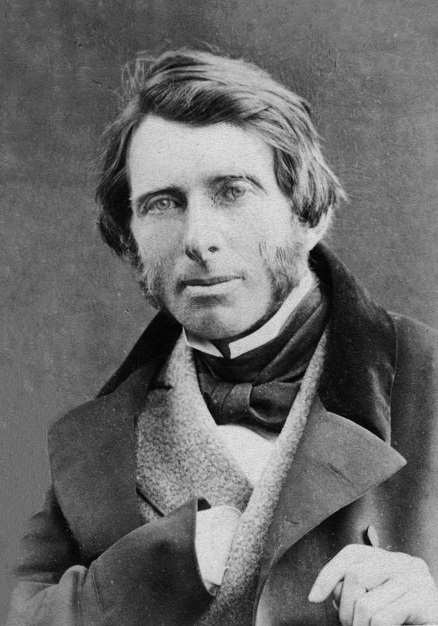
John RuskinThe author, a leading Victorian art critic who turned to fierce social criticism.
JS
John Stuart MillThe famous economist whose ideas Ruskin quotes and argues against.
DR
David RicardoAn earlier economist whose theories Ruskin also challenges.
S
SolomonThe biblical king whose proverbs about justice and the poor Ruskin uses as a guide.
Did you know?
The Cornhill Magazine, then edited by William Makepeace Thackeray, stopped the series after four essays because readers were so angry.
Mahatma Gandhi read the book on a train journey in South Africa in 1904 and later published a Gujarati version of it called Sarvodaya.
The title comes from Matthew 20, the parable of the workers in the vineyard.
Questions to talk about
What does Ruskin mean by calling the economist's ideal worker "a covetous machine," and why does he think that picture is wrong?
Ruskin asks when a merchant should be willing to die. What would your answer be for a business owner today?
Do you agree that "the art of making yourself rich" is often the art of keeping your neighbor poor? Give an example.
How does the parable in the title connect to Ruskin's argument for fixed, fair wages?
"There is no Wealth but Life." How would a country measure its wealth if it took that idea seriously?
Chapters
Unto This Last: Four Essays on the First Principles of Political Economy chapters
ChapterStarts at
Chapter 10:19
Chapter 235:32
Chapter 31:00:45
Chapter 41:31:12
New listeners
Get 25% off your first audiobook
Join our list and we'll email you 25% off, plus new releases from our store. Every one is read by a real person. No account needed.
Details
Length
2 hr 33 min
Narration
Solo narrator
Format
Unabridged audiobook
Publisher
Academy Voices
Language
English
ISBN
9798182629638
Questions
What is Unto This Last: Four Essays on the First Principles of Political Economy about?
John Ruskin's four fiery essays arguing that economics must be built on justice and human feeling, not on greed, and that the only real wealth is life itself.
Who are the main characters in Unto This Last: Four Essays on the First Principles of Political Economy?
John Ruskin, the author, a leading Victorian art critic who turned to fierce social criticism; John Stuart Mill, the famous economist whose ideas Ruskin quotes and argues against; David Ricardo, an earlier economist whose theories Ruskin also challenges; Solomon, the biblical king whose proverbs about justice and the poor Ruskin uses as a guide.
Who narrates the Unto This Last: Four Essays on the First Principles of Political Economy audiobook?
This edition of Unto This Last: Four Essays on the First Principles of Political Economy by John Ruskin is narrated by Wayne Champion.
How long is the Unto This Last: Four Essays on the First Principles of Political Economy audiobook?
It runs 2 hr 33 min, unabridged, so you hear the complete text.
Is this audiobook narrated by a real person?
Yes. Every Academy Voices audiobook is Certified Human Voice: performed start to finish by a real narrator.
Where can I listen to Unto This Last: Four Essays on the First Principles of Political Economy?
Right here: buy it on Academy Voices and listen in your browser or our app. Hear a free sample on this page first.