Written by
Hans Christian Andersen34 audiobooks with Academy Voices
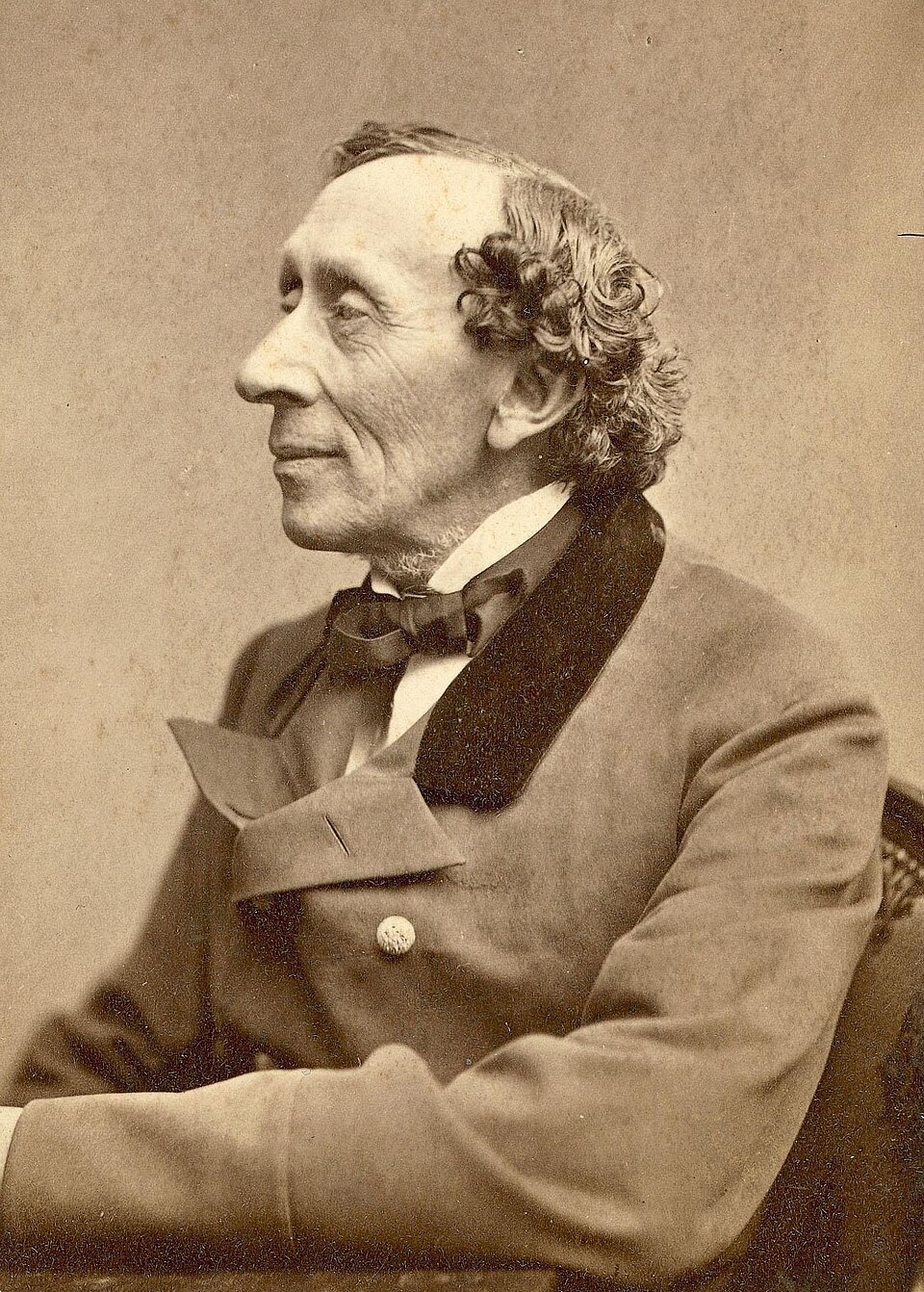
Hans Christian Andersen was born to a poor family in Odense, Denmark, and went to Copenhagen at fourteen to make his way in the theater.More about Hans Christian Andersen →
Read by a real person
Richard Stibbard44 audiobooks with Academy Voices
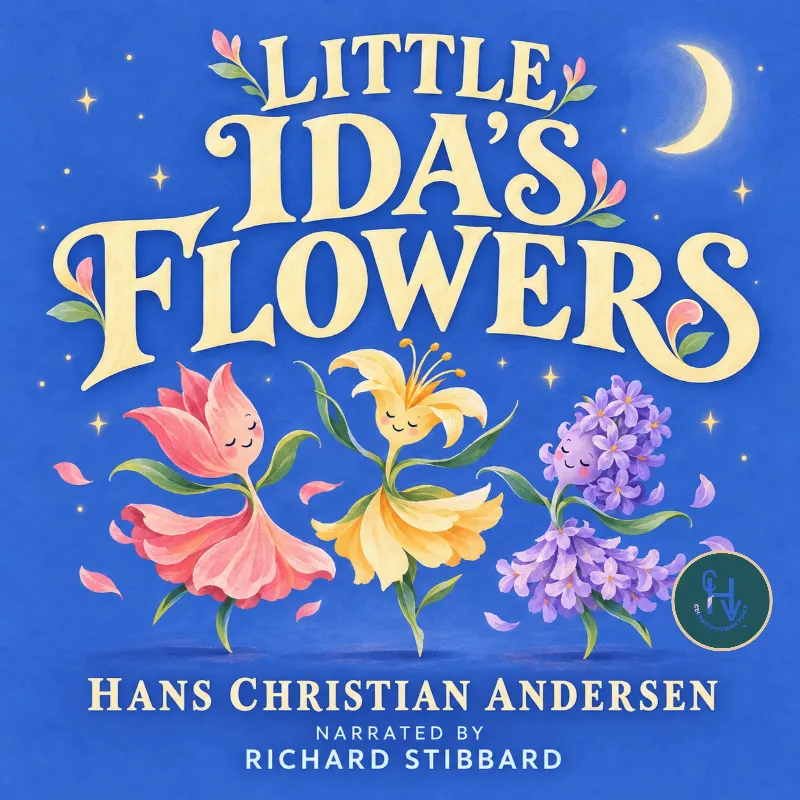
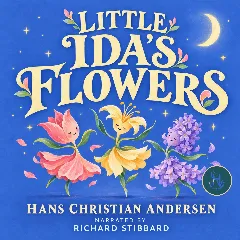
Little Ida is heartbroken when her bouquet wilts overnight—until a merry student shares a secret: after bedtime, flowers slip away to dance at a royal ball.
Hear it read by Richard Stibbard: the audiobook is right here
Story guide on this page: summary, characters, discussion questions
Yours to keep: a DRM-free EPUB for any device. Read it here, or on Kindle (with Send to Kindle), Apple Books, Kobo or Google Play Books.
Want both? Buy the audiobook and add the ebook for $0.99.
Free audiobook
Listen to the whole story free
Enter your email and we'll send you a link to the full audiobook of Little Ida’s Flowers. No account needed.
We'll also ask if you'd like new audiobooks by email. Privacy Policy
✓ DRM-free, yours to keep. Download the files after you buy and play them anywhere.
Yours to keepBuy once, it stays in your library
Listen anywhereIn our app on your phone or computer
Bought by mistake, or something wrong with the file? Email apica@academyvoices.com within 14 days for a full refund.
Bought by mistake or something wrong with the audio? Email apica@academyvoices.com within 14 days for a full refund.
About this audiobookAbout this book
Little Ida is heartbroken when her bouquet wilts overnight—until a merry student shares a secret: after bedtime, flowers slip away to dance at a royal ball. That night, Ida peeks into a moonlit room where hyacinths and tulips whirl in pairs, a golden lily plays the music, and her doll Sophie wakes to join the revels. Come morning, the flowers have faded for good, and Ida gives them a tender farewell, burying them in a pretty box with the hopeful promise that they will return more beautiful next summer.
Hans Christian Andersen’s charming tale celebrates imagination, empathy, and the quiet magic hiding in everyday things. Richard Michael Stibbard’s warm, expressive narration honors the classic’s lullaby cadence—gentle pacing, clear character voices, and a soothing tone that invites young listeners to dream along. Ideal for family listening, classroom storytime, and bedtime winding down, this short, sparkling story reminds us that kindness helps wonders bloom. Perfect for fans of timeless fairy tales and anyone who believes the night holds a dance of its own.
Story guide
Little Ida’s Flowers summary
Spoiler alert: this summary tells the whole story.
Little Ida is sad because her flowers have faded overnight. Her friend, a merry student who tells wonderful stories and cuts out paper figures, explains that the flowers went to a ball last night and are tired. He says flowers hold balls in the king's summer palace when the court has gone, with roses as king and queen and tulips and tiger lilies as watchful old ladies. Butterflies, he says, are flowers that flew off their stalks. A grumpy councilor scolds him for putting such foolish ideas into a child's head.
Ida believes every word. She puts her tired flowers to bed in her doll Sophie's cradle and makes Sophie sleep in the drawer. In the night she wakes to soft piano music, peeps into the next room and sees the flowers dancing in the moonlight. A yellow lily plays the piano, a blue crocus wakes the sick flowers in the doll's bed, and they join the dance. Even her Shrove Tuesday rod dances, with a wax figure of the councilor on top crying, "How can one put such stuff into a child's head?" Sophie climbs out of the drawer, is invited to dance, and offers the flowers her bed for good.
The flowers thank her but say they will be dead by morning. They ask her to tell Ida to bury them in the garden near the canary's grave, so they can bloom again next summer. Then a grand procession of flowers from the king's garden arrives with music and bells, and the dancing goes on until they all say good night.
In the morning the flowers are more faded than ever, and Sophie, half asleep, will not say a word. Ida lays the flowers in a little painted box. With her cousins Gustave and Adolphe, who shoot their crossbows over the grave, she buries them in the garden so they may grow again next summer.
This was one of the very first fairy tales Andersen wrote. It is a gentle, playful story about imagination and about loss and renewal, perfect for young children.
Famous lines
How can one put such stuff into a child's head?
The councilor
The flowers went to a ball last night, and are tired. That's why they hang their heads.
The student
and then we shall wake again next summer and be even more beautiful than we have been this year.
The flowers
Main characters
LI
Little IdaA small girl who loves her flowers and believes the student's stories.
S
The studentA merry young man who tells Ida that flowers dance at night.
C
The councilorA cross visitor who thinks the student's stories are nonsense.
S
SophieIda's doll, who gives up her bed for the sick flowers.
F
The flowersIda's faded bouquet, who dance one last time before they die.
Did you know?
Andersen said he wrote the story for little Ida Thiele, the daughter of his friend and early supporter Just Mathias Thiele.
It appeared in Andersen's very first booklet of fairy tales in 1835, together with "The Tinderbox" and "The Princess and the Pea."
Like the student in the story, Andersen loved making paper cutouts and often cut them while telling stories to children.
Questions to talk about
Why does Ida believe the student instead of the councilor? Who do you think is right?
How does the story make the flowers' death feel less sad?
Why do you think the wax councilor has to dance at the ball?
Sophie forgets to give Ida the flowers' message. Why might Andersen have ended it that way?
What other things in nature could you make up a story about, the way the student does?
New listeners
Get 25% off your first audiobook
Join our list and we'll email you 25% off, plus new releases from our store. Every one is read by a real person. No account needed.
Details
Length
15 min
Narration
Solo narrator
Format
Unabridged audiobook
Publisher
Anthony Pica Productions, LLC
Language
English
ISBN
9798179314899
Questions
What is Little Ida’s Flowers about?
A student tells little Ida that her faded flowers are tired from dancing at a ball all night, and that night Ida sees the flowers, her doll and even a wax councilor dancing in the moonlight.
Who are the main characters in Little Ida’s Flowers?
Little Ida, a small girl who loves her flowers and believes the student's stories; The student, a merry young man who tells Ida that flowers dance at night; The councilor, a cross visitor who thinks the student's stories are nonsense; Sophie, ida's doll, who gives up her bed for the sick flowers; The flowers, ida's faded bouquet, who dance one last time before they die.
Who narrates the Little Ida’s Flowers audiobook?
This edition of Little Ida’s Flowers by Hans Christian Andersen is narrated by Richard Stibbard.
How long is the Little Ida’s Flowers audiobook?
It runs 15 min, unabridged, so you hear the complete text.
Is this audiobook narrated by a real person?
Yes. Every Academy Voices audiobook is Certified Human Voice: performed start to finish by a real narrator.
Where can I listen to Little Ida’s Flowers?
Right here: buy it on Academy Voices and listen in your browser or our app. Hear a free sample on this page first.