Hear it read by Paul Landergan: the audiobook is right here
Story guide on this page: summary, characters, discussion questions
Yours to keep: a DRM-free EPUB for any device. Read it here, or on Kindle (with Send to Kindle), Apple Books, Kobo or Google Play Books.
Want both? Buy the audiobook and add the ebook for $0.99.
✓ DRM-free, yours to keep. Download the files after you buy and play them anywhere.
Yours to keepBuy once, it stays in your library
Listen anywhereIn our app on your phone or computer
Bought by mistake, or something wrong with the file? Email apica@academyvoices.com within 14 days for a full refund.
Bought by mistake or something wrong with the audio? Email apica@academyvoices.com within 14 days for a full refund.
About this audiobookAbout this book
A group of friends gather for a dinner party in Athens and agree to take turns giving a speech in praise of love. Each guest has a different idea, from comedy to myth, and then Socrates tells what he learned about love from a wise woman named Diotima.
Plato's dialogue is one of the most famous works on love in philosophy. Read by Paul Landergan in about three and a half hours.
A clear, lively entry into ancient philosophy.
Story guide
Symposium summary
Spoiler alert: this summary tells the whole story.
The story is told years later by Apollodorus, who heard it from Aristodemus, a devoted follower of Socrates who was there. The young poet Agathon has just won a prize for his first tragedy, and he hosts a dinner to celebrate. Because everyone is still hungover from the night before, the guests agree to drink lightly and entertain themselves instead with speeches, each one praising Eros, the god of love.
Phaedrus speaks first, calling Love the oldest of the gods and the source of courage, since lovers will even die for each other. Pausanias divides love into a noble, heavenly kind that cares for the soul and a common kind that only wants the body. The doctor Eryximachus describes love as a force of harmony running through medicine, music and the whole of nature. The comic playwright Aristophanes, whose turn was delayed by a fit of hiccups, tells a funny and touching myth: humans were once round, double creatures until Zeus cut them in half, and ever since each of us has searched for our missing half. The desire and pursuit of the whole, he says, is called love. Agathon then gives a beautiful, flowery speech praising Love as young, gentle and the author of every good thing.
Socrates, with gentle questions, shows that Love cannot be beautiful and good, since we only desire what we lack. He then repeats what he once learned from a wise woman, Diotima of Mantineia. Love, she taught him, is a spirit between gods and mortals, always reaching for what it lacks. It is the desire to possess the good forever, and that is why people long to create, whether children, poems, laws or ideas. Love can lead us up a ladder, from loving one beautiful body, to all beauty, to beautiful minds and knowledge, and finally to the vision of Beauty itself.
Suddenly the handsome politician Alcibiades arrives, very drunk, with a crowd of revelers. Instead of praising Love, he praises Socrates, comparing him to a carved figure that looks ugly outside but holds images of gods within. He describes Socrates's bravery in battle, his endurance and his self-control. The party dissolves into drinking. At dawn, only Socrates is still awake and arguing, and he heads off to spend the day as usual.
The Symposium is one of the most beautiful and readable works of philosophy ever written. Its ideas about love, beauty and the soul shaped Western thought, and its lively characters make it feel like a real party.
Famous lines
human nature was originally one and we were a whole, and the desire and pursuit of the whole is called love.
Aristophanes
'Then love,' she said, 'may be described generally as the love of the everlasting possession of the good?'
Diotima, as Socrates recalls
I say, that he is exactly like the busts of Silenus, which are set up in the statuaries' shops, holding pipes and flutes in their mouths; and they are made to open in the middle, and have images of gods inside them.
Alcibiades, on Socrates
Main characters
S
SocratesThe famous philosopher, who shares the teaching of Diotima and outlasts everyone at the party.
A
AgathonThe young tragic poet and host, celebrating his first victory.
A
AristophanesThe great comic playwright, who tells the myth of the split humans.
A
AlcibiadesA brilliant, reckless politician who crashes the party drunk and praises Socrates.
DM
Diotima of MantineiaA wise woman who, Socrates says, taught him the truth about love.
P
PhaedrusThe first speaker, who suggested the theme of praising Love.
A
AristodemusA follower of Socrates who attended the party and later told the story.
Did you know?
The Greek word symposium means a drinking party, a dinner where friends drank and talked together.
Aristophanes, one of the speakers, was a real comic playwright who had mocked Socrates years earlier in his play The Clouds.
The English version here is by Benjamin Jowett, a 19th-century Oxford scholar whose translations of Plato became the standard for generations of readers.
Questions to talk about
Which speech about love do you find most convincing? Why?
What do you think of Aristophanes's myth of the split humans? Does it still describe how people feel about love?
Diotima says we only desire what we lack. Do you agree?
Why do you think Plato ends the dialogue with Alcibiades praising Socrates instead of Love?
What does the "ladder of love" mean, and can you see it in your own life?
Chapters
Symposium chapters
ChapterStarts at
Introduction0:21
Symposium1:12:00
Symposium (continued)2:23:36
New listeners
Get 25% off your first audiobook
Join our list and we'll email you 25% off, plus new releases from our store. Every one is read by a real person. No account needed.
Details
Length
3 hr 37 min
Narration
Solo narrator
Format
Unabridged audiobook
Publisher
Academy Voices
Language
English
ISBN
9798240125317
Cover art
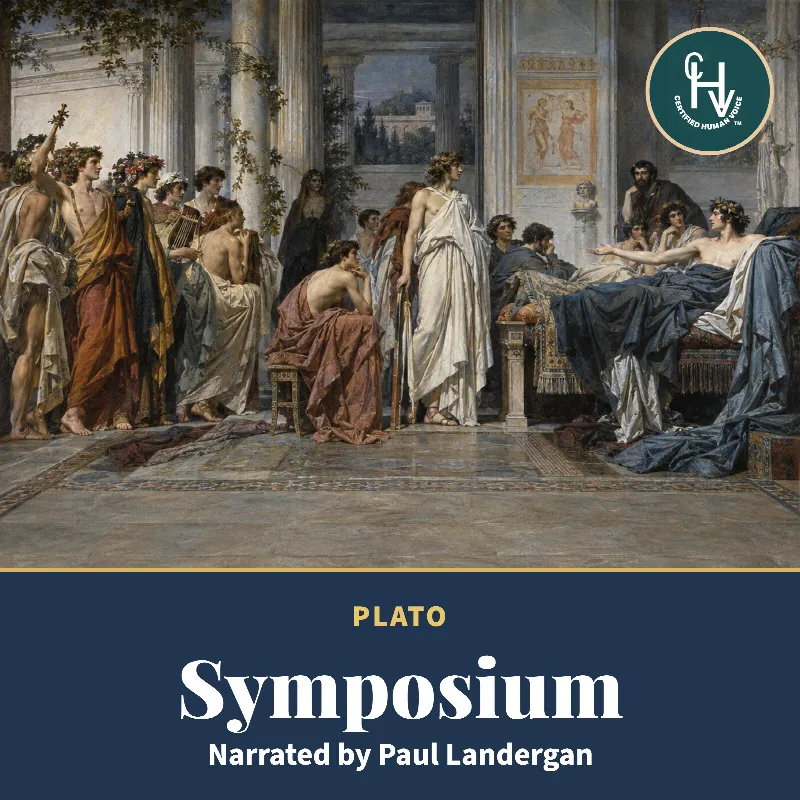
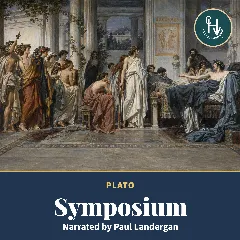
Anselm Feuerbach, Plato's Symposium (1869)
Questions
What is Symposium about?
At a dinner party in ancient Athens, a group of friends including Socrates take turns giving speeches in praise of Love, until a drunken Alcibiades bursts in and praises Socrates instead.
Who are the main characters in Symposium?
Socrates, the famous philosopher, who shares the teaching of Diotima and outlasts everyone at the party; Agathon, the young tragic poet and host, celebrating his first victory; Aristophanes, the great comic playwright, who tells the myth of the split humans; Alcibiades, a brilliant, reckless politician who crashes the party drunk and praises Socrates; Diotima of Mantineia, a wise woman who, Socrates says, taught him the truth about love; Phaedrus, the first speaker, who suggested the theme of praising Love; Aristodemus, a follower of Socrates who attended the party and later told the story.
Who narrates the Symposium audiobook?
This edition of Symposium by Plato is narrated by Paul Landergan.
How long is the Symposium audiobook?
It runs 3 hr 37 min, unabridged, so you hear the complete text.
Is this audiobook narrated by a real person?
Yes. Every Academy Voices audiobook is Certified Human Voice: performed start to finish by a real narrator.
Where can I listen to Symposium?
Right here: buy it on Academy Voices and listen in your browser or our app. Hear a free sample on this page first.