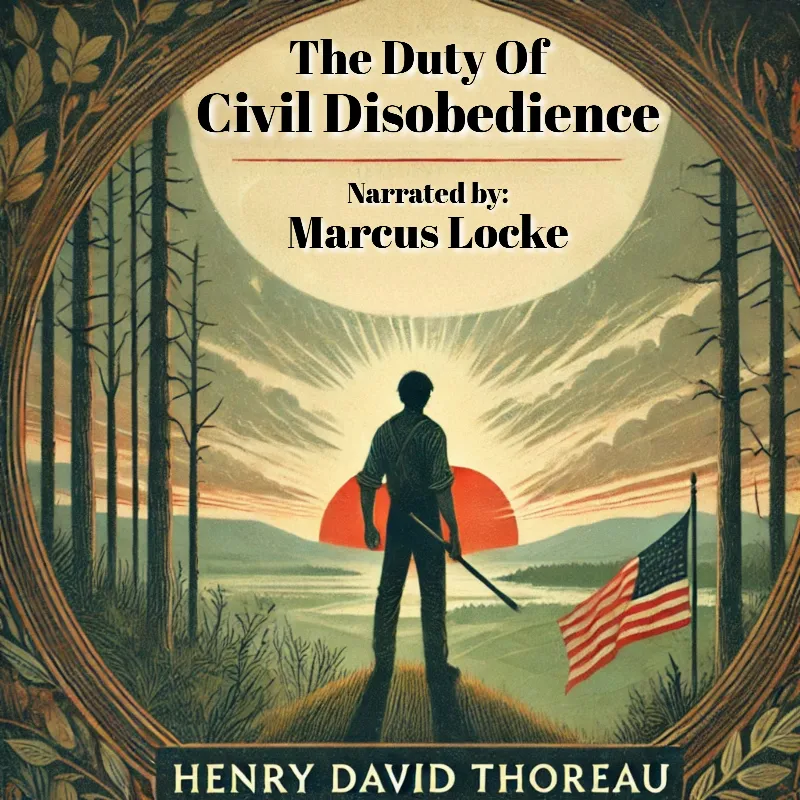
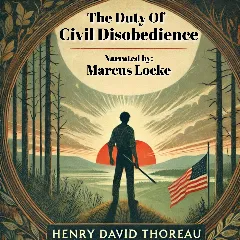
Hear it read by Marcus Locke: the audiobook is right here
Story guide on this page: summary, characters, discussion questions
Yours to keep: a DRM-free EPUB for any device. Read it here, or on Kindle (with Send to Kindle), Apple Books, Kobo or Google Play Books.
Want both? Buy the audiobook and add the ebook for $0.99.
Free audiobook
Listen to the whole story free
Enter your email and we'll send you a link to the full audiobook of The Duty of Civil Disobedience. No account needed.
We'll also ask if you'd like new audiobooks by email. Privacy Policy
✓ DRM-free, yours to keep. Download the files after you buy and play them anywhere.
Yours to keepBuy once, it stays in your library
Listen anywhereIn our app on your phone or computer
Bought by mistake, or something wrong with the file? Email apica@academyvoices.com within 14 days for a full refund.
Bought by mistake or something wrong with the audio? Email apica@academyvoices.com within 14 days for a full refund.
About this audiobookAbout this book
Does a person owe obedience to the laws of a government they believe is wrong? Henry David Thoreau says no, and in this famous essay he explains why. A man's duty is to do what he thinks right, and to refuse to help an unjust state.
Thoreau wrote it after a night in jail for refusing to pay a tax, and it later guided people like Gandhi and Martin Luther King Jr. Read by Marcus Locke, in about an hour.
For readers who want to hear one of America's great arguments in its own words.
Story guide
The Duty of Civil Disobedience summary
Spoiler alert: this summary tells the whole story.
Thoreau opens by accepting the motto "That government is best which governs least," and goes further: the best government would govern not at all, once people are ready for it. Government, he says, is only a tool, and it is often misused. His example is the Mexican War, which he calls the work of a few people using the government as their instrument.
He asks whether a citizen must ever hand over his conscience to the lawmaker, and answers that we should be men first and subjects afterward. Respect for what is right matters more than respect for the law. He criticizes people who disapprove of slavery and the war but do nothing except vote and wait. Voting for the right, he says, is not the same as doing it. When a law requires you to be the agent of injustice to another, break the law and let your life be a counter friction to stop the machine.
Thoreau then tells his own story. He has paid no poll tax for six years and was once jailed for a night because of it. Looking at the thick stone walls, he decides the State is half-witted, since it can lock up his body but not his thoughts. He describes his night in the Concord jail, his talk with his cellmate and his view of his own town from behind bars. In the morning someone interferes and pays the tax, and he walks out and joins a huckleberry party on a hill two miles away.
He insists he is not quarrelsome and that he pays other taxes and obeys laws he finds just. But he will not support a State that keeps slaves. Under a government that imprisons anyone unjustly, he writes, the true place for a just man is also a prison. He closes by imagining a State that treats every individual as a higher and independent power, a State he has imagined but not yet seen anywhere.
This short essay became one of the most influential pieces of political writing in history, a model for nonviolent resistance studied by Gandhi, Martin Luther King Jr. and countless students.
Famous lines
That government is best which governs least
The motto Thoreau accepts in the opening line
I think that we should be men first, and subjects afterward.
Thoreau
Let your life be a counter friction to stop the machine.
Thoreau
Under a government which imprisons any unjustly, the true place for a just man is also a prison.
Thoreau
Main characters
HD
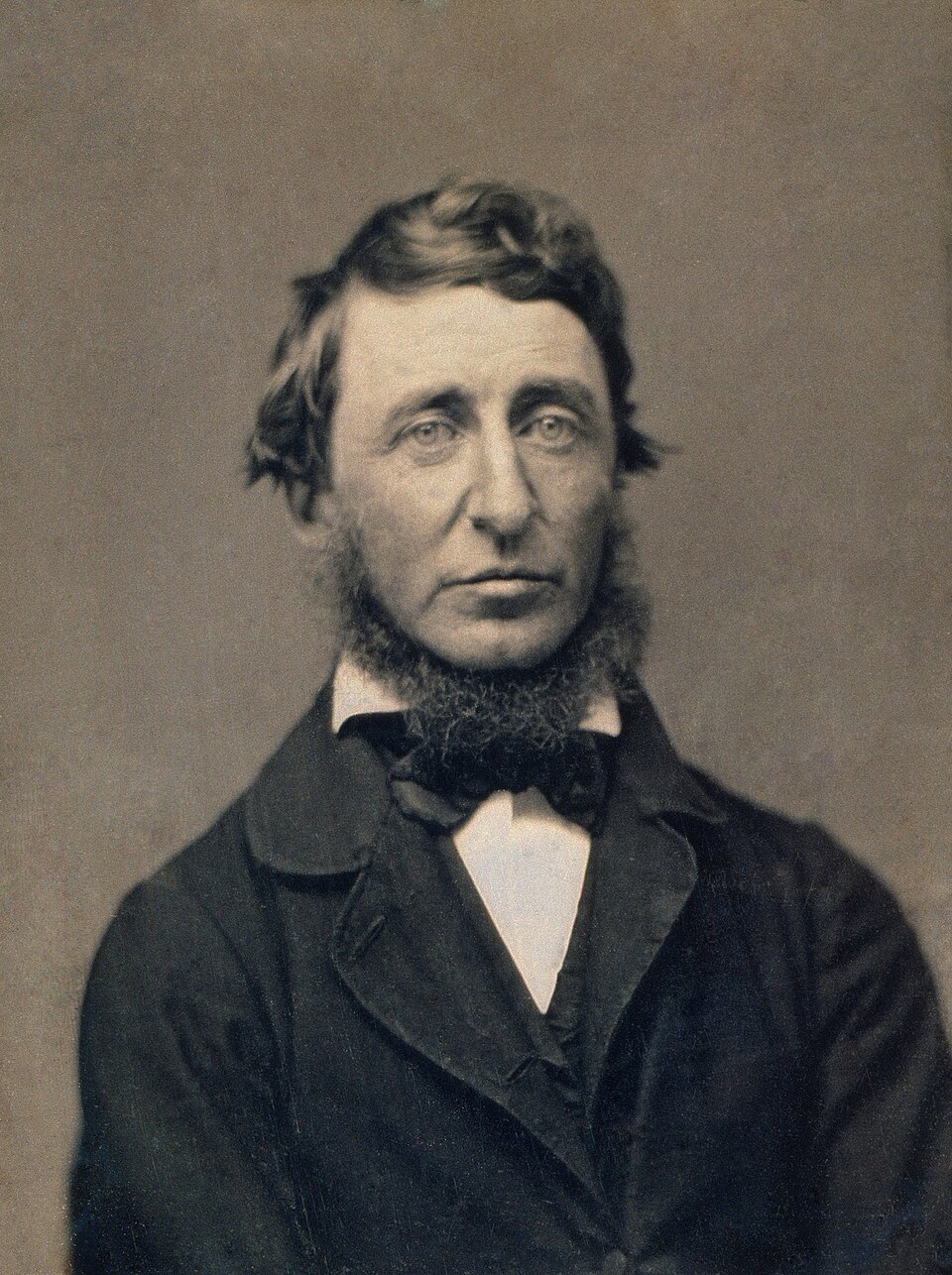
Henry David ThoreauThe author, who spends a night in jail for refusing to pay his poll tax.
T
The tax-gathererThoreau's neighbor, the official through whom he meets the government face to face.
HC
His cellmateA fellow prisoner, accused of burning a barn, who shows Thoreau the ways of the jail.
Did you know?
Thoreau first gave these ideas as a lecture in Concord before they were printed.
Thoreau's night in jail happened in July 1846, while he was living at Walden Pond.
Mahatma Gandhi and Martin Luther King Jr. both said the essay shaped their thinking about nonviolent resistance.
Questions to talk about
Thoreau says we should be "men first, and subjects afterward." What does he mean, and do you agree?
Why does Thoreau think voting is not enough to fight an injustice like slavery?
How does his night in jail change the way he sees his town and his neighbors?
Someone paid Thoreau's tax without his permission. How do you think he felt about that, based on the essay?
Is there a law or rule today that you think a person of conscience might refuse to follow? What would Thoreau say?
New listeners
Get 25% off your first audiobook
Join our list and we'll email you 25% off, plus new releases from our store. Every one is read by a real person. No account needed.
Details
Length
1 hr 4 min
Narration
Solo narrator
Format
Unabridged audiobook
Publisher
Academy Voices
Language
English
ISBN
9798875188282
Questions
What is The Duty of Civil Disobedience about?
Henry David Thoreau explains why he refused to pay his poll tax to a government that supported slavery and the Mexican War, and argues that a person's conscience must come before the law.
Who are the main characters in The Duty of Civil Disobedience?
Henry David Thoreau, the author, who spends a night in jail for refusing to pay his poll tax; The tax-gatherer, thoreau's neighbor, the official through whom he meets the government face to face; His cellmate, a fellow prisoner, accused of burning a barn, who shows Thoreau the ways of the jail.
Who narrates The Duty of Civil Disobedience audiobook?
This edition of The Duty of Civil Disobedience by Henry David Thoreau is narrated by Marcus Locke.
How long is The Duty of Civil Disobedience audiobook?
It runs 1 hr 4 min, unabridged, so you hear the complete text.
Is this audiobook narrated by a real person?
Yes. Every Academy Voices audiobook is Certified Human Voice: performed start to finish by a real narrator.
Where can I listen to The Duty of Civil Disobedience?
Right here: buy it on Academy Voices and listen in your browser or our app. Hear a free sample on this page first.